FlowNode
FlowNode started as a problem in our own studio. Every creative AI tool did one thing well, and moving between them lost the brief, the references and the reasons behind each decision.
So we built one canvas where image, video, sound, 3D and language models work as connected steps, with the brief attached to everything they make. We conceived, designed, engineered and run FlowNode ourselves, from the brand and the website to the product, for our own work and for creative teams.

An identity that steps back
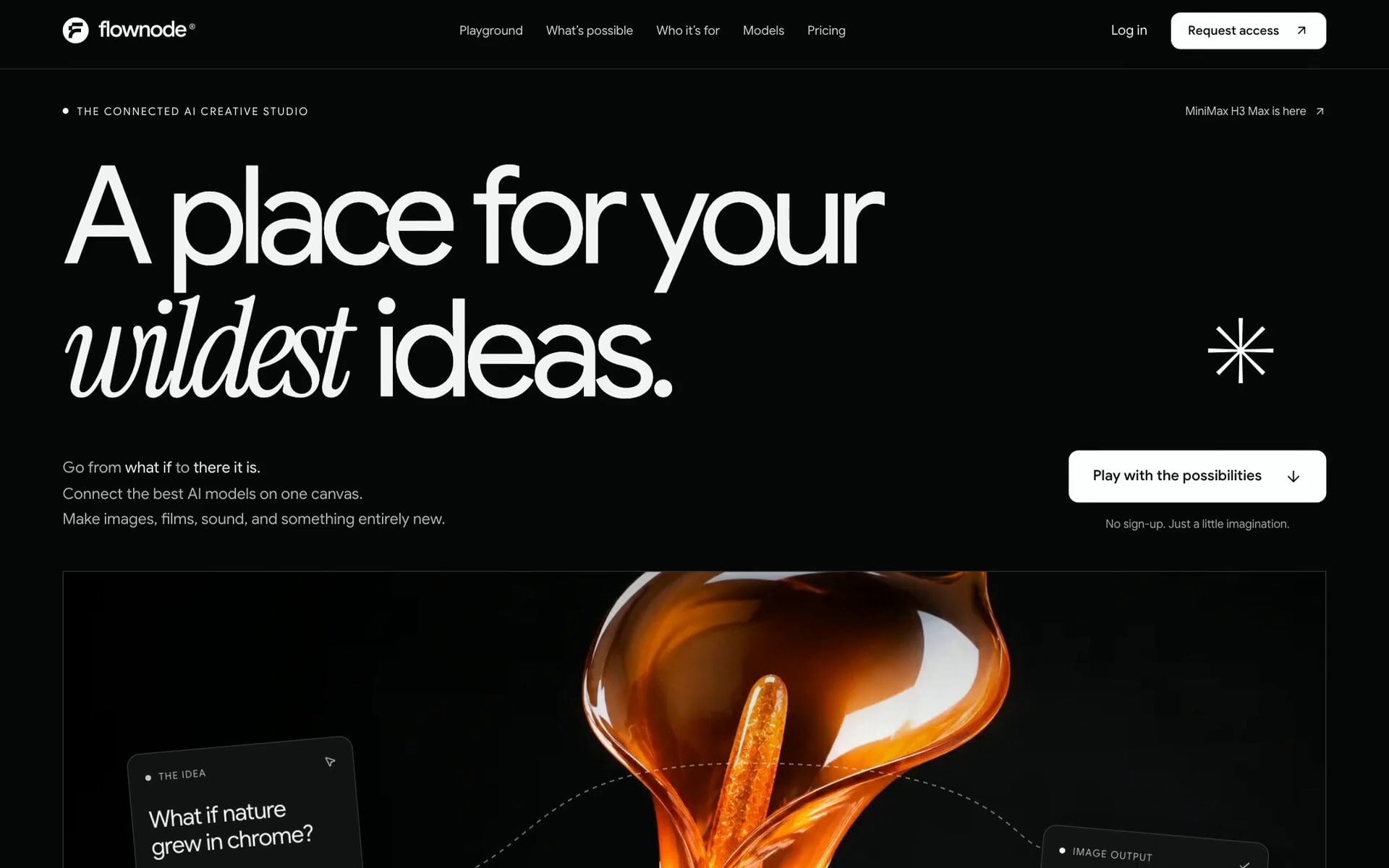
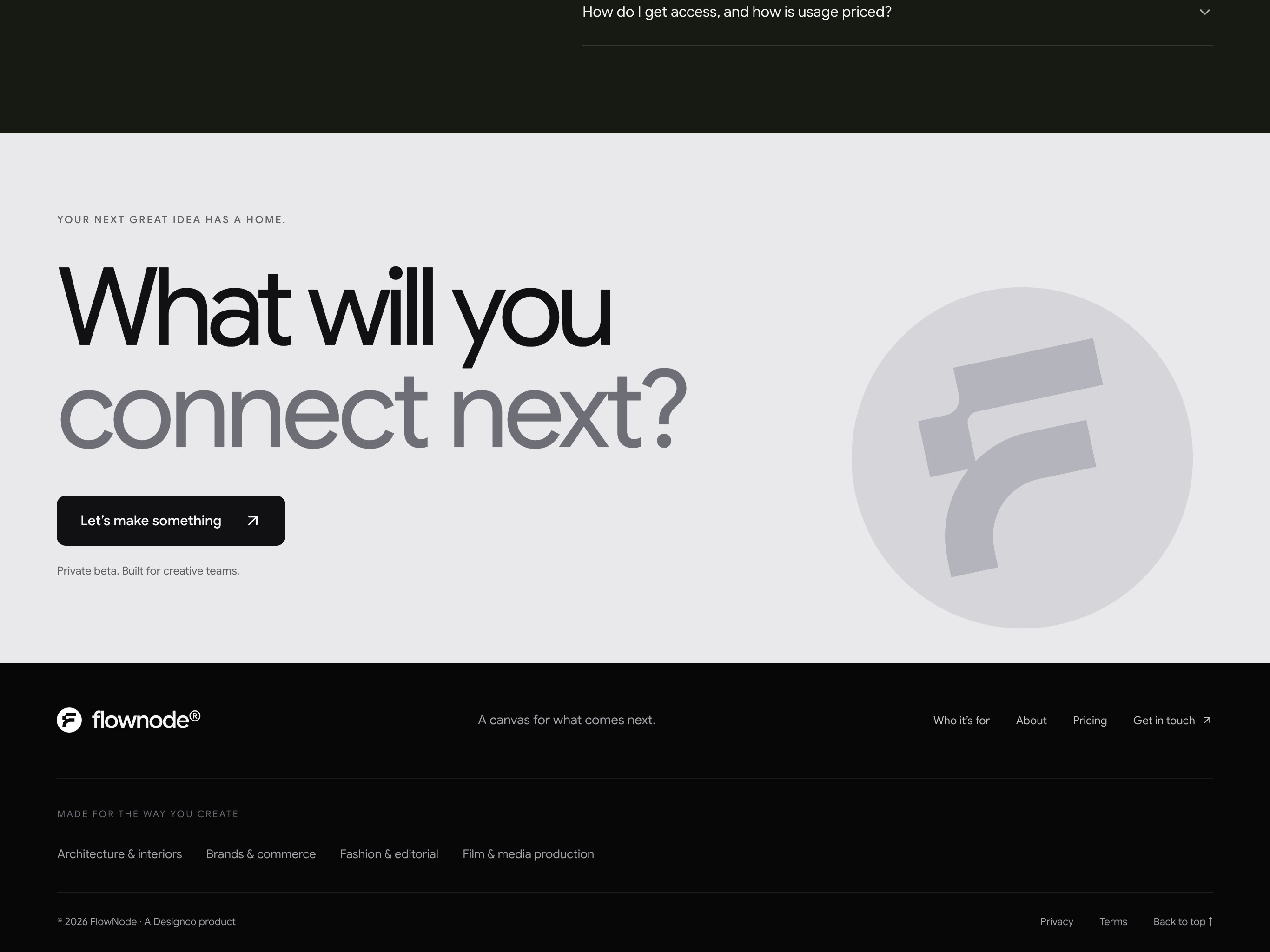
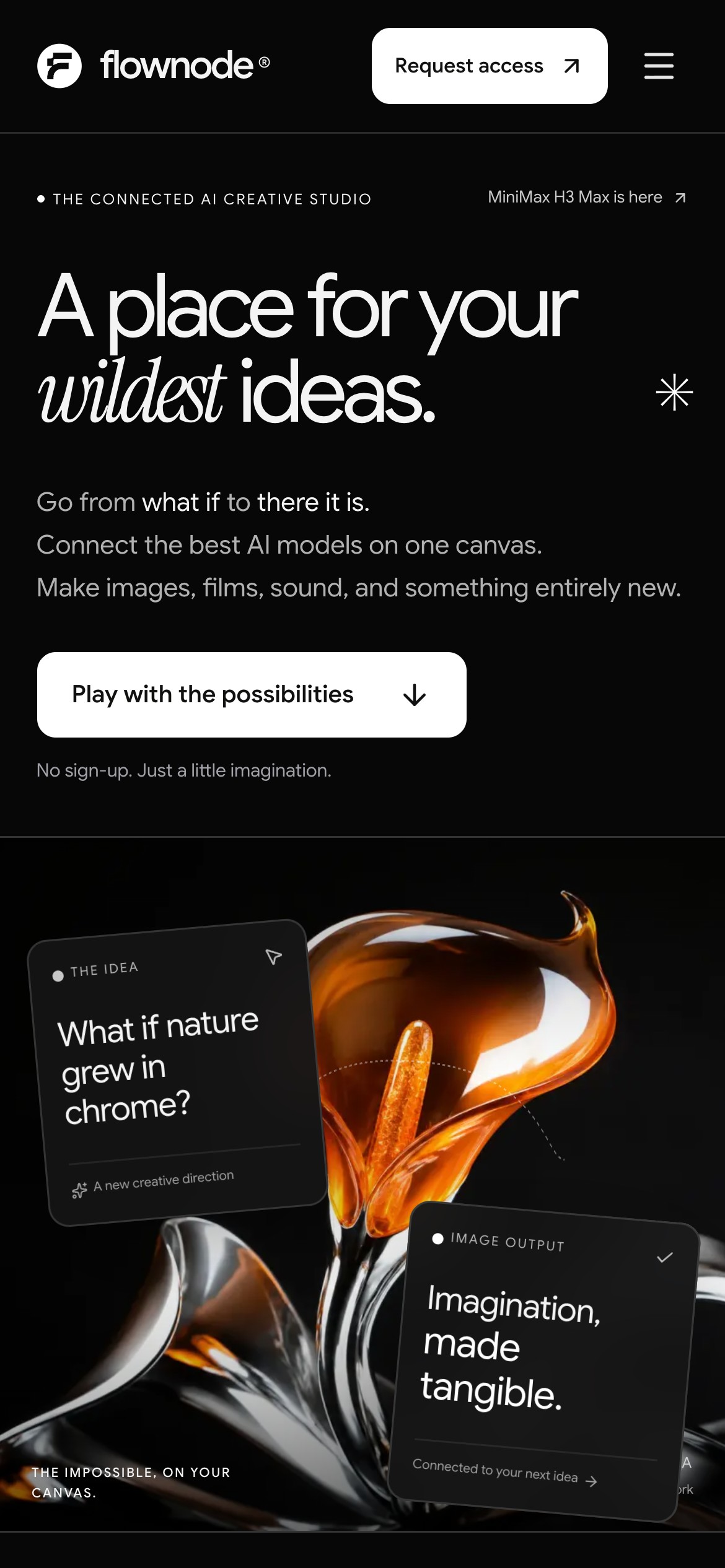
Creative tools often compete with the images they make. FlowNode's mark is a single F in a disc and its palette is near black with white as the one accent, so every colour on screen belongs to the work. The website keeps the same restraint: its first sentence, “A place for your wildest ideas”, speaks to the person with the idea rather than the buyer of compute, and its last screen is a quiet grey band that hands the next move to the visitor.


Proof sits beside the promise
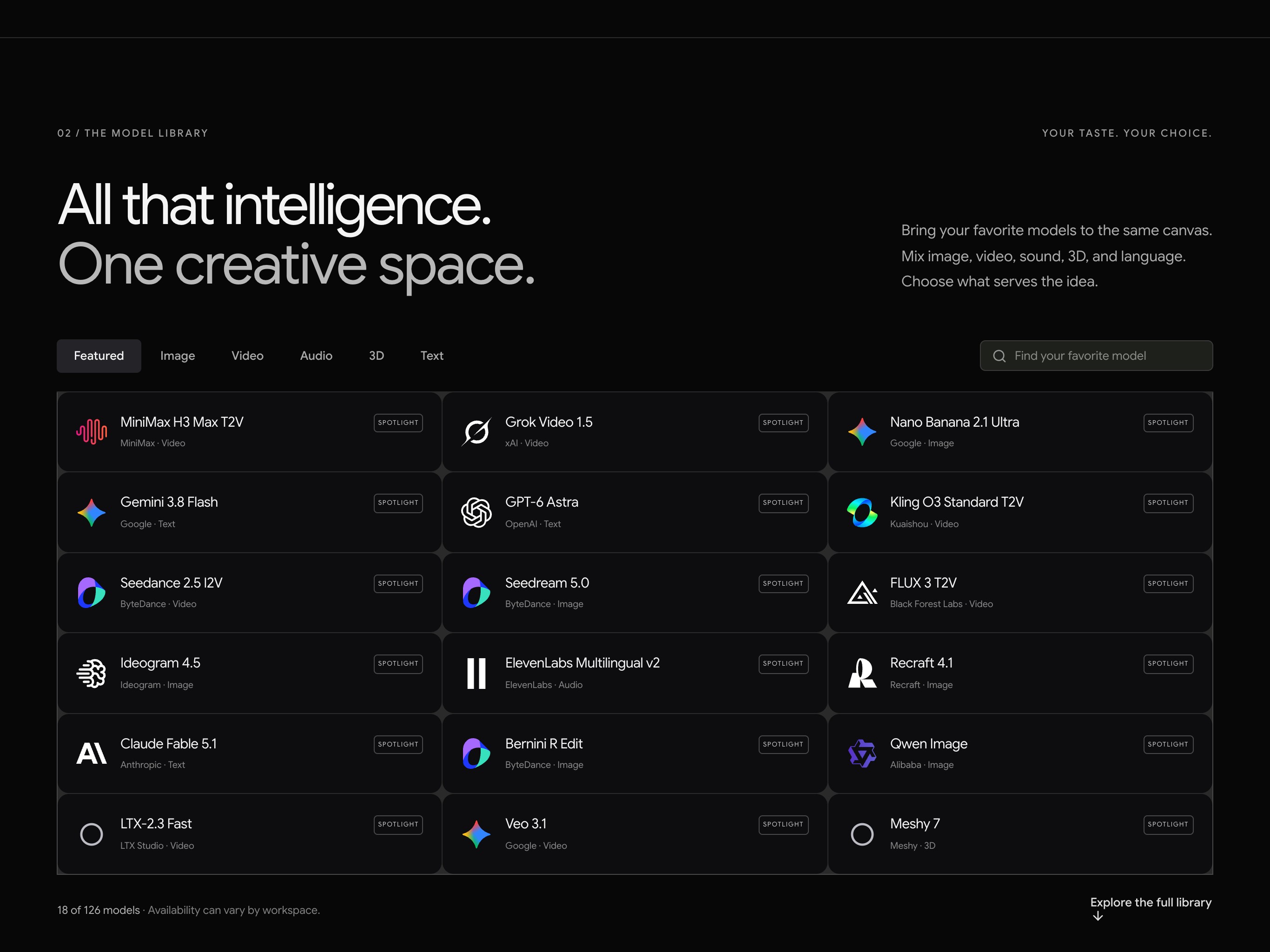
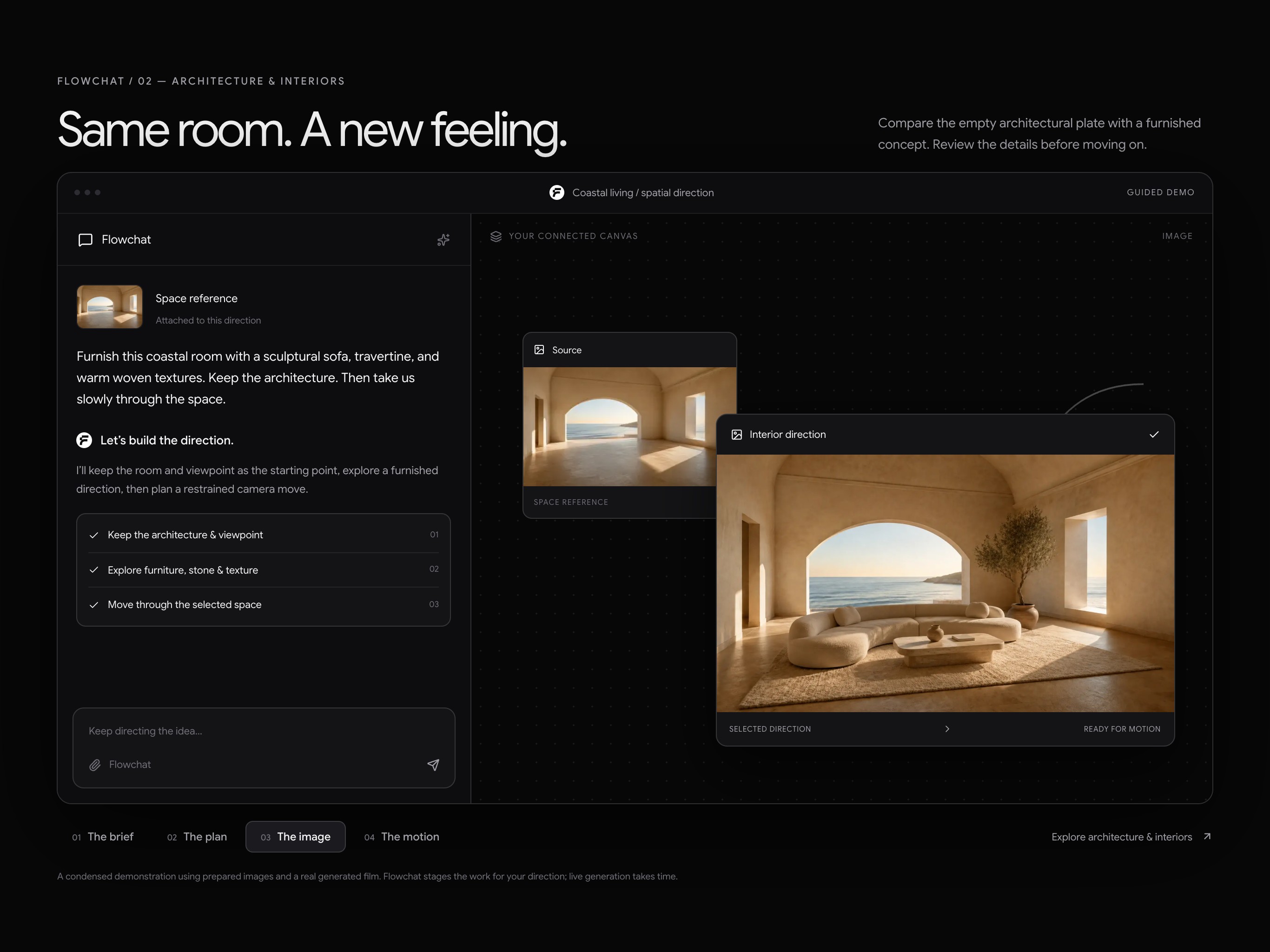
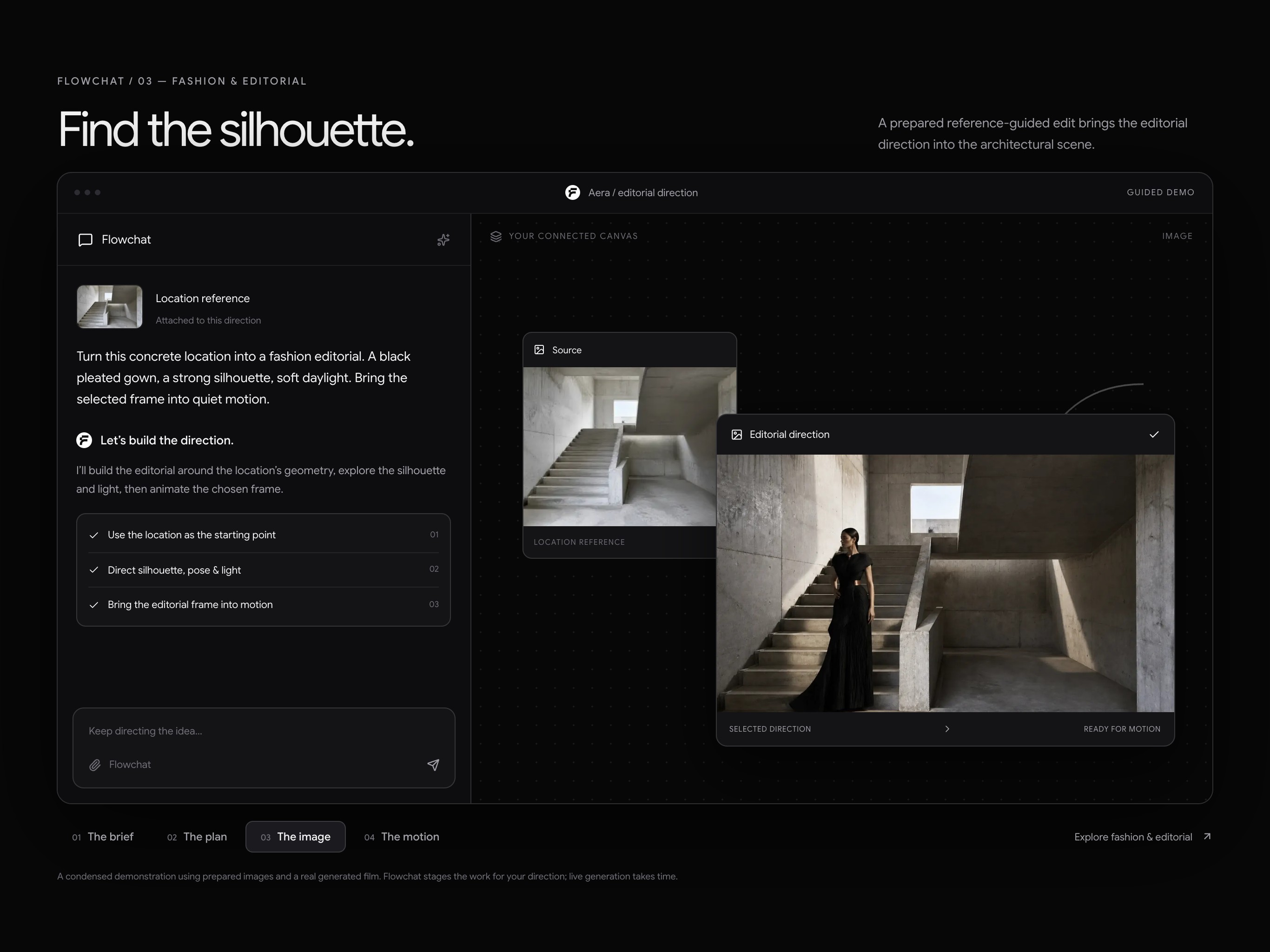
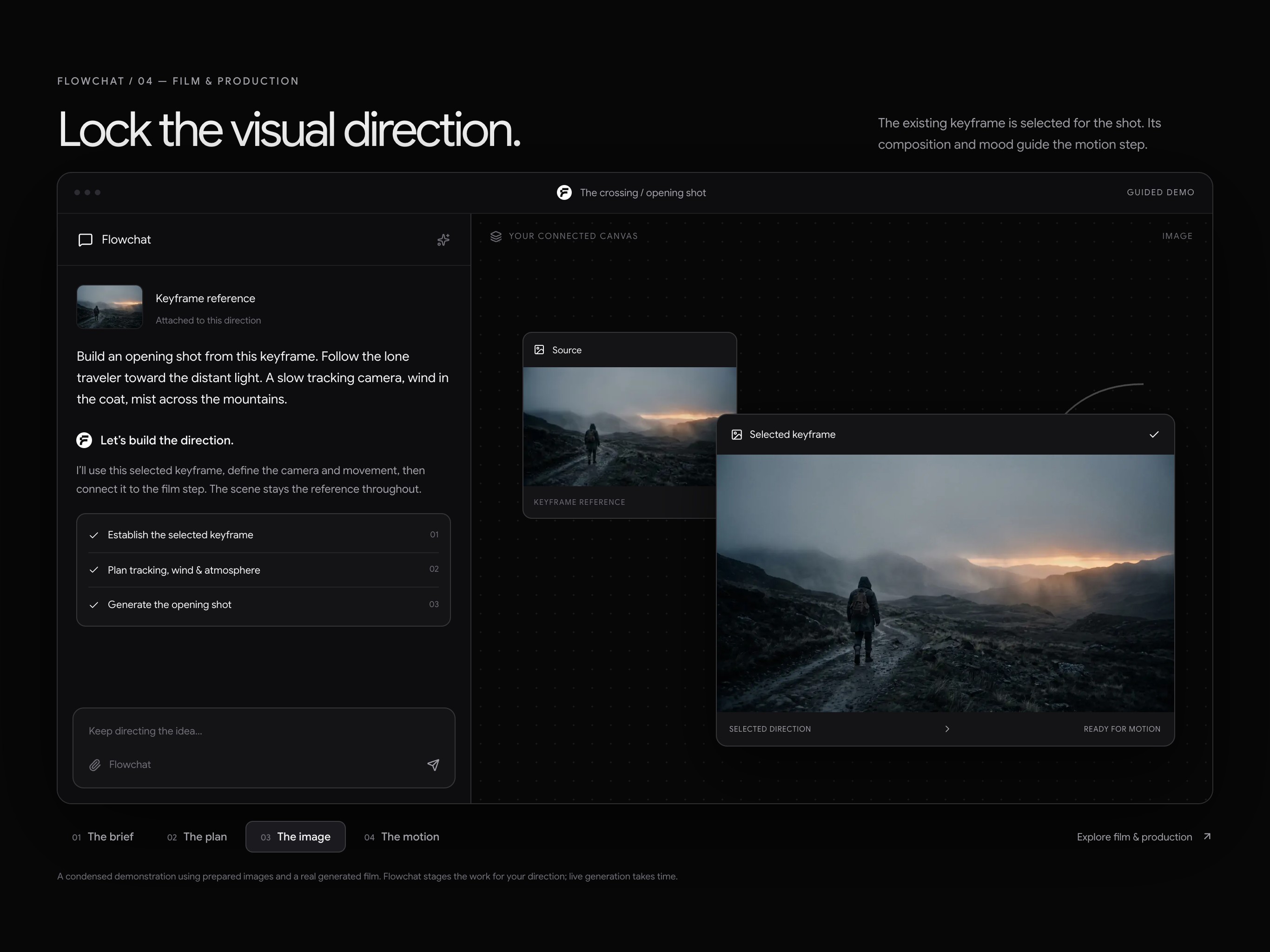
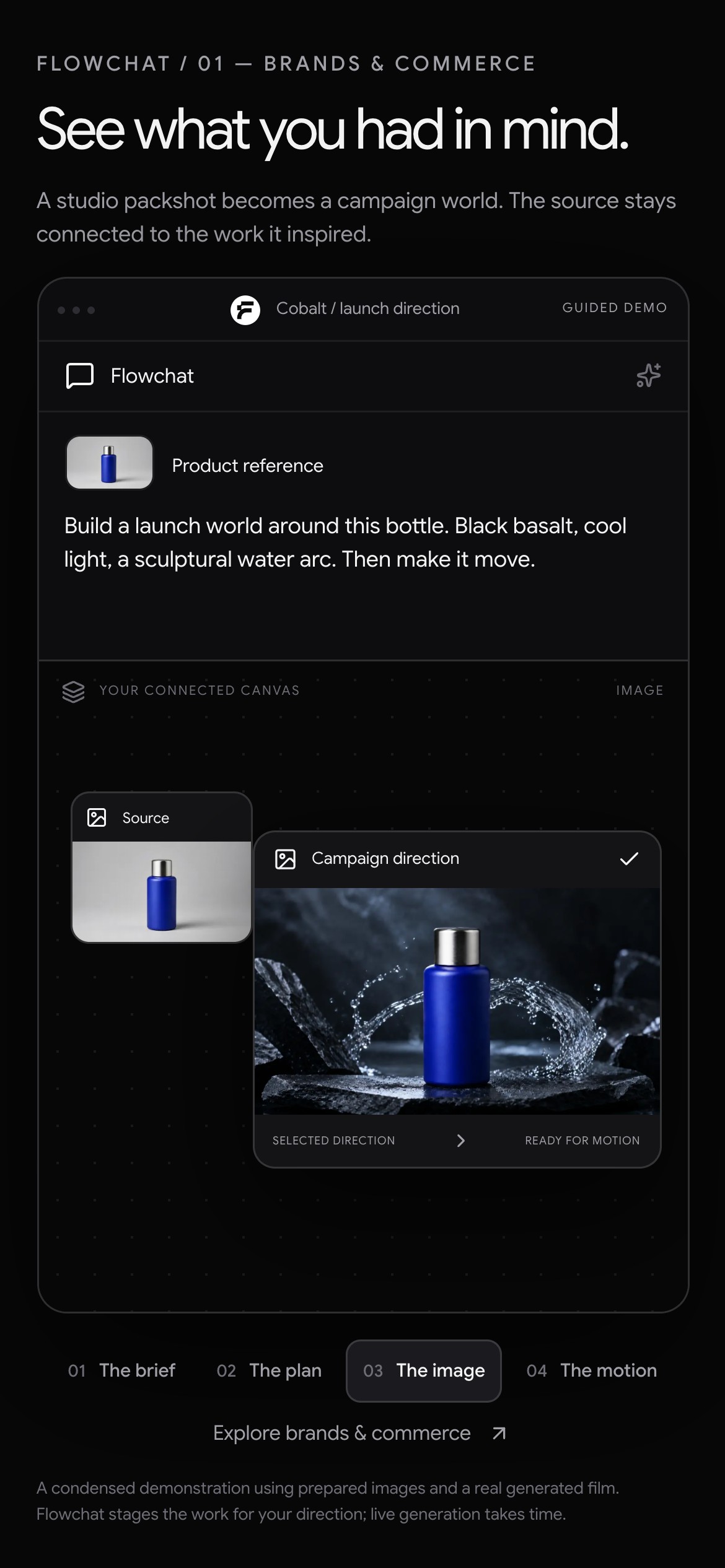
Most AI websites describe the product and leave the rest to the imagination. FlowNode's stories are built from the app's own components, so they show the work happening: in each, a sentence becomes a plan, the plan becomes nodes and a picture lands, for a product, a room, a look and an opening shot. The library sets 126 models side by side, each with its maker, in one grammar, so moving between them reads as one way of working.
Visitors learn by doing it
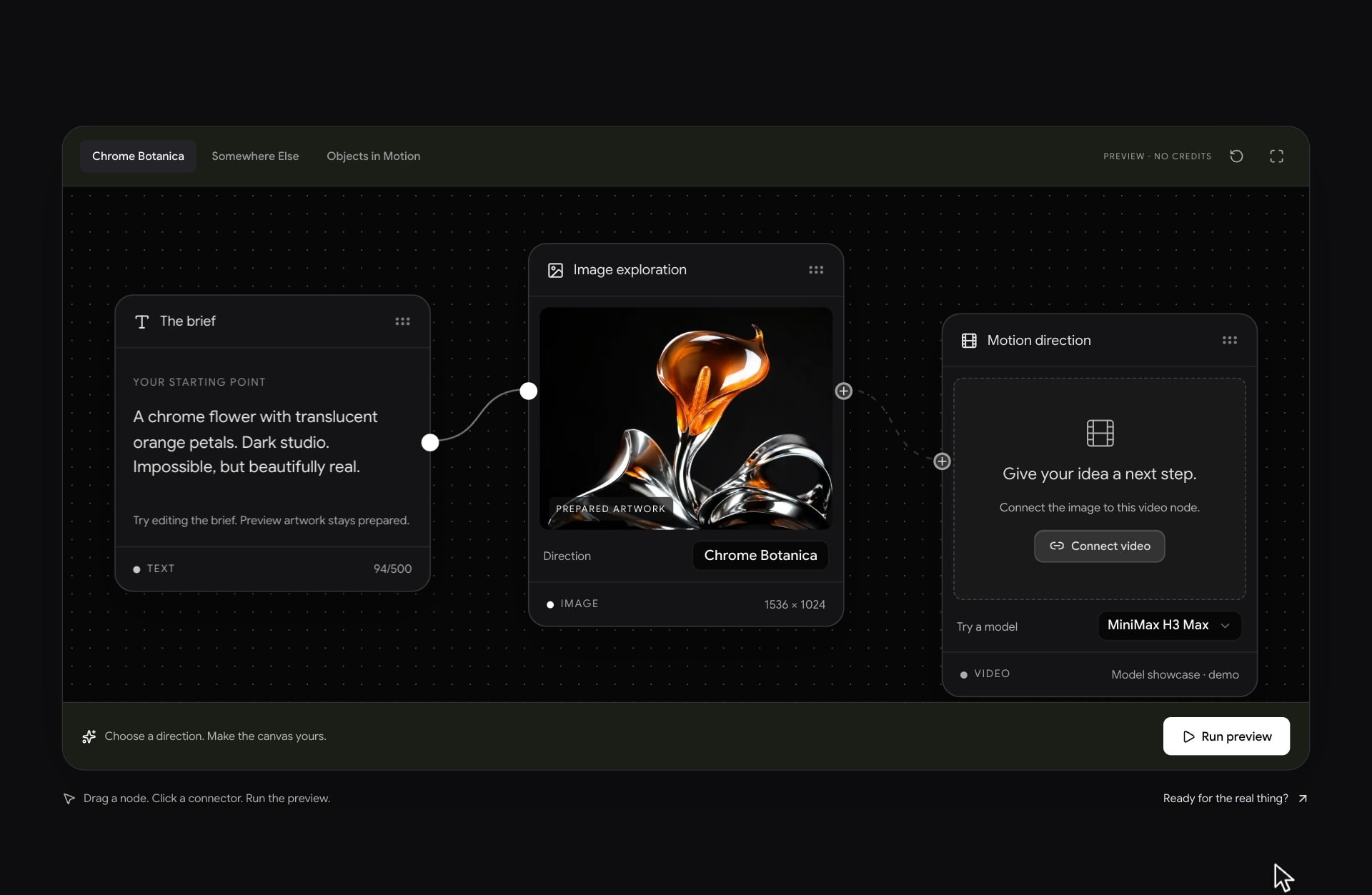
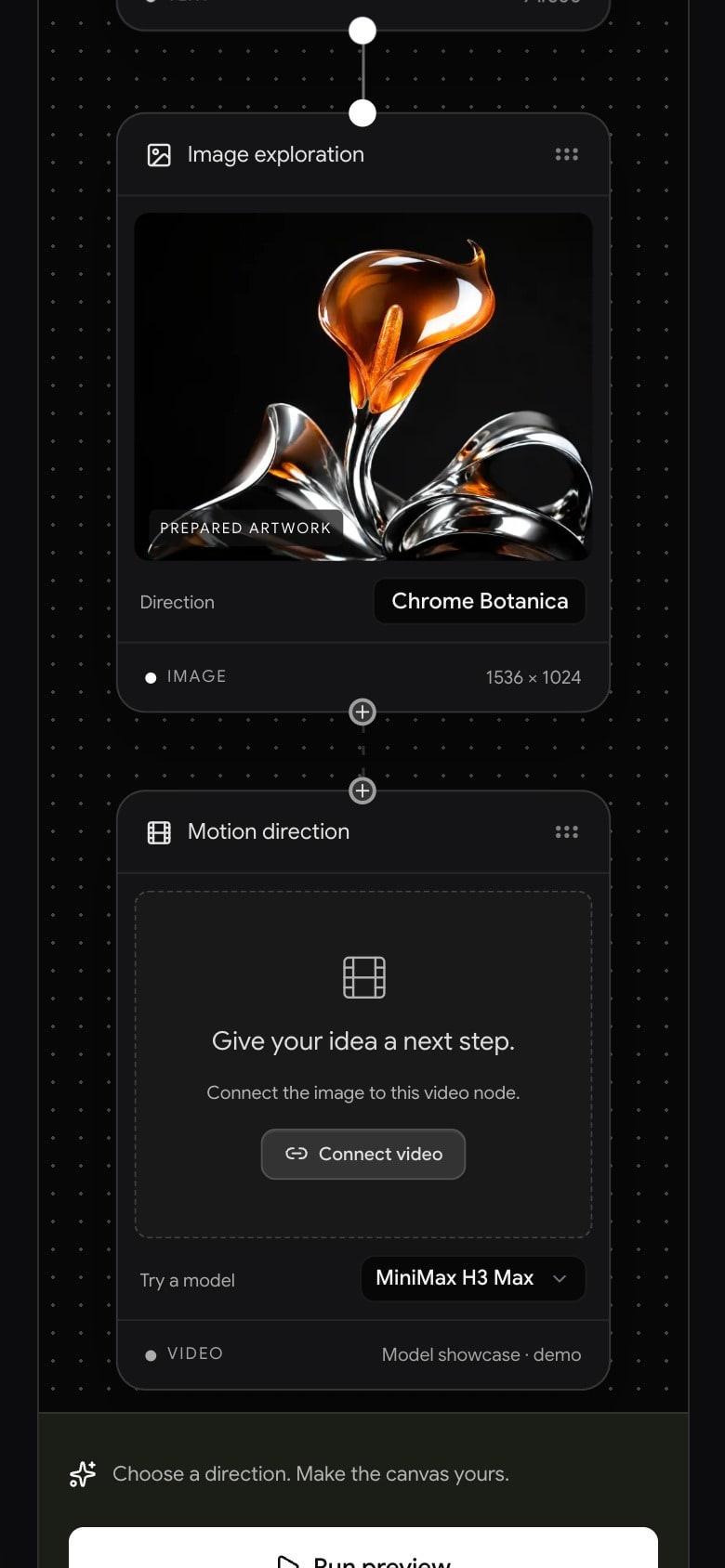
Most AI websites play a video of their product. FlowNode's home page hands over three of its nodes instead: a visitor wires the image to the video node and presses Run preview, and the preview walks the graph one step at a time, with nothing generated and no credits spent. Typed ports and connected steps make sense before any sign-up. On a phone the canvas is not shrunk: the nodes restack into one column and the wires run downward, within reach of a thumb.

Nothing runs until a person agrees
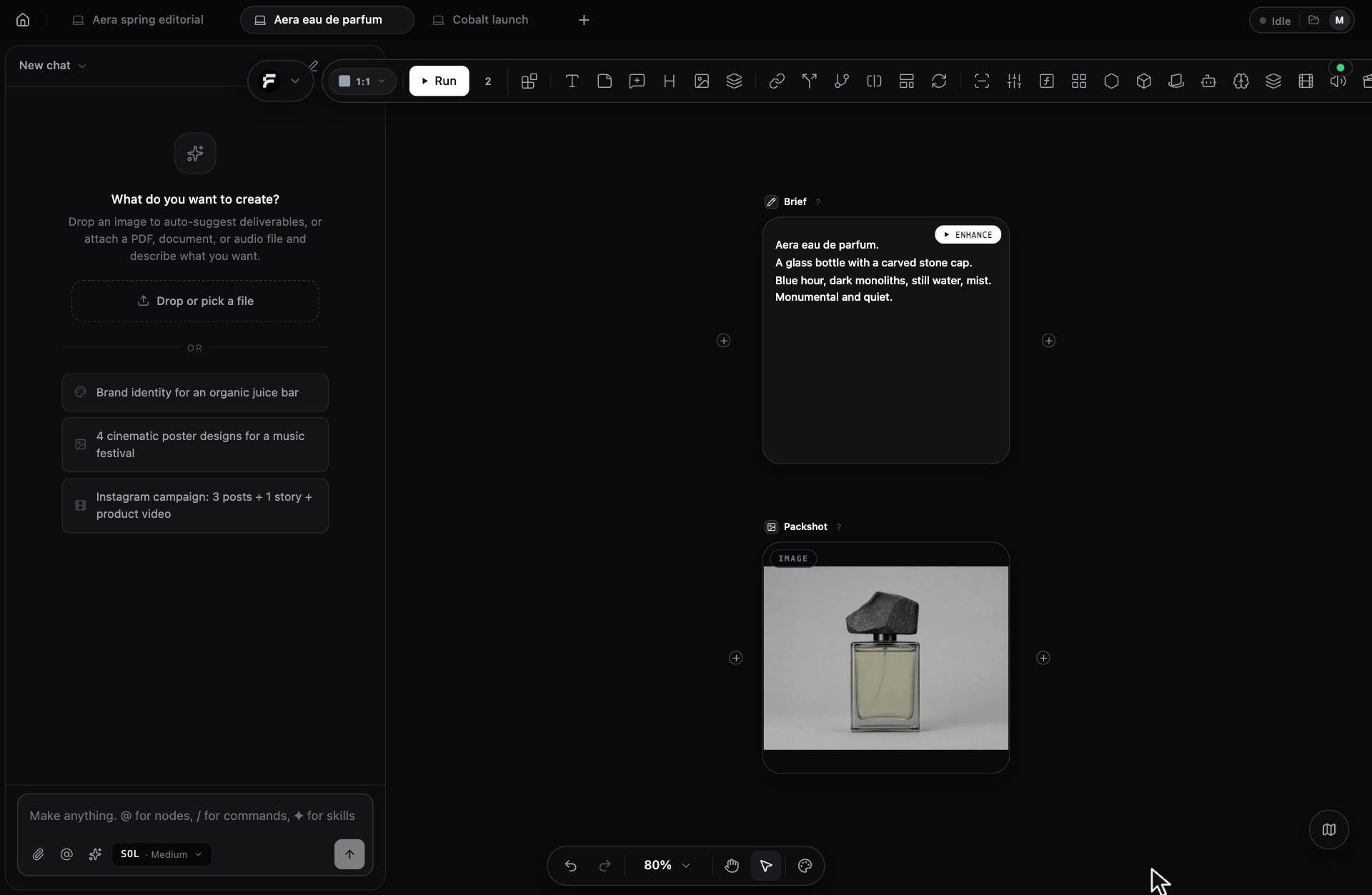
An assistant that acts alone spends budget on guesses. Flowchat answers a single sentence with a plan of outputs, each with its ratio and a model anyone can change, and the film waits for a manual run. A producer can move one shot to another model before anything starts; one press then lays the set on the canvas as prompts wired to their generations, the same graph a person would build by hand, ready to branch, compare and run again.


The brief travels with every generation
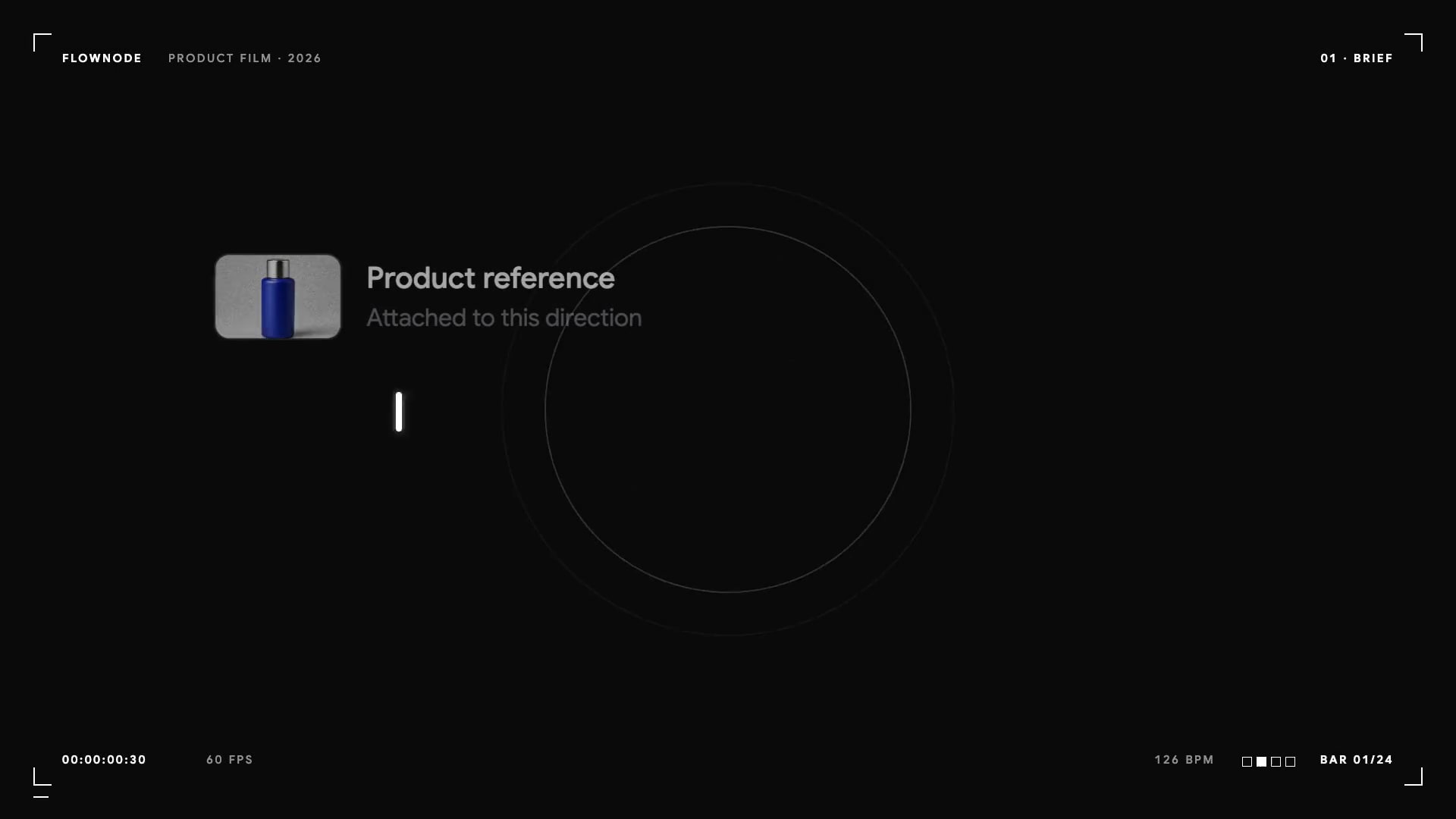
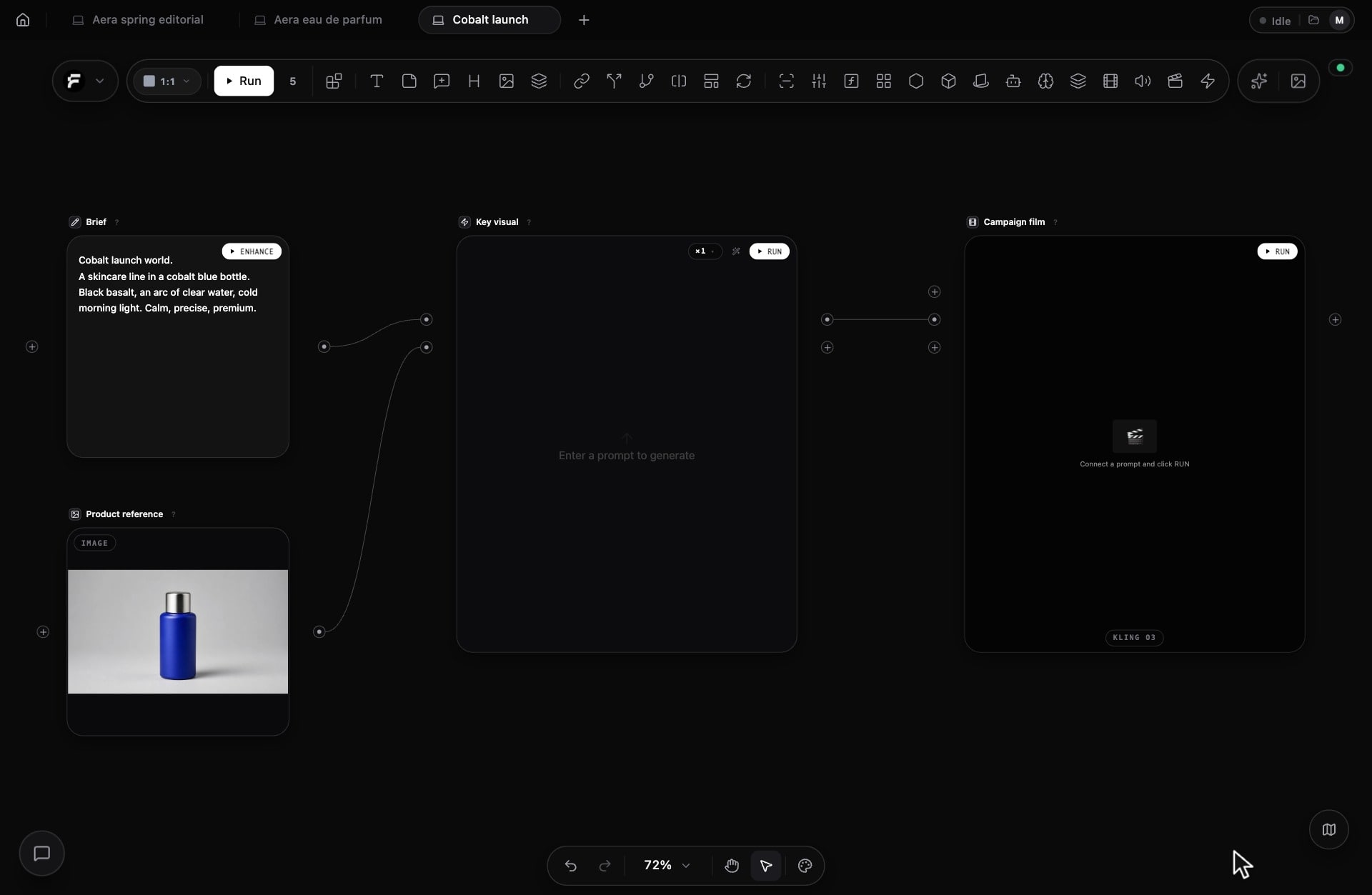
When a brief changes mid-campaign, separate tools mean retyping it everywhere. On the canvas the brief and the product reference feed the key visual, which feeds the film, so a change upstream reaches everything downstream while each step still runs on its own. Every result stays in its node with its model, ratio and resolution, so a campaign can be rerun, compared or handed to a colleague months later without guesswork.
Good processes outlive their projects
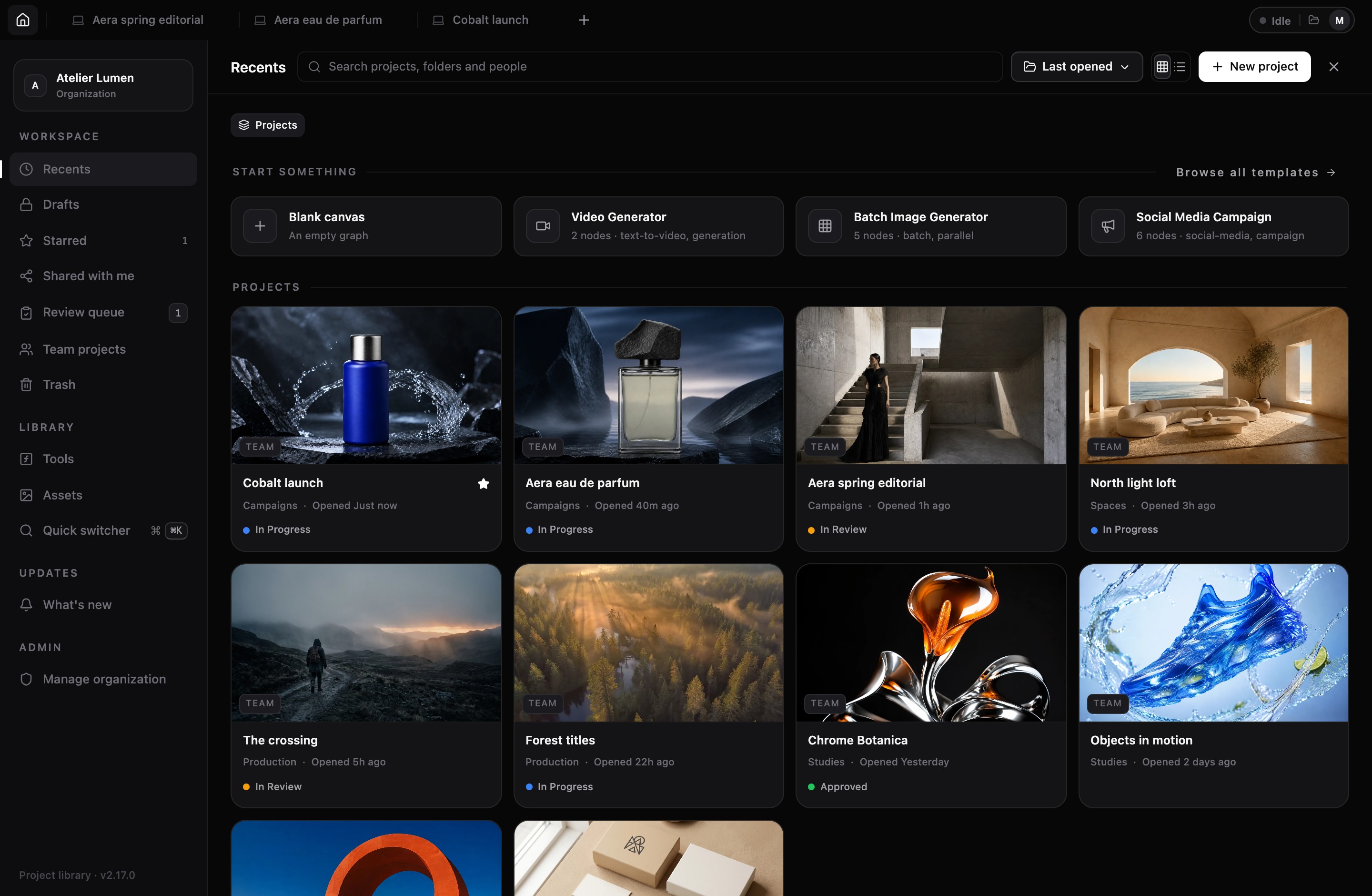
When a project closes, a studio's best process often closes with it. FlowNode keeps templates as saved graphs and gives every project a review state, from in progress to in review to approved, so a team sees where the work stands at a glance and the next brief opens on what worked last time rather than an empty prompt box. Roles, reviews and usage sit in the same quiet interface as the canvas.
The result
A creative AI platform conceived, designed, engineered and run by one team: the identity, the website that teaches its grammar and the product behind them. FlowNode is in private beta, built for creative teams, and it keeps improving because we use it on our own work every day.
Building something like this?
Start a project.