Geofos
Geofos keeps the green and built spaces of Attica in order, from pruning and compost to cleaning, and rents out the fleet it works with. Its public customers order against framework contracts, each with its own funds and daily limits.
We designed the brand and the corporate site, then designed and built e·geofos: the platform where customers book that fleet, and the operations centre behind it. Everything is in Greek, and the operations centre appears with demo data.

In a white city, green leads
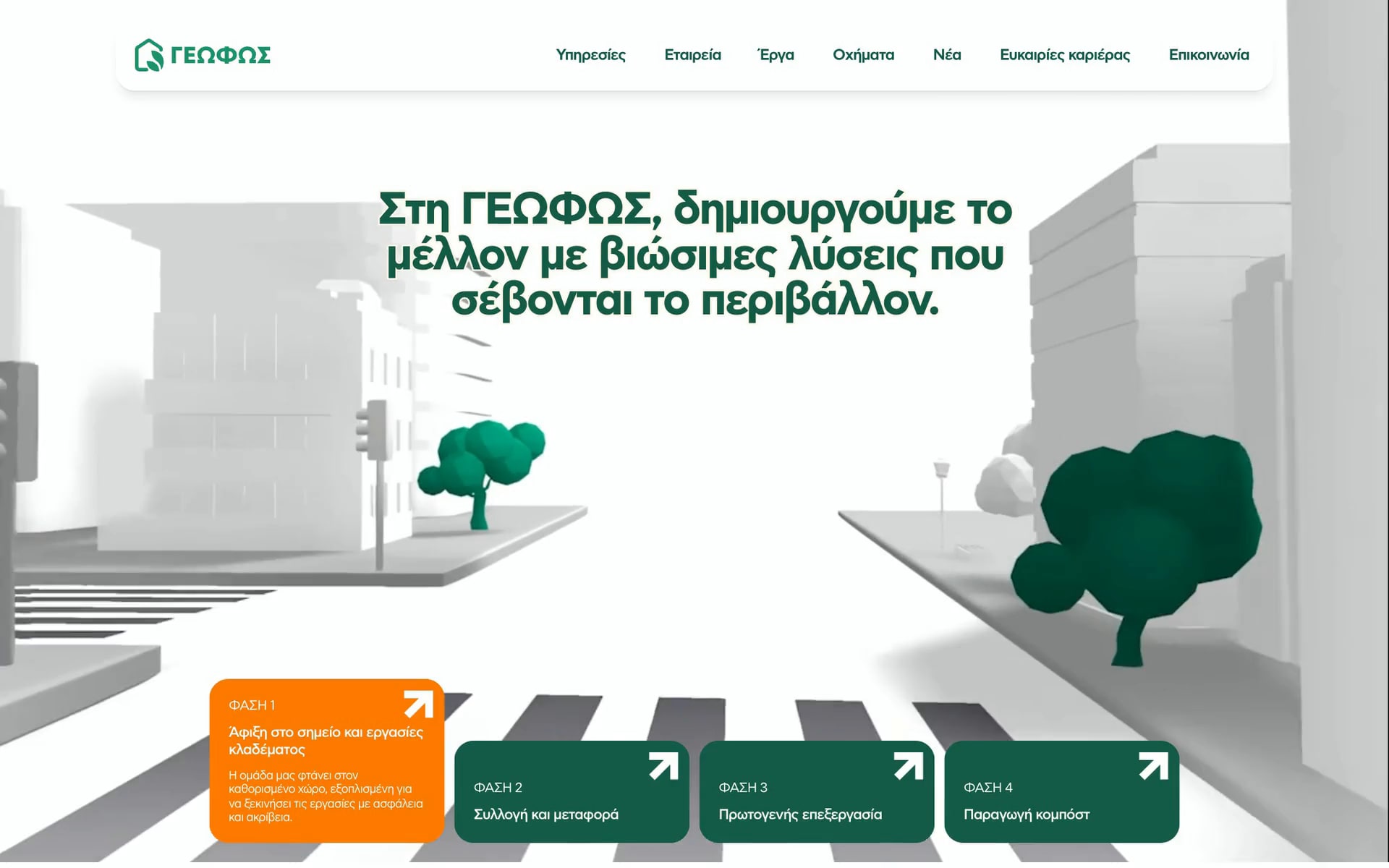
Geofos handles a green waste job from end to end, from the aerial platform at the tree to the compost bagged under its mark, and a list of services cannot show that. The home page opens on a city drawn in white where only the trees and the work are green, so the eye follows the job down the street without a caption. Four phase cards step through it at the visitor's pace, the one in play marked in orange.


Track record, not adjectives
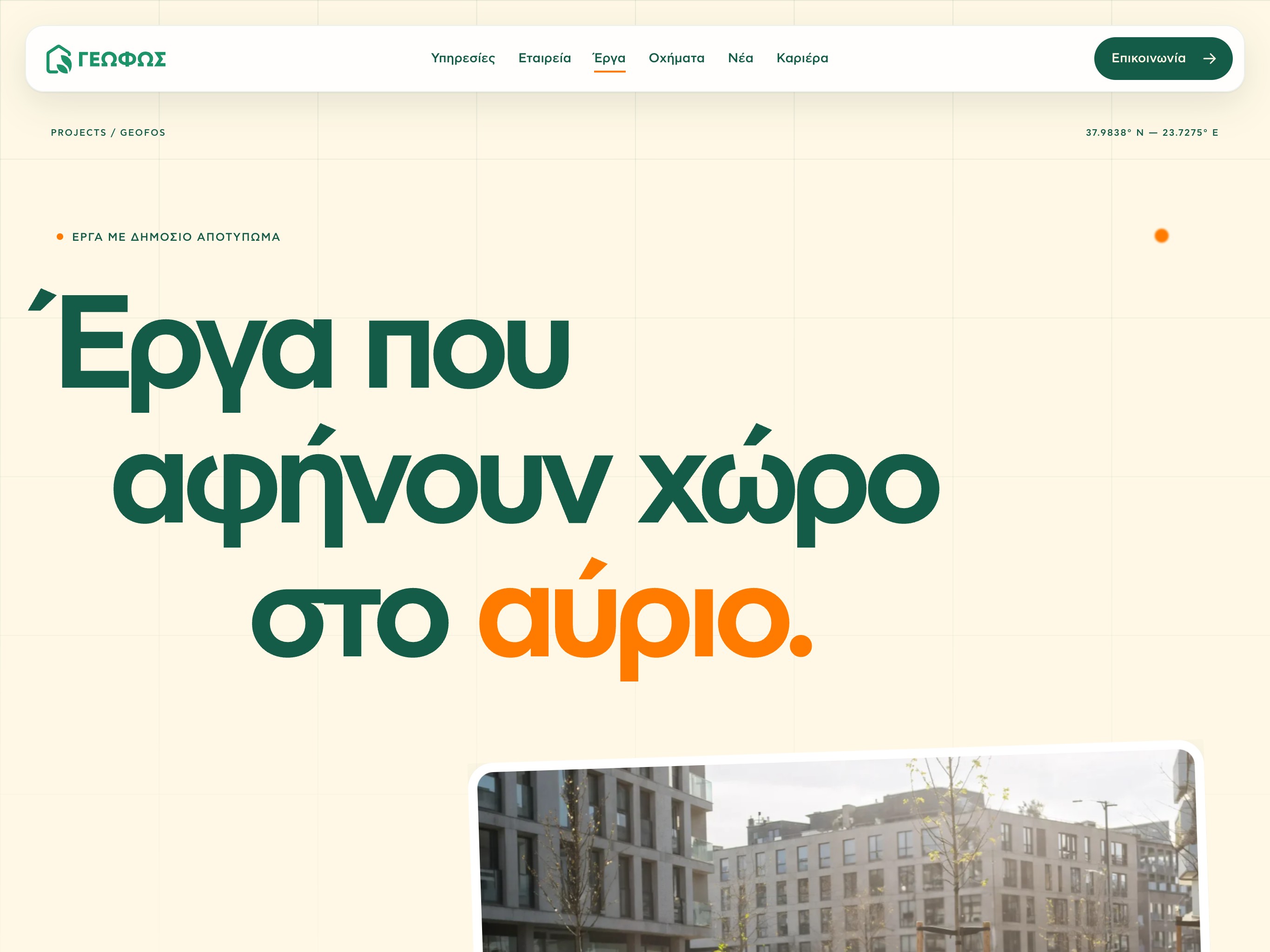
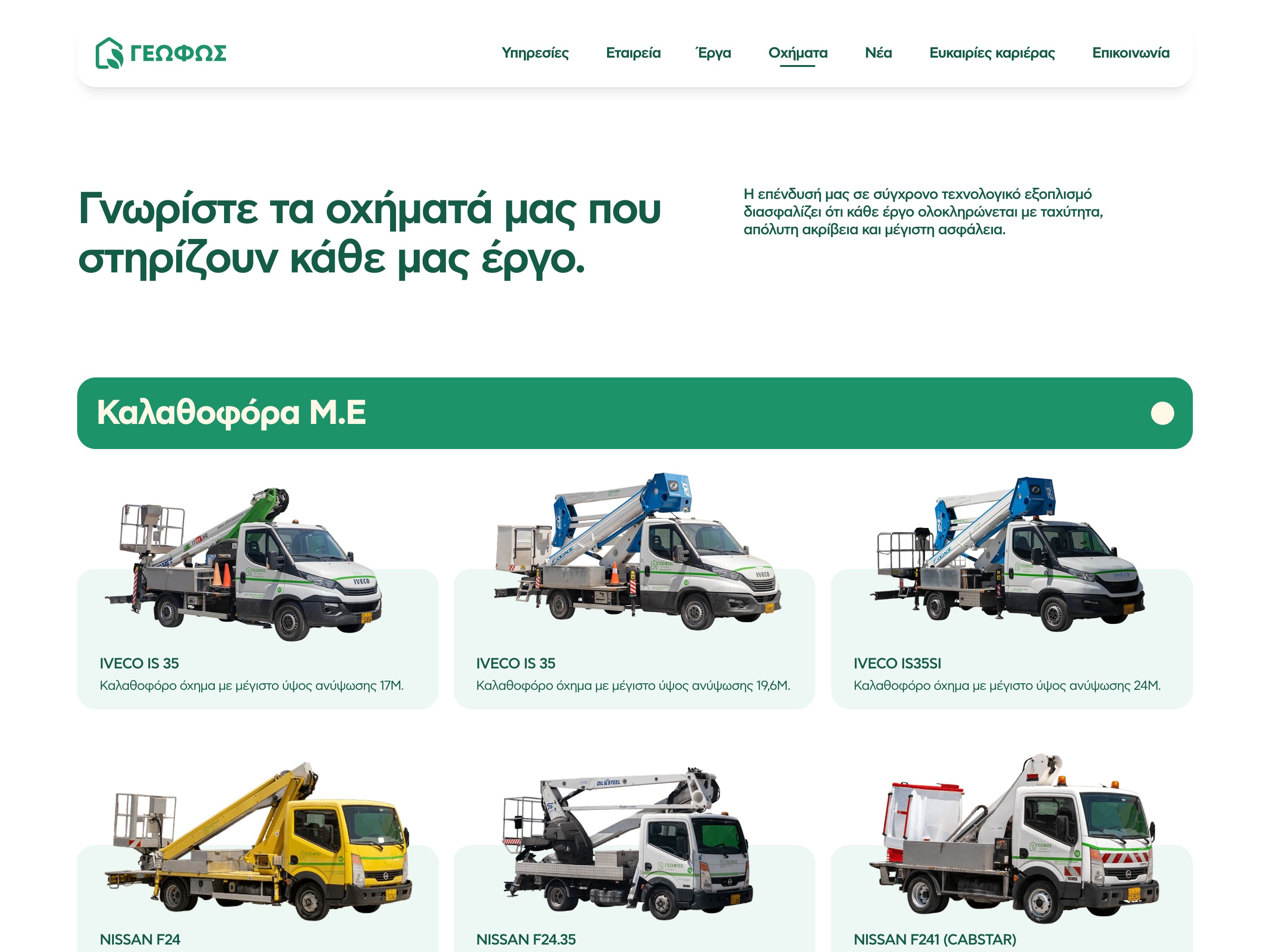
Municipalities hire on track record. The projects page is built around eight finished jobs in drone and field photography, and keeps the headline's orange for one word, tomorrow, so every job reads as evidence for the promise. The fleet page does the same for the machines: Geofos's own vehicles in their own livery, each with the working height a site engineer asks about first, one step from the platform that rents them.

When, then what
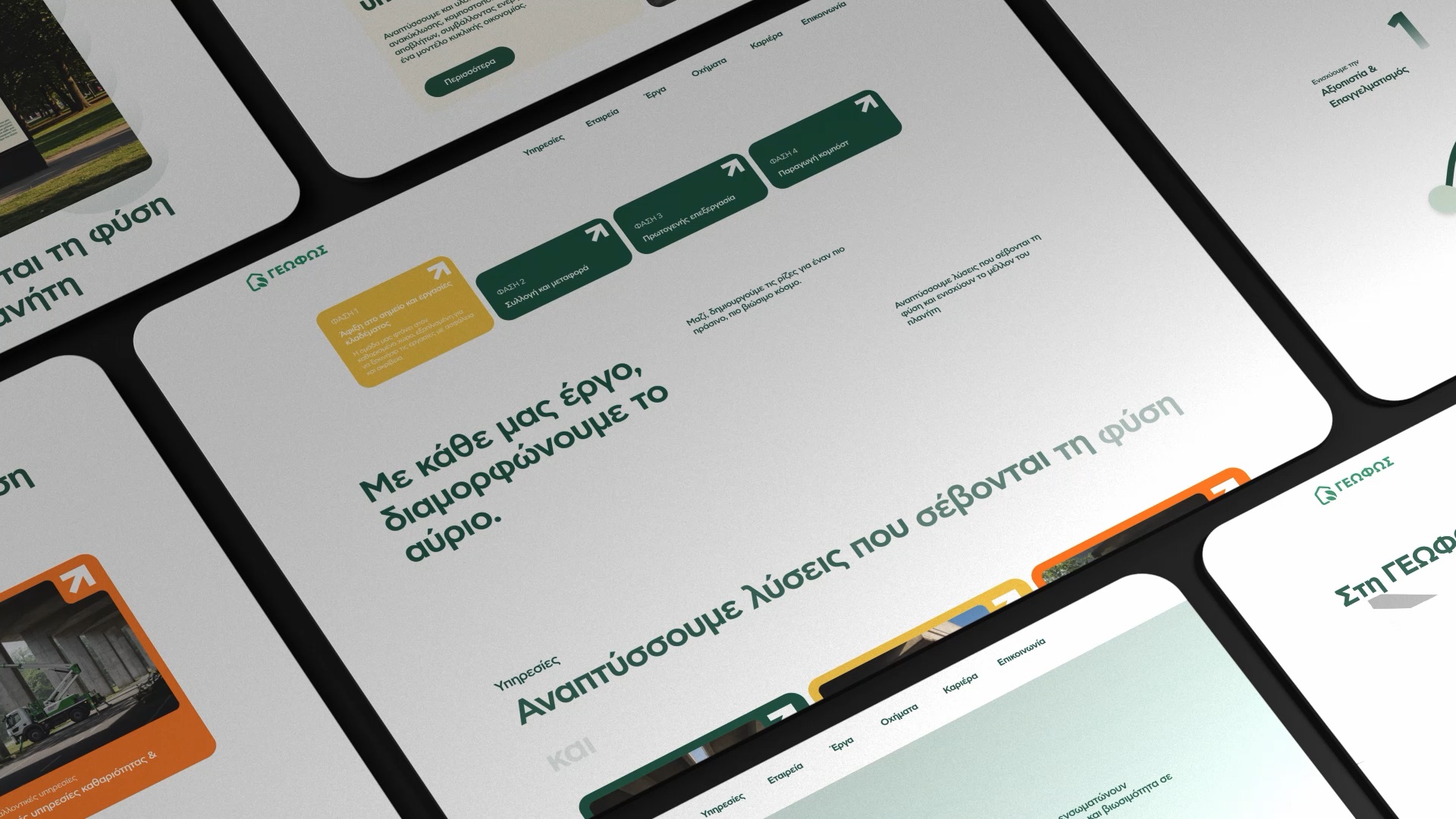
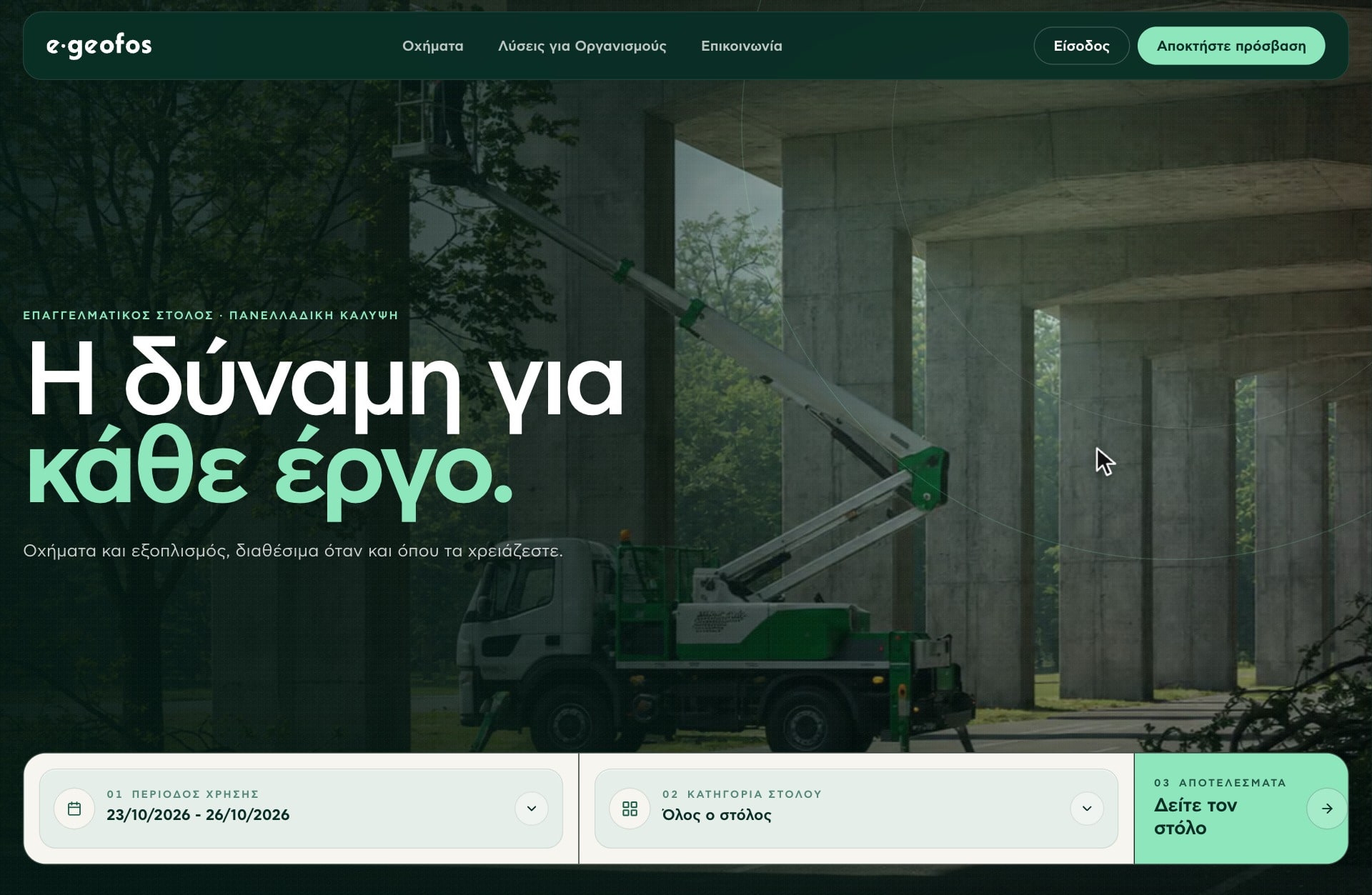
A municipal work order says when, then what. The platform's search asks the same two questions in the same order, as numbered steps in one bar: the period, with quick ranges of one, three or seven days that spare the calendar for the exceptions, then the category, each described in a line of the work it covers. Once dates are set, anything already booked drops out, so the results are only machines that are free.

The machine that arrives
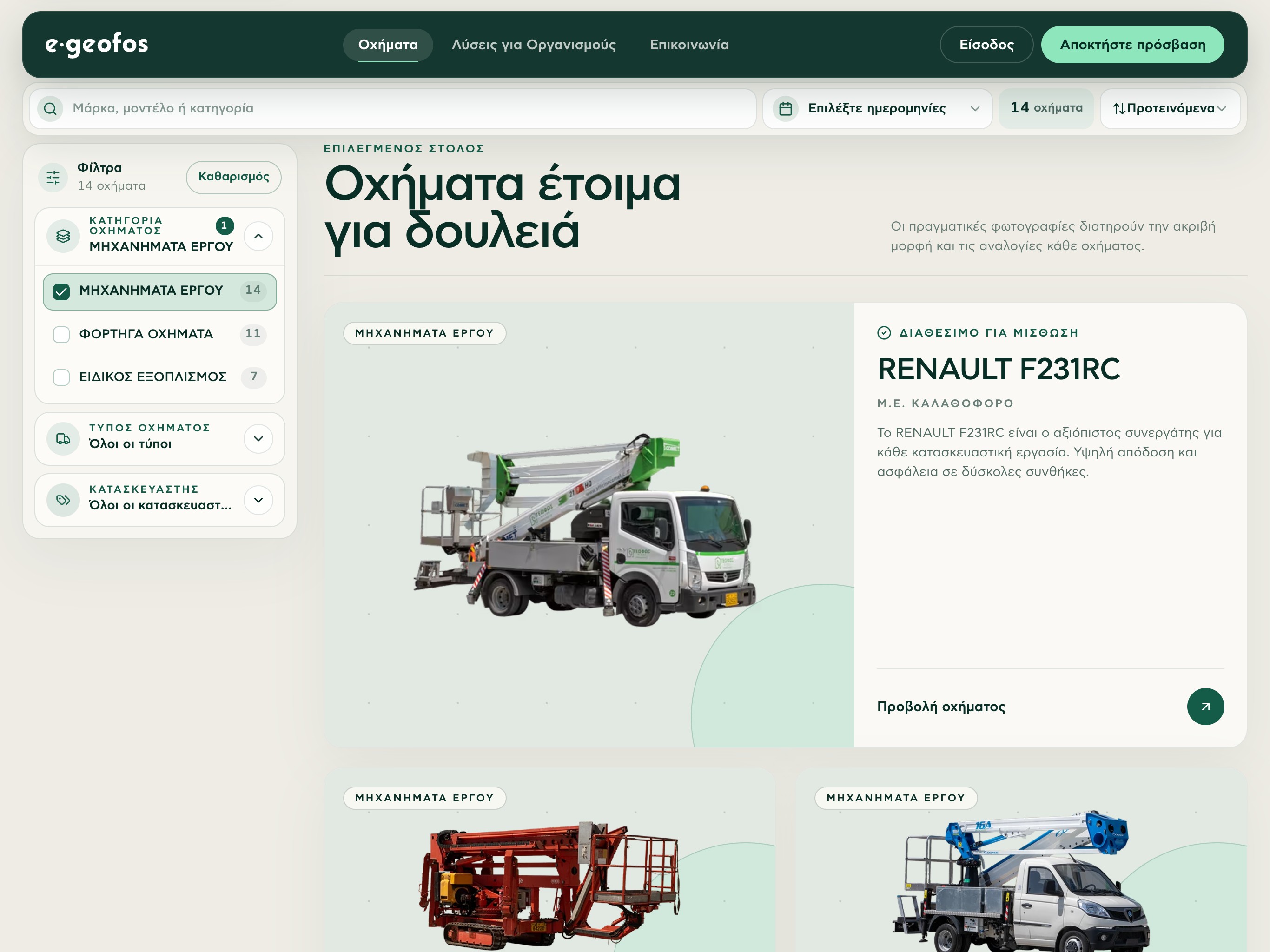
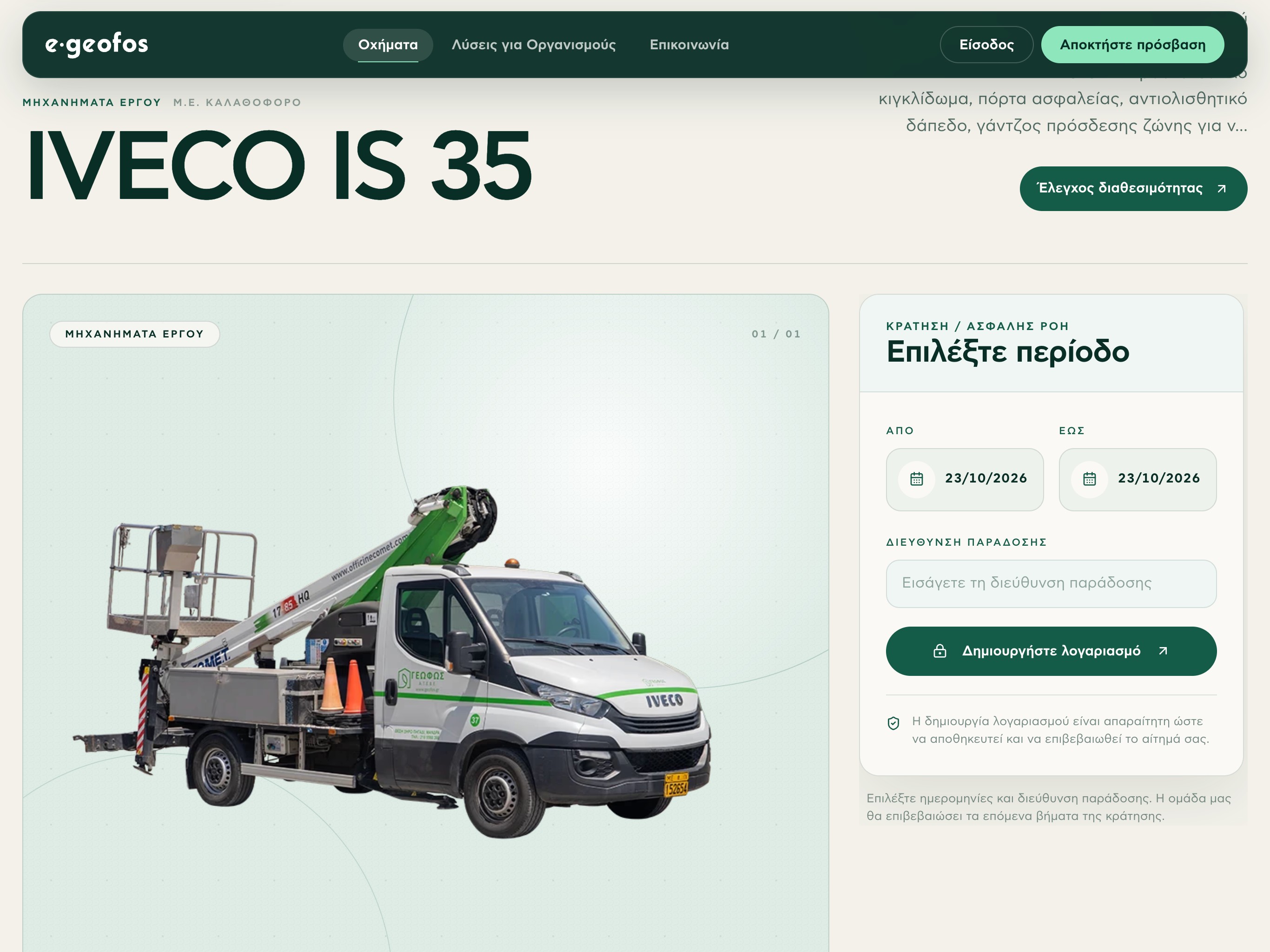
Public buyers have to justify a choice, so the catalogue keeps it fair: every vehicle card carries the same fields in the same places, and the filter rail counts what each category holds before anyone scrolls. Equipment is often sold on brochure images. Here each vehicle page is built on a photograph of the real unit, and booking asks for two facts, the period and the delivery address, with an account needed only to commit.
Counted before it closes
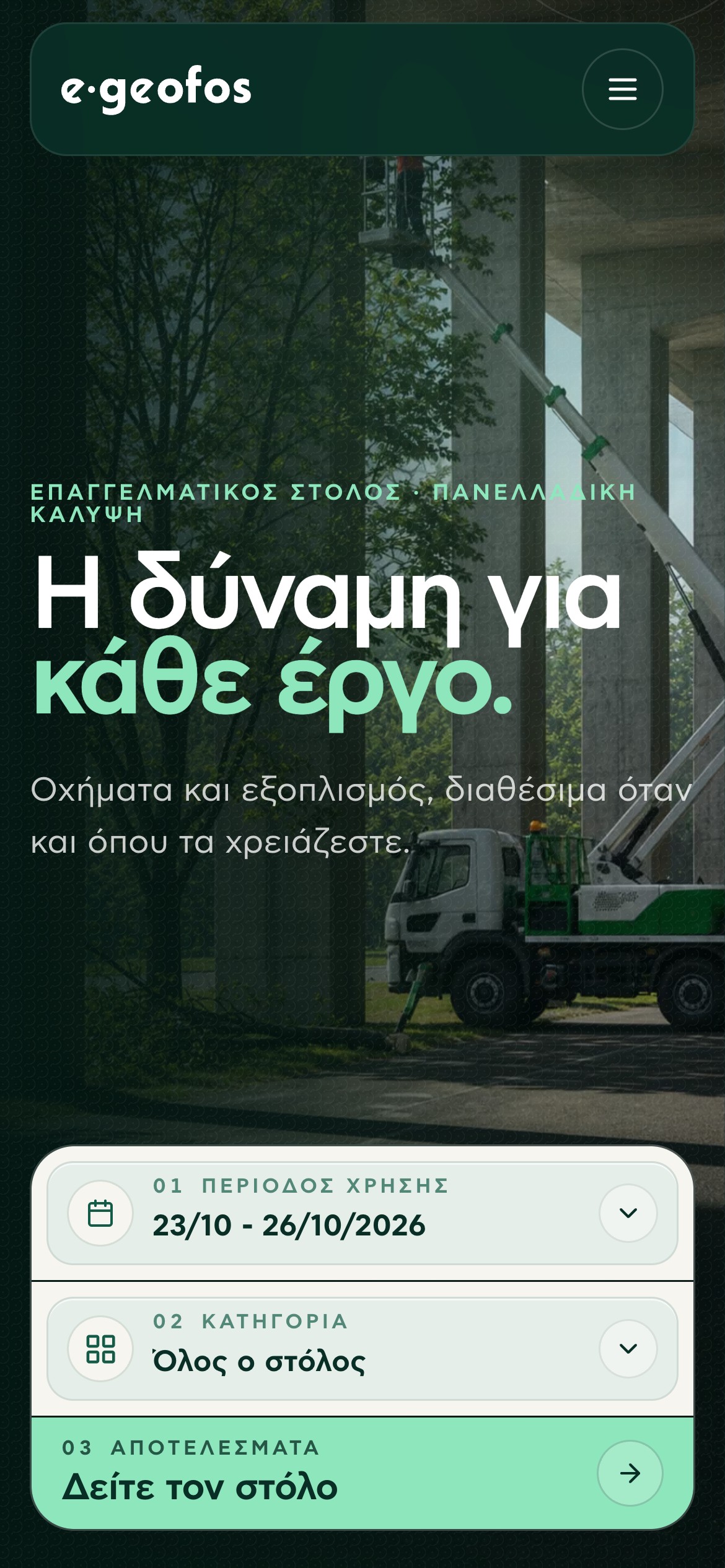
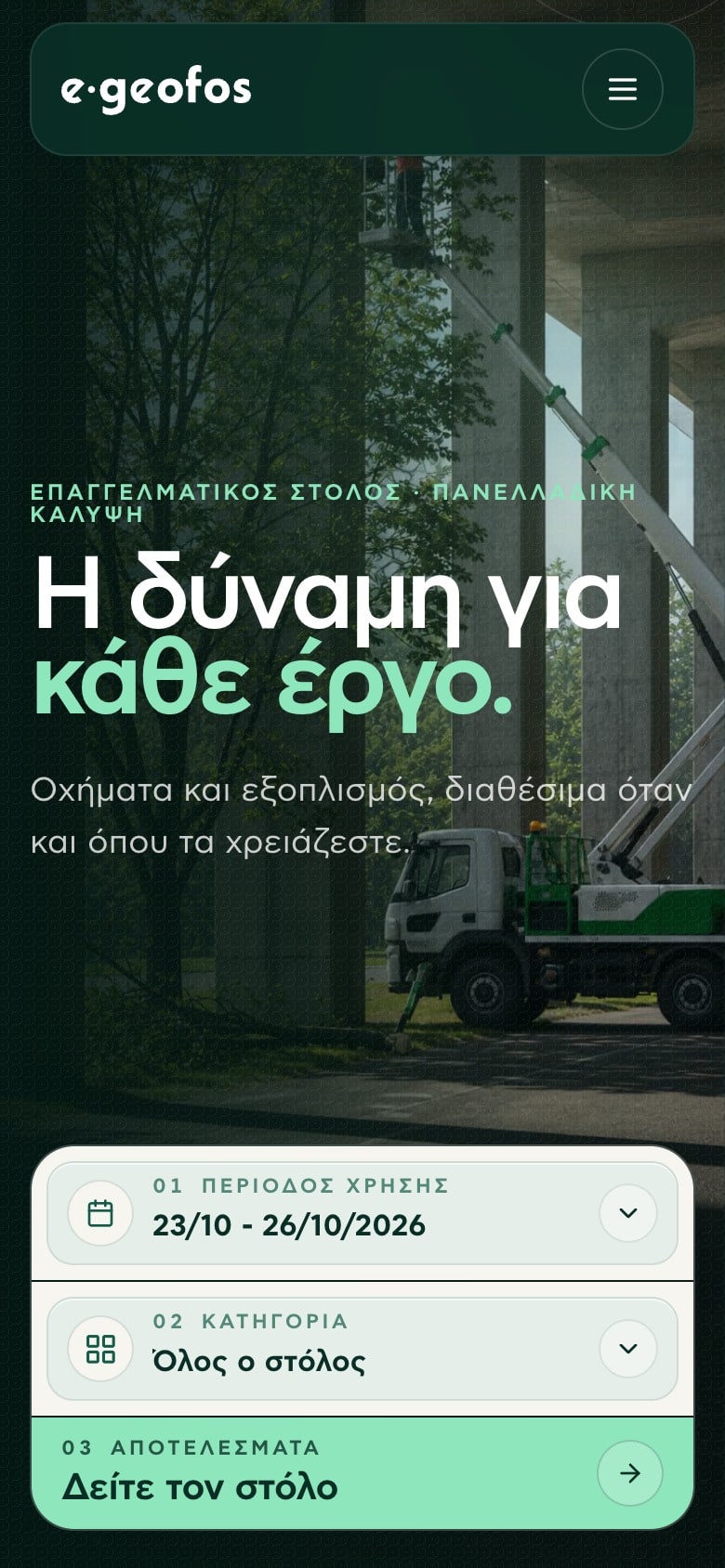
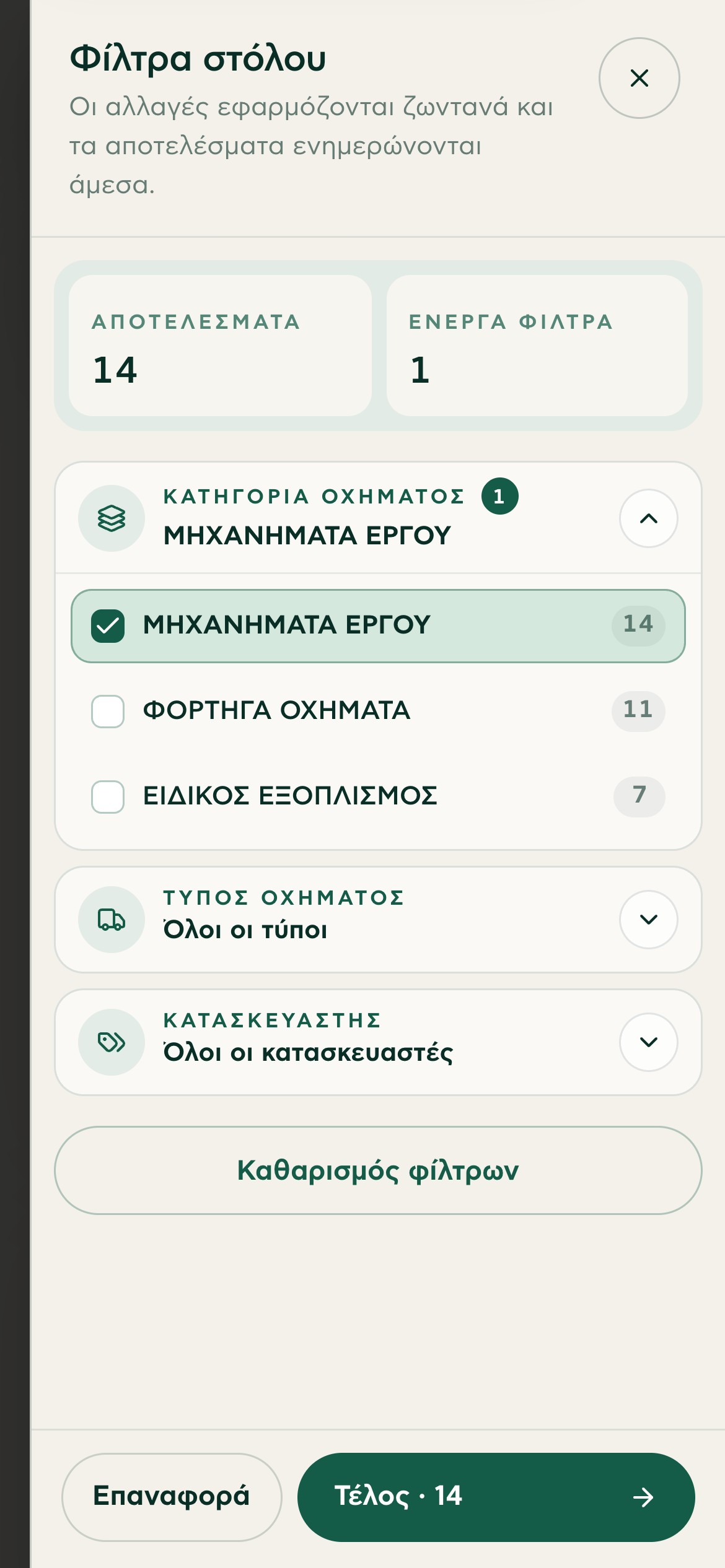
A request can start on site, on a phone. The search stacks its three steps into a column a thumb can reach, and the fleet's filter sheet counts as it is set: the results, the active filters and the closing button all show the same number, fourteen machines here, so nobody closes the sheet onto an empty list.

Promised by type, checked by vehicle
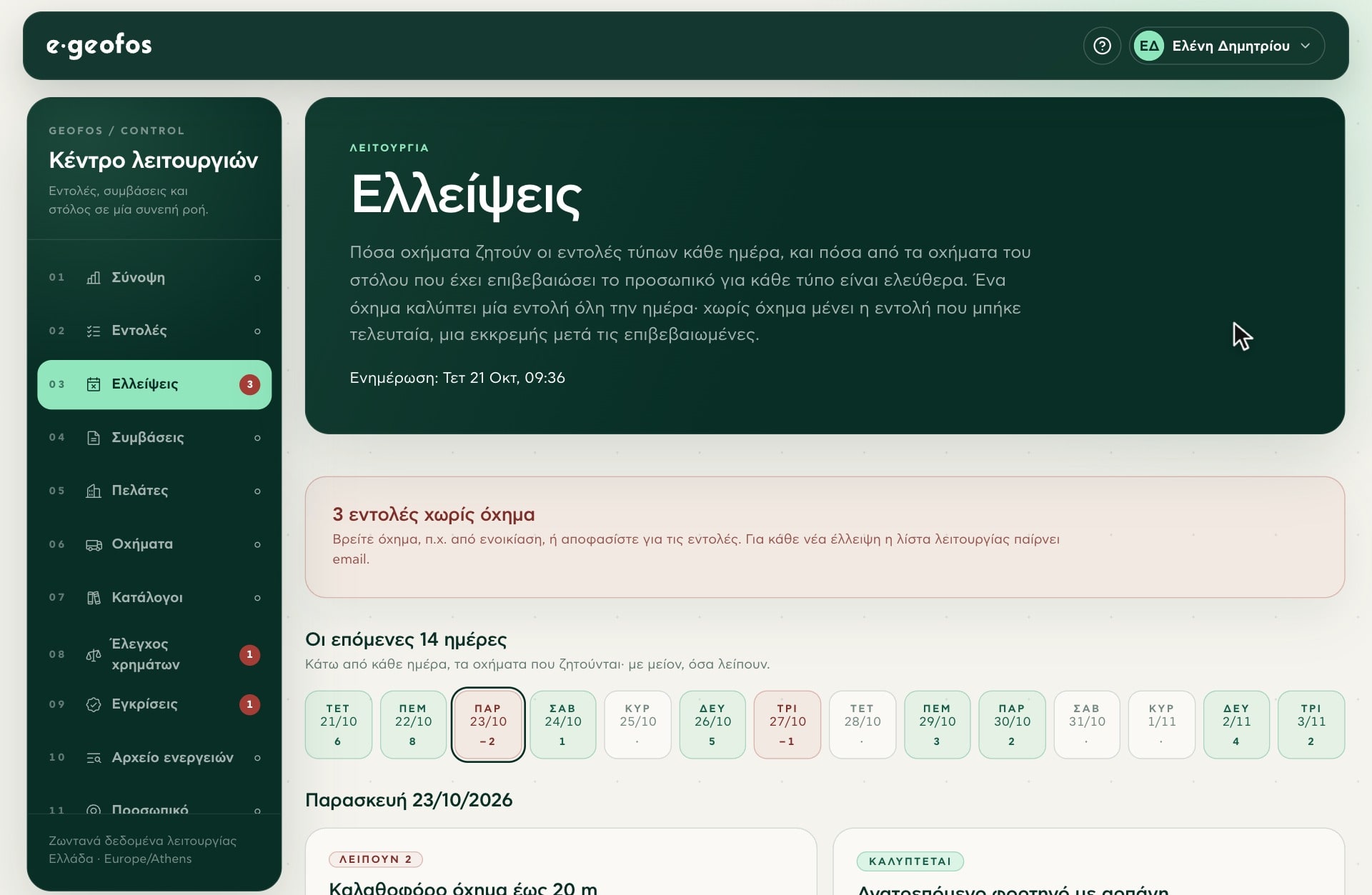
Framework contracts often promise a kind of vehicle, a basket up to 20 metres, not a particular one, so several public bodies lean on the same machines. The shortage board sets fourteen days of those promises against the vehicles the team has confirmed for each type. A short day shows in red with the number missing, its orders and vehicles beneath it, and the operations list gets an email in time to hire one in or rethink an order.

One week, every customer
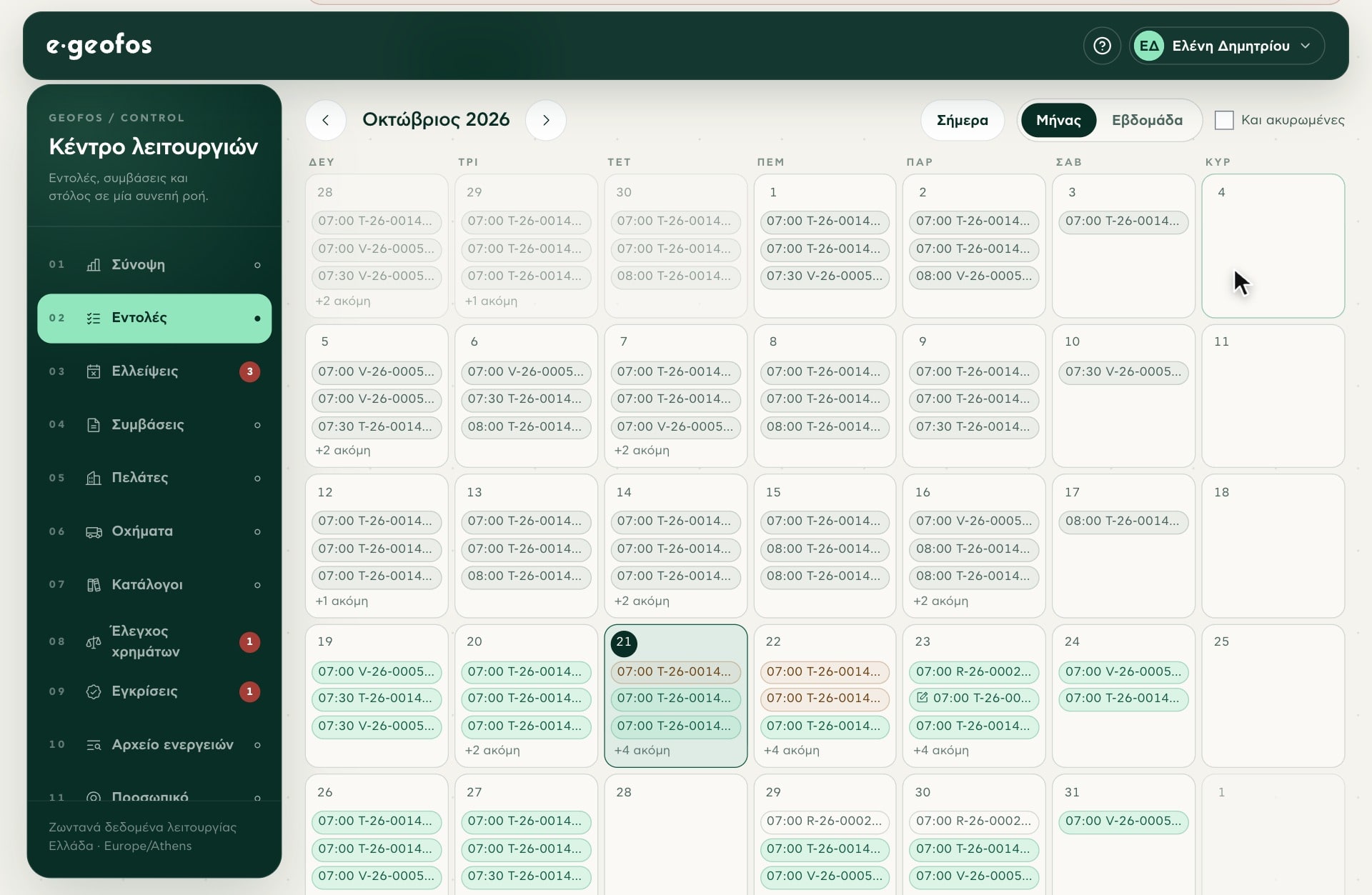
A dispatcher's question is who goes where, with what. The order calendar answers it across every customer at once rather than contract by contract, and each card carries the hours, the place, the machine, the operator, the crew and the status, so a week can be checked in one pass. Orders that still need a decision stand out in their own colour before the day arrives.

Every euro has a decision
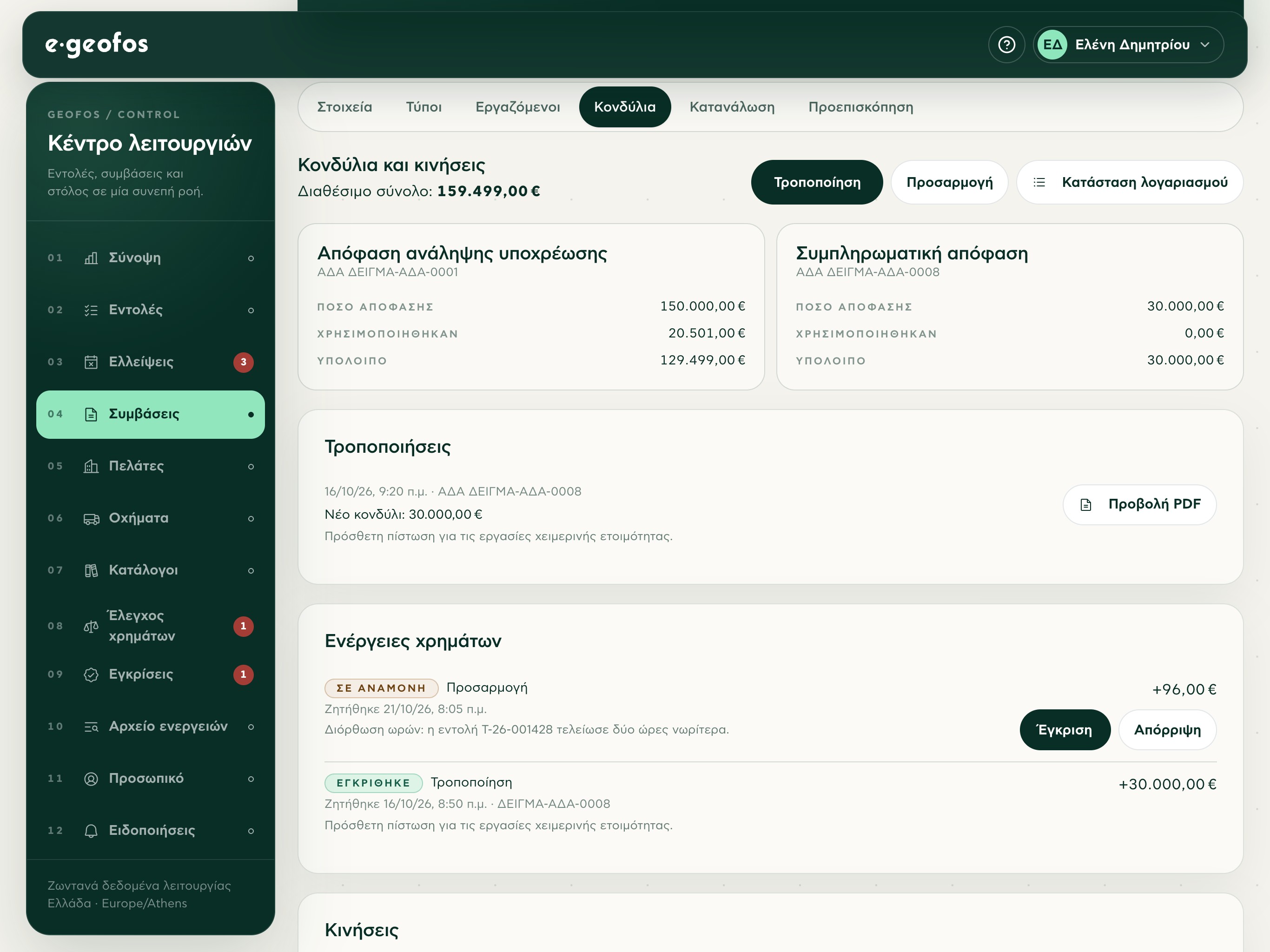
Municipal spending answers to published decisions. In the operations centre each decision stands as its own fund, with its reference, its amount, what has been used and what is left. Every charge names the decision it drew on, amendments arrive with their documents, and a correction waits for a second person to approve it, never the one who asked.

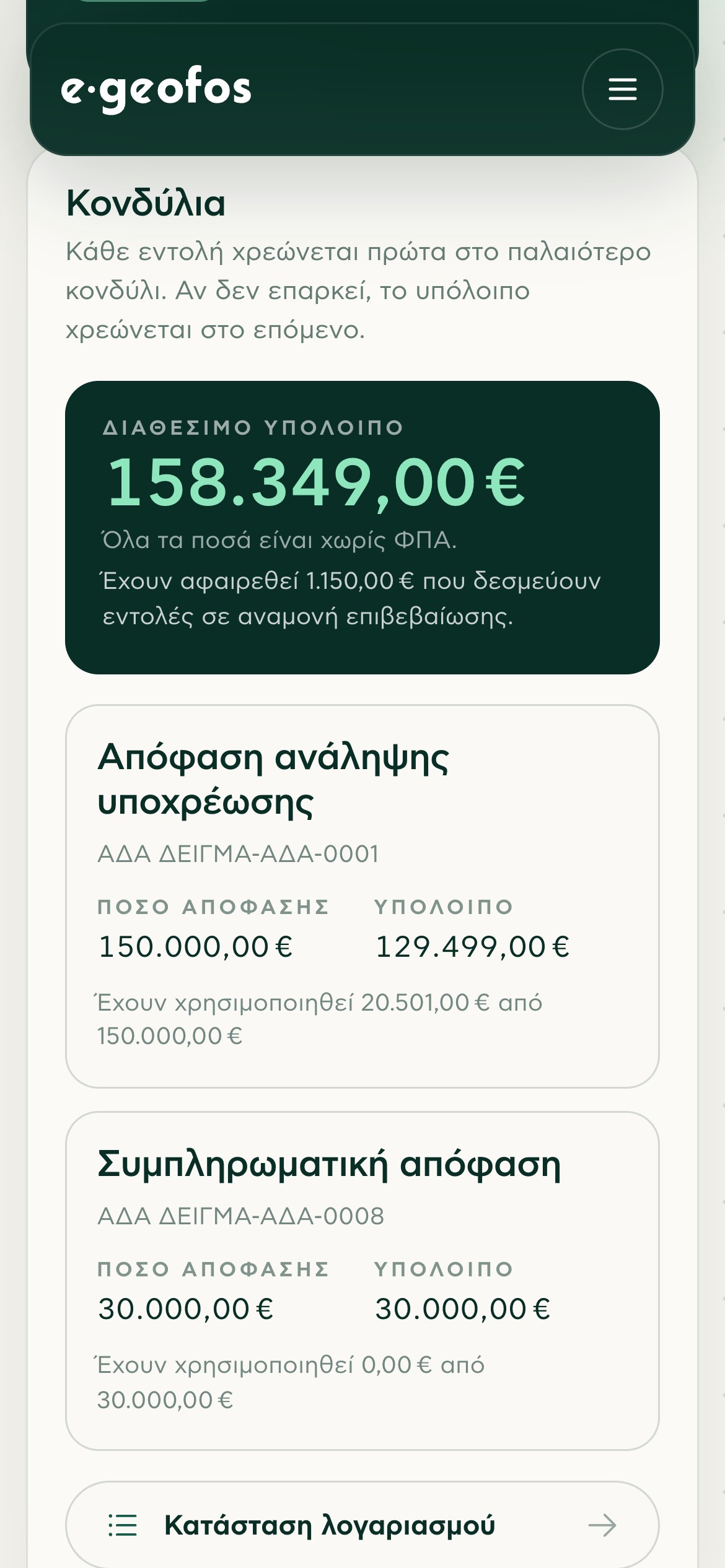
The real number, first
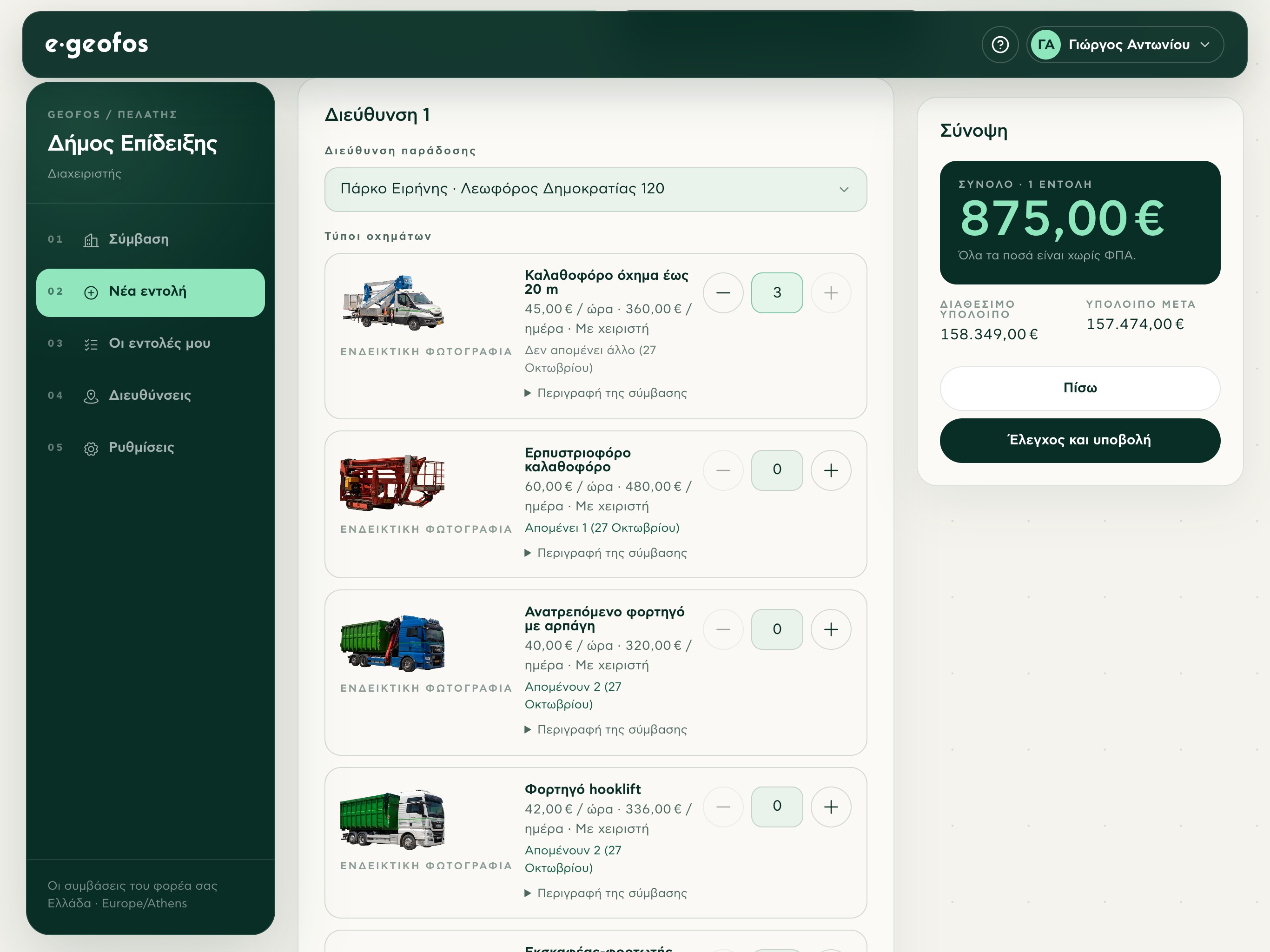
Before choosing anything, the officer placing an order needs to know what the contract has left. The balance at the top of the customer's home already subtracts orders still waiting for confirmation, and every amount is stated without VAT. In the order builder the steppers use the tender's own wording and prices and count the day's cap down as they rise, so an order the contract cannot carry is never built.


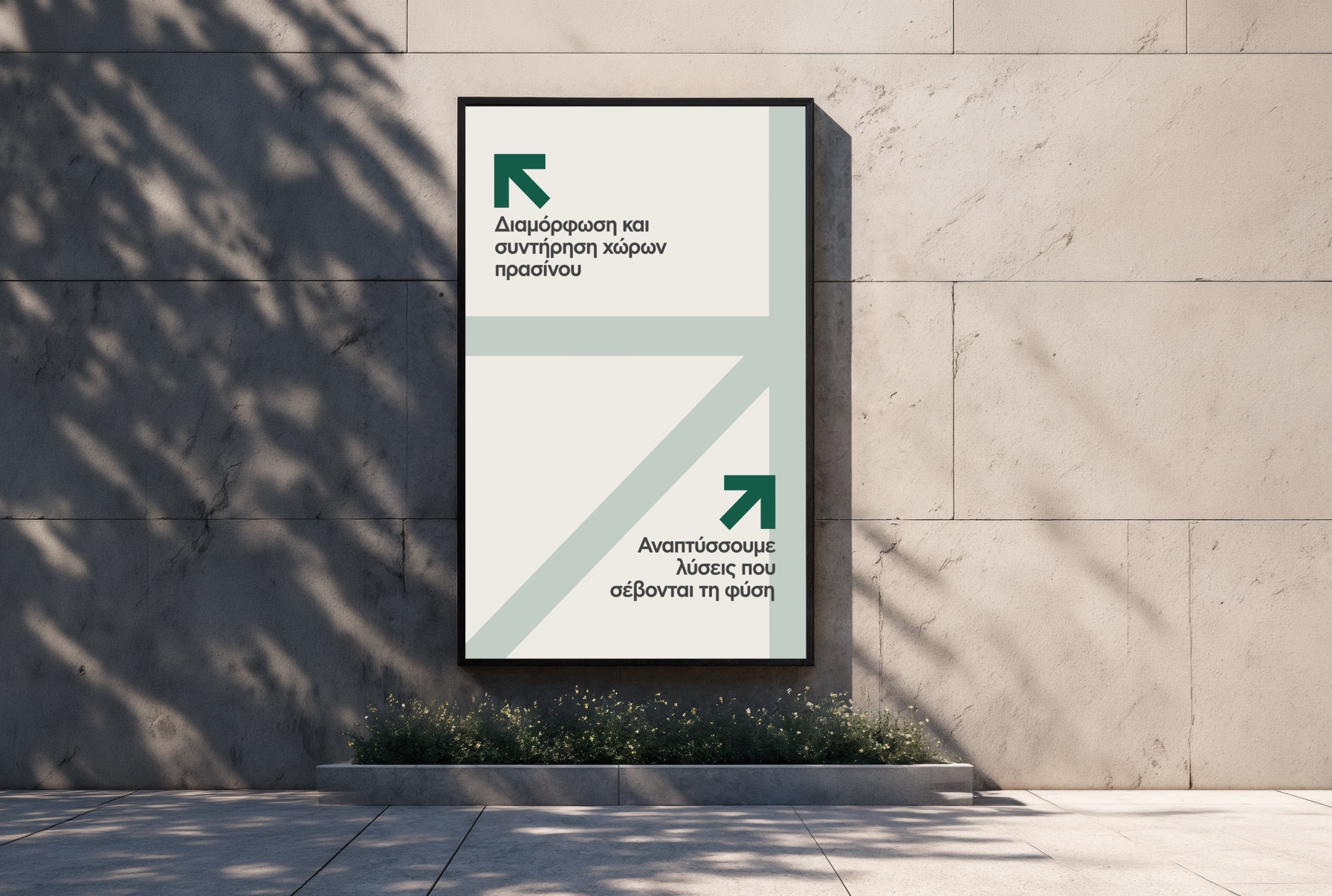
Simple enough for a truck door
A municipal contractor is judged in public, on posters, signs and its own vehicles, often from across a street. The mark is one continuous house line with two leaves inside it, the built environment and the natural one that Geofos looks after, and it keeps its shape from a truck door down to a phone screen. Pressed into plaster with no colour at all, it still reads by its shadow.
The result
A brand on the outside and the operating system of the business on the inside, designed and built by one team. A municipality meets the same Geofos on a truck door, on the corporate site and on the platform where it books machines, and behind them customers, contracts, money and the fleet sit in one system.
Building something like this?
Start a project.