Omnimedica
Omnimedica builds voice-first software for medicine, starting where a Greek radiologist works: dictating a report in a language dense with compound terms, declensions and abbreviations. Dictation is only the first step of that report. Editing, review and approval follow, and the clinician's judgement has to stay in charge of all of them.
We built it at every layer as one piece of work: DESIGNCO-MED-1, the Greek medical model at its core; the Auraspeech platform and app around it, with views for doctors, editing teams and managers; and the brand, website and films that explain it.

The voice is in the name
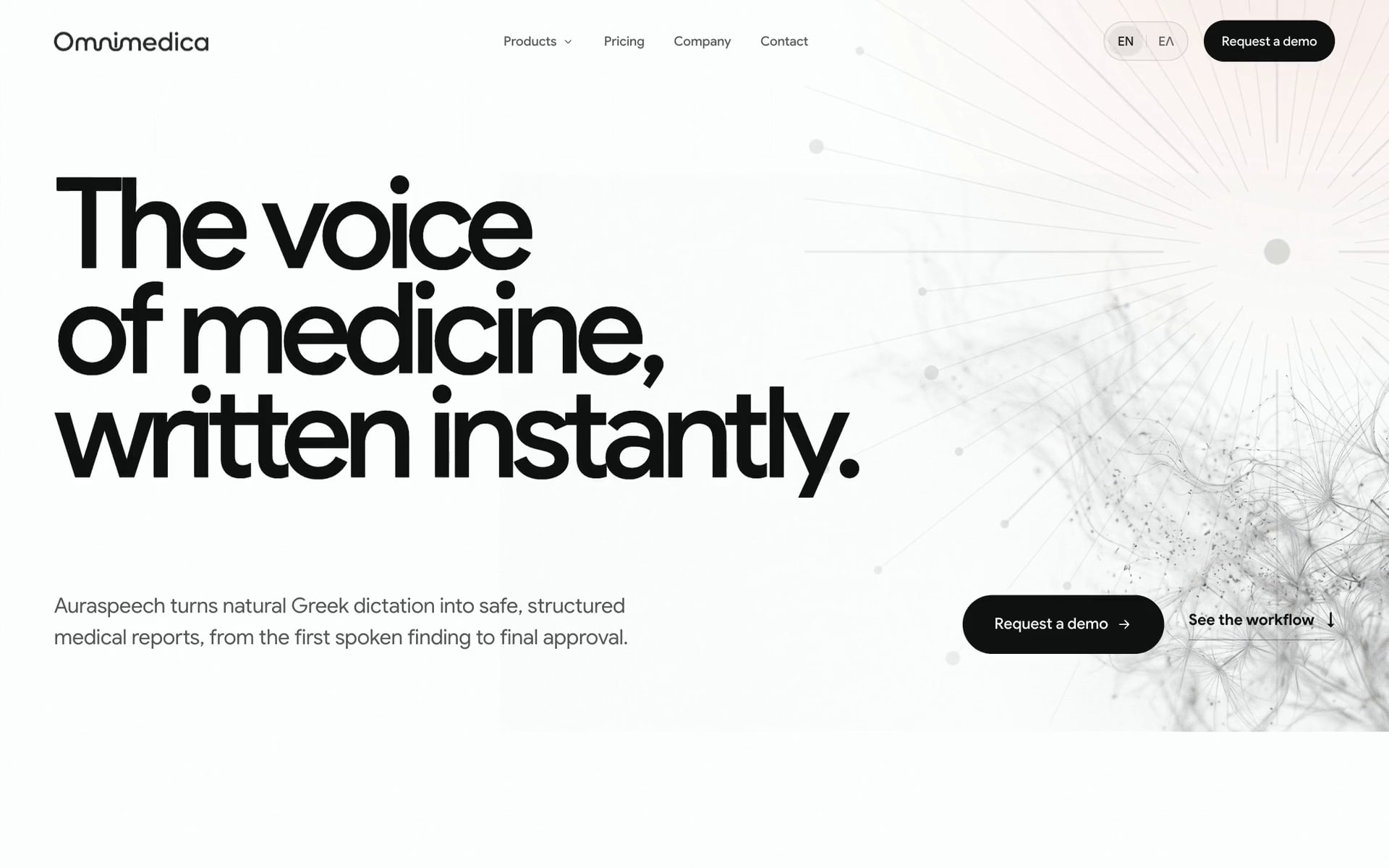
Healthcare identities default to blue, crosses and stethoscopes. Omnimedica carries its subject in its lettering instead: the joined letters mni of the wordmark read as a sound wave, and the O alone becomes the app's icon. The palette keeps to ink, paper and a concrete grey, with one burnt red saved for the played waveform, the safety gate and the title that opens a page.

The work makes the case
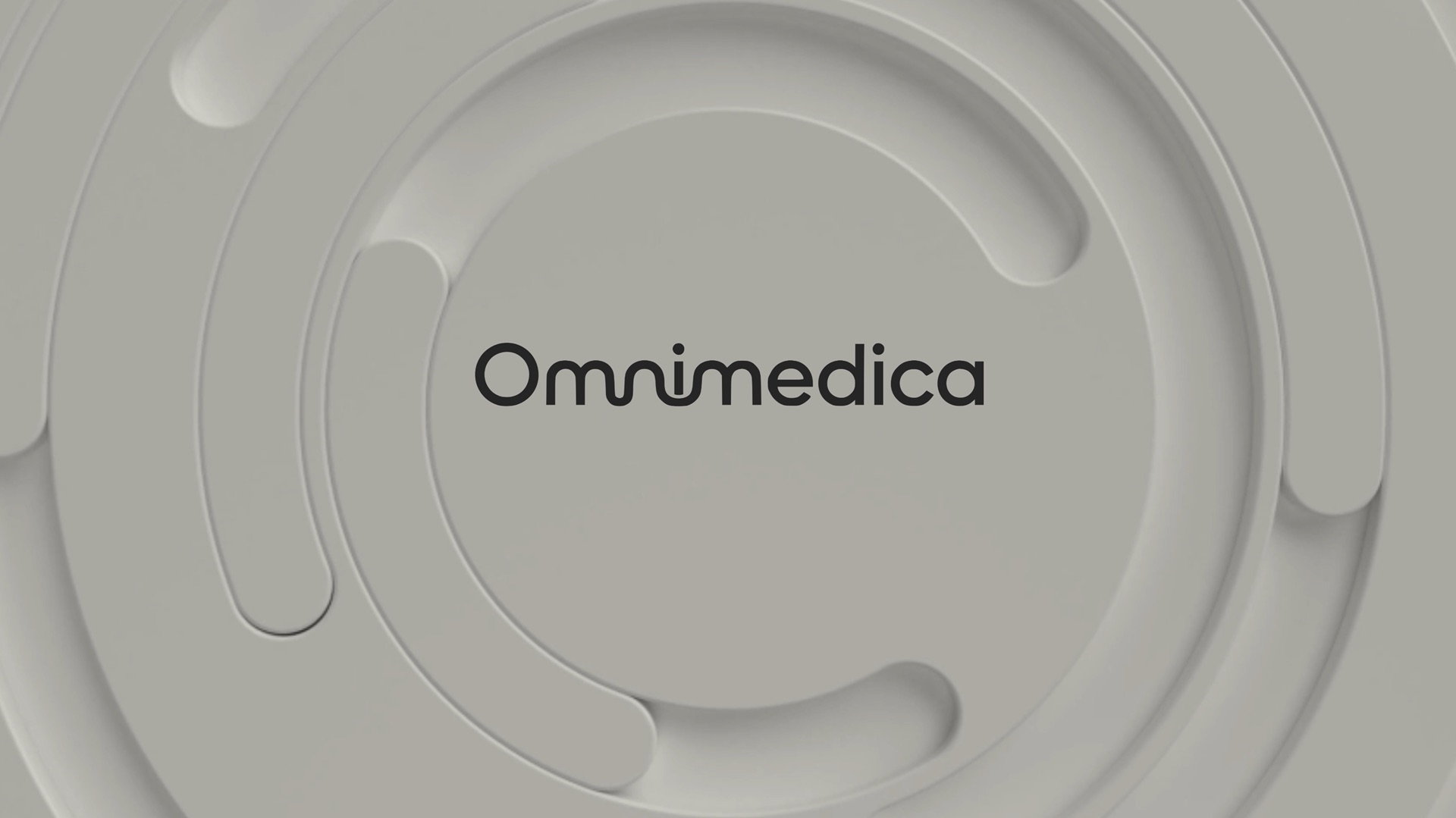
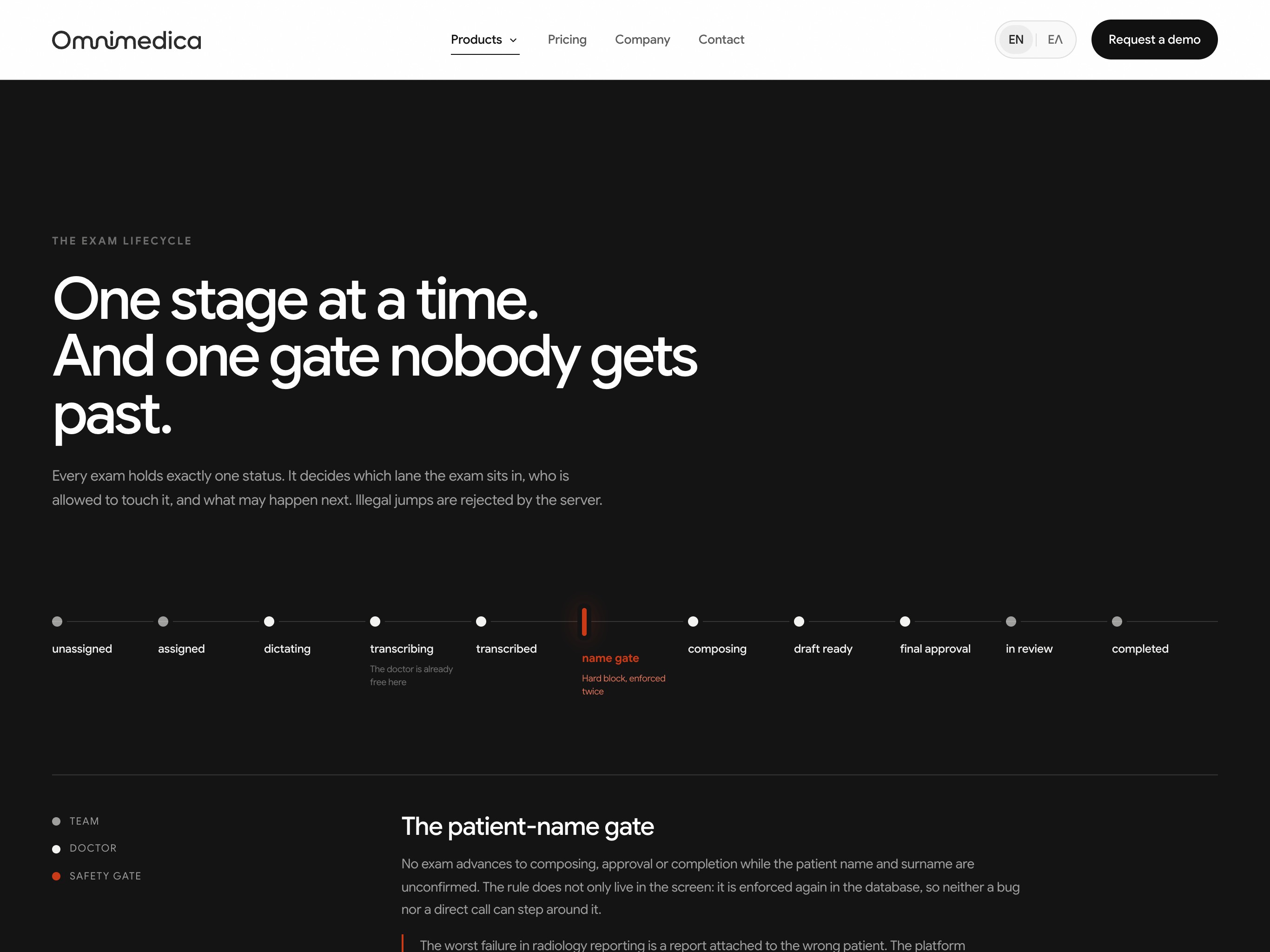
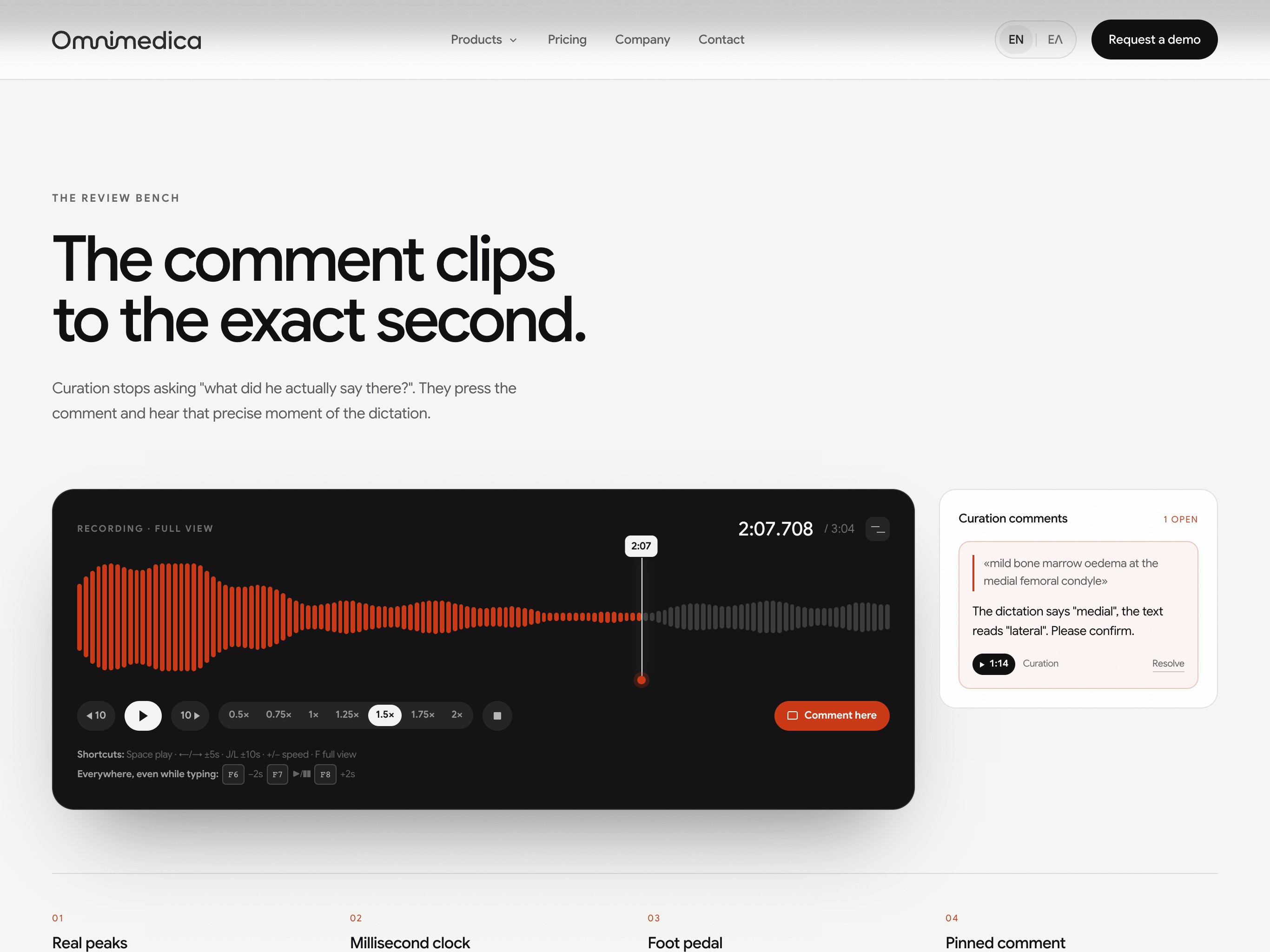
Medical websites tend to open on stock photographs of smiling staff and to argue safety with badges. This one argues with the work. The exam's whole life is drawn as one line of eleven states and stopped at a single red gate until the patient's name is confirmed, a rule the platform enforces in the screen and again in the database. A curator's question is pinned to the second of the recording it is about.


Structure arrives after the thinking
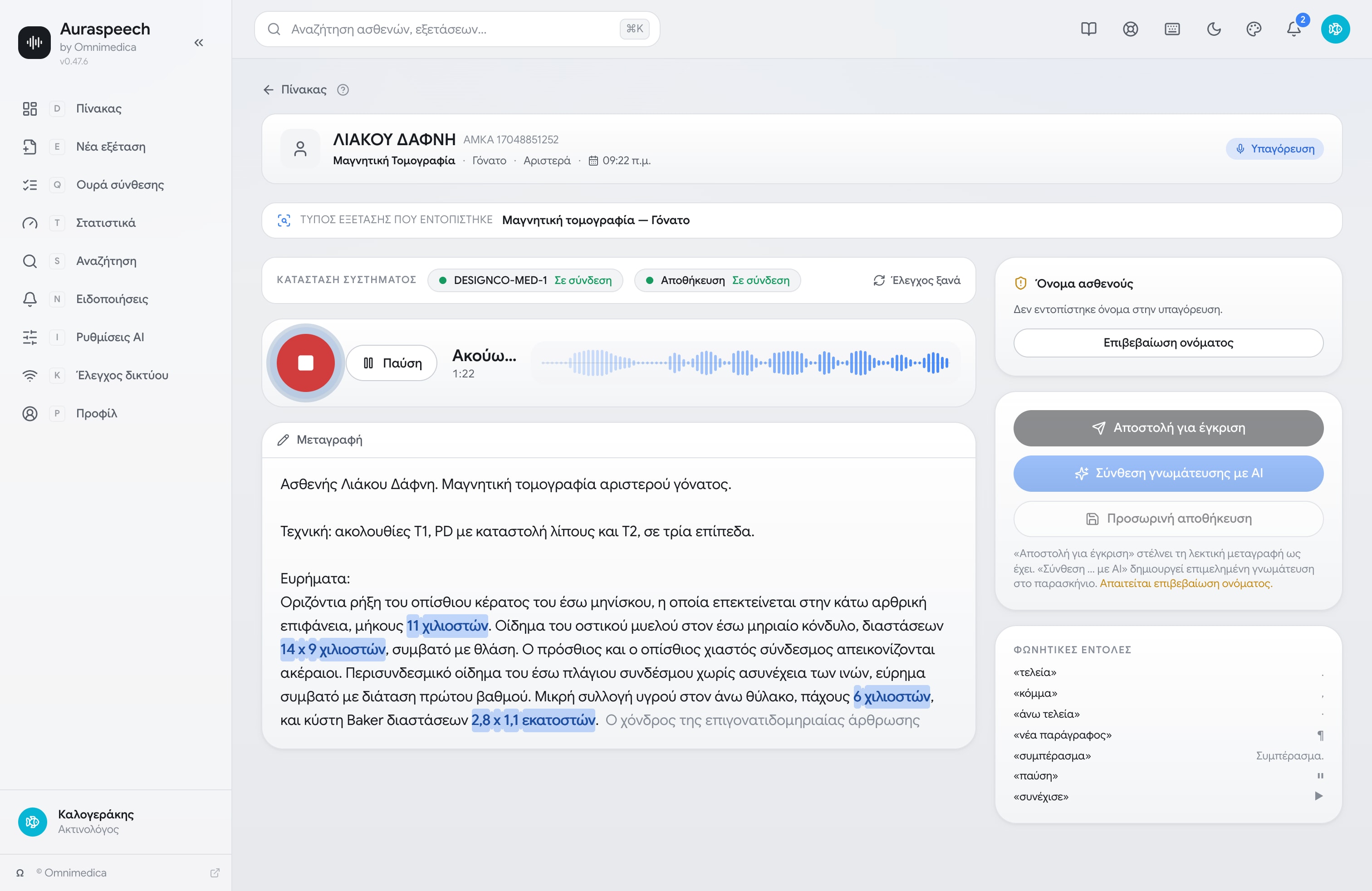
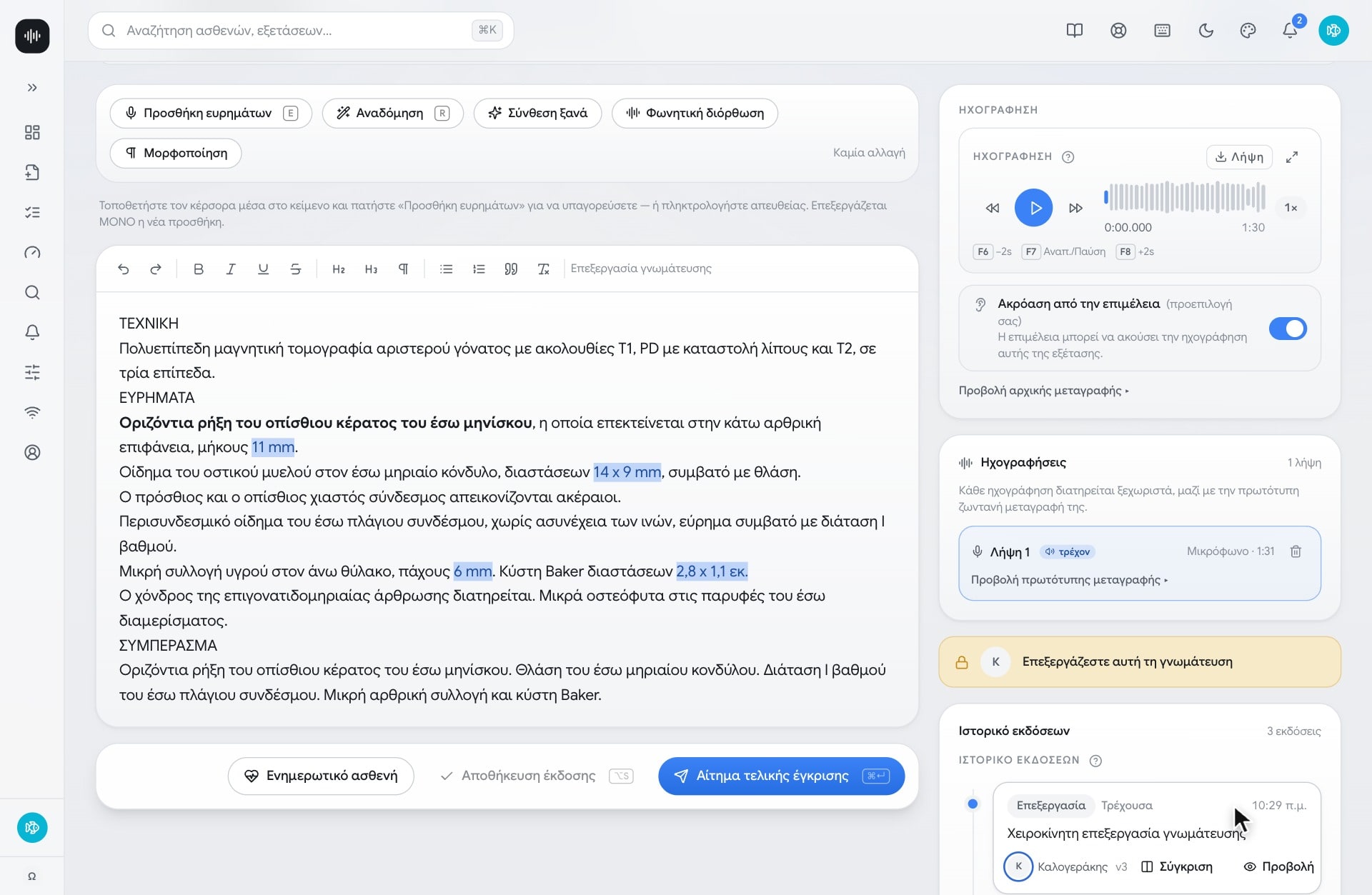
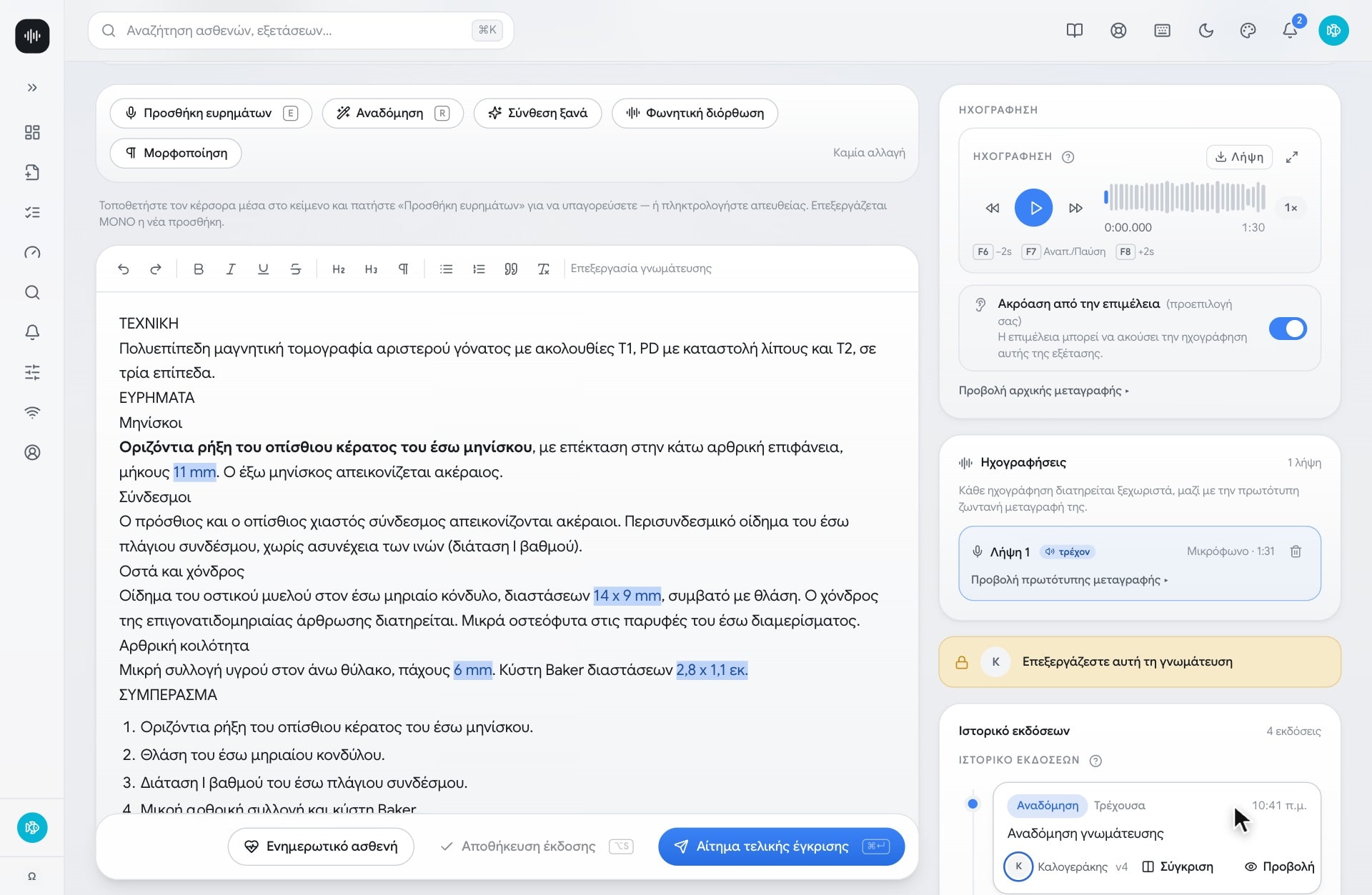
A dictation follows the doctor's reasoning; a report is read region by region. Auraspeech keeps the two apart. The transcript forms while the doctor speaks, every measurement marked, so a wrong millimetre is caught in the sentence that produced it. Then one instruction regroups the findings under anatomical headings, from the menisci to the joint cavity, numbers the conclusion and keeps every measurement as spoken, while the version before stays in the history.

Risky fixes ask twice
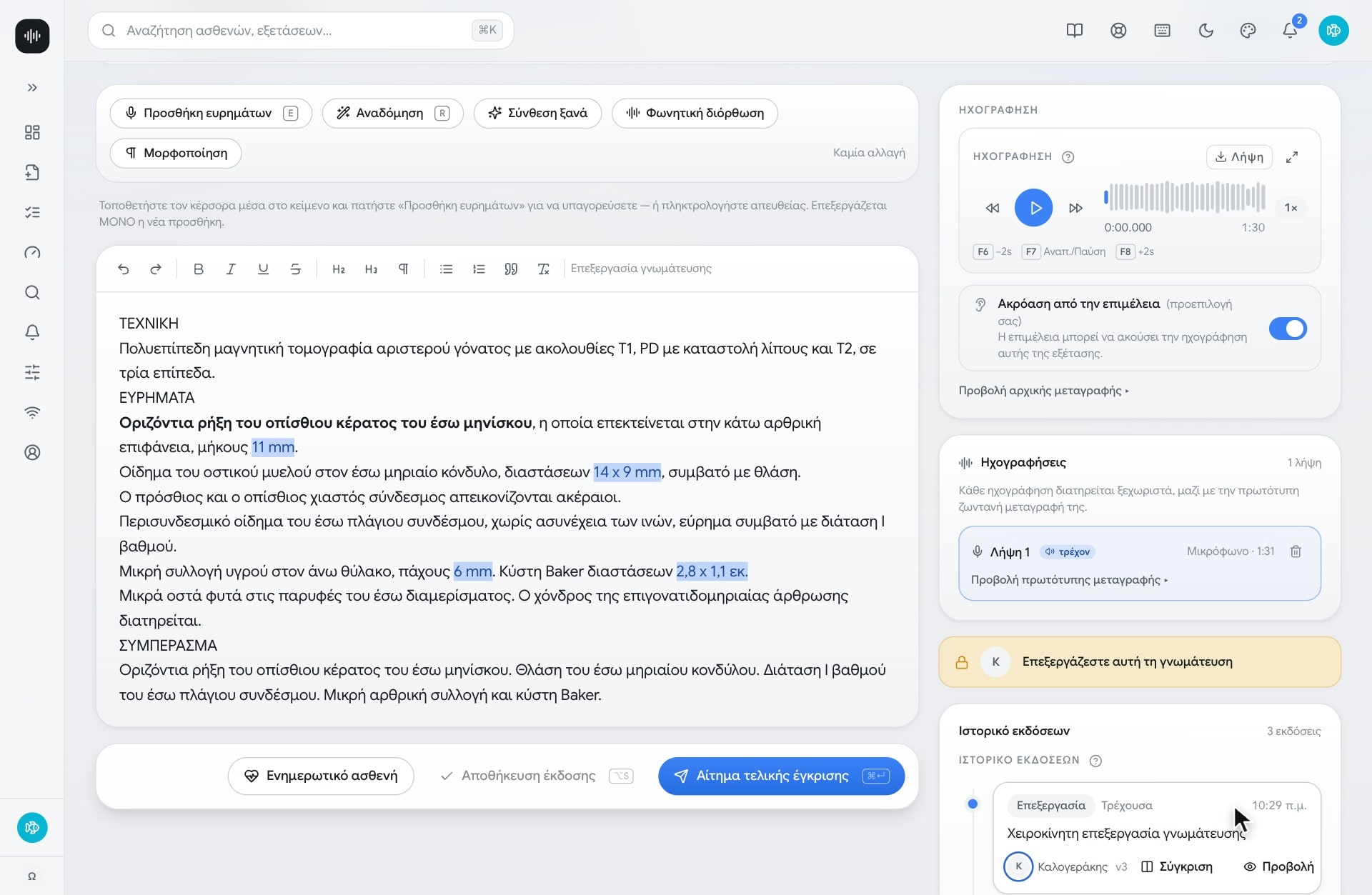
Editing a report usually means retyping a phrase and hoping nothing else moved. Here the doctor selects the words that came back wrong and the corrections arrive in place, each shown against the original. A suggestion that would change a measurement, a side or a level is marked and needs a second press, because those are the slips that change a finding. The fix is kept as a new version, and the one before it stays.

One dictation, two readers
A formal report is written for the referring doctor; the patient needs the same findings in everyday words. Auraspeech writes the patient's version from the finished report, so it starts from exactly what the doctor concluded. The meniscus becomes the cartilage disc on the inner side of the joint, while every measurement, side and level carries over unchanged, in a neutral voice. The doctor reads it before it is kept with the exam.
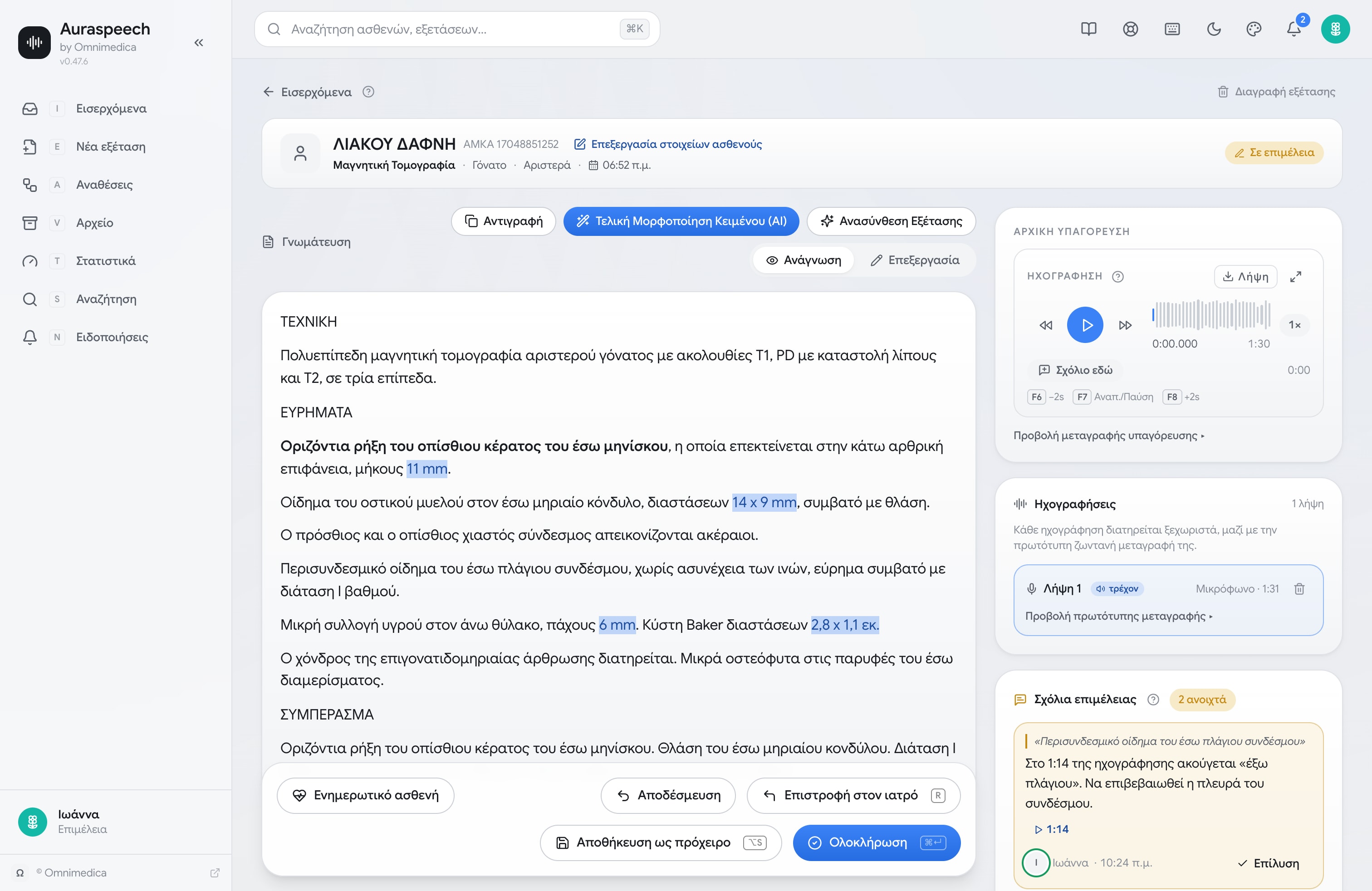
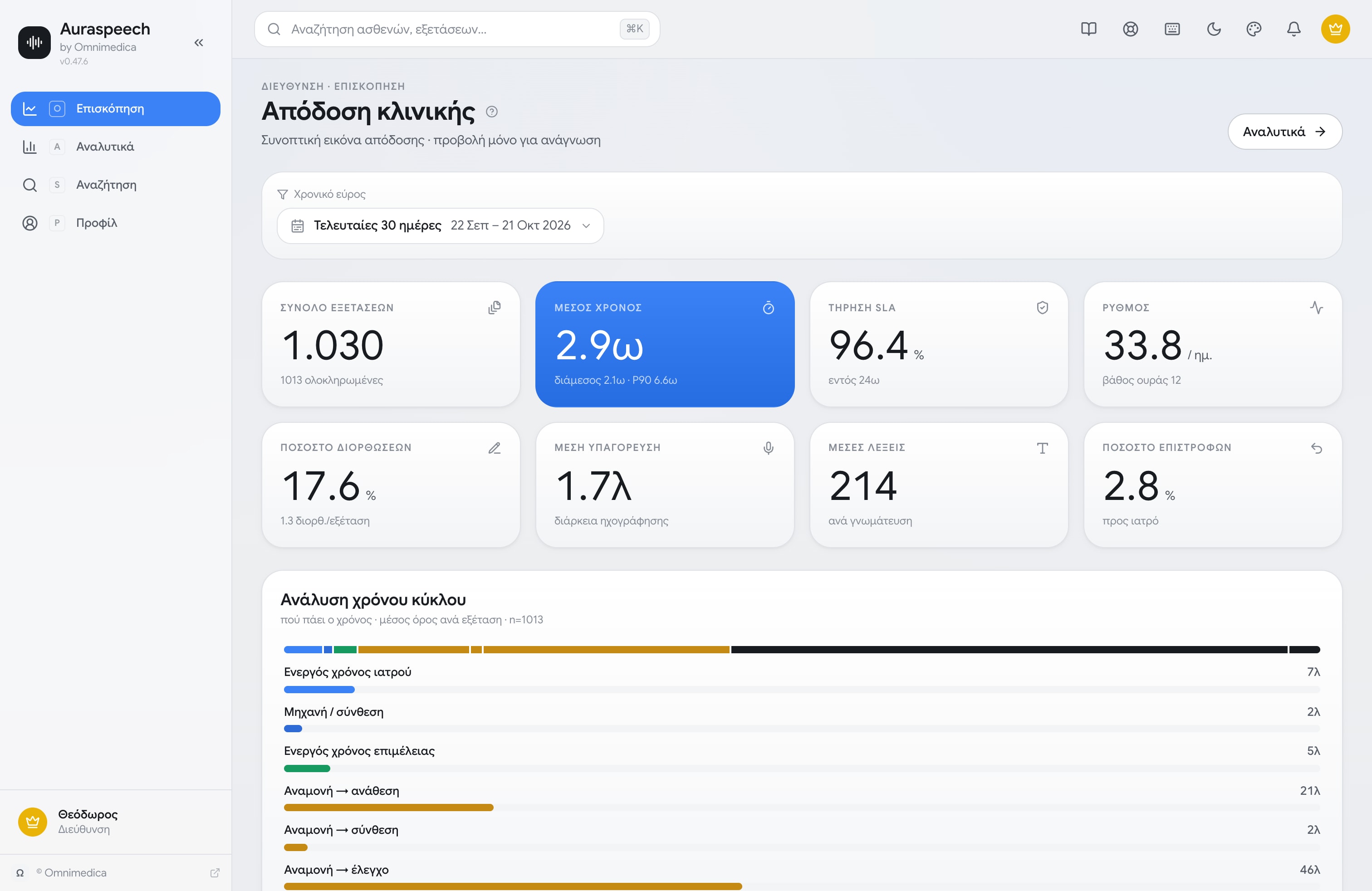
Not every task is the doctor's
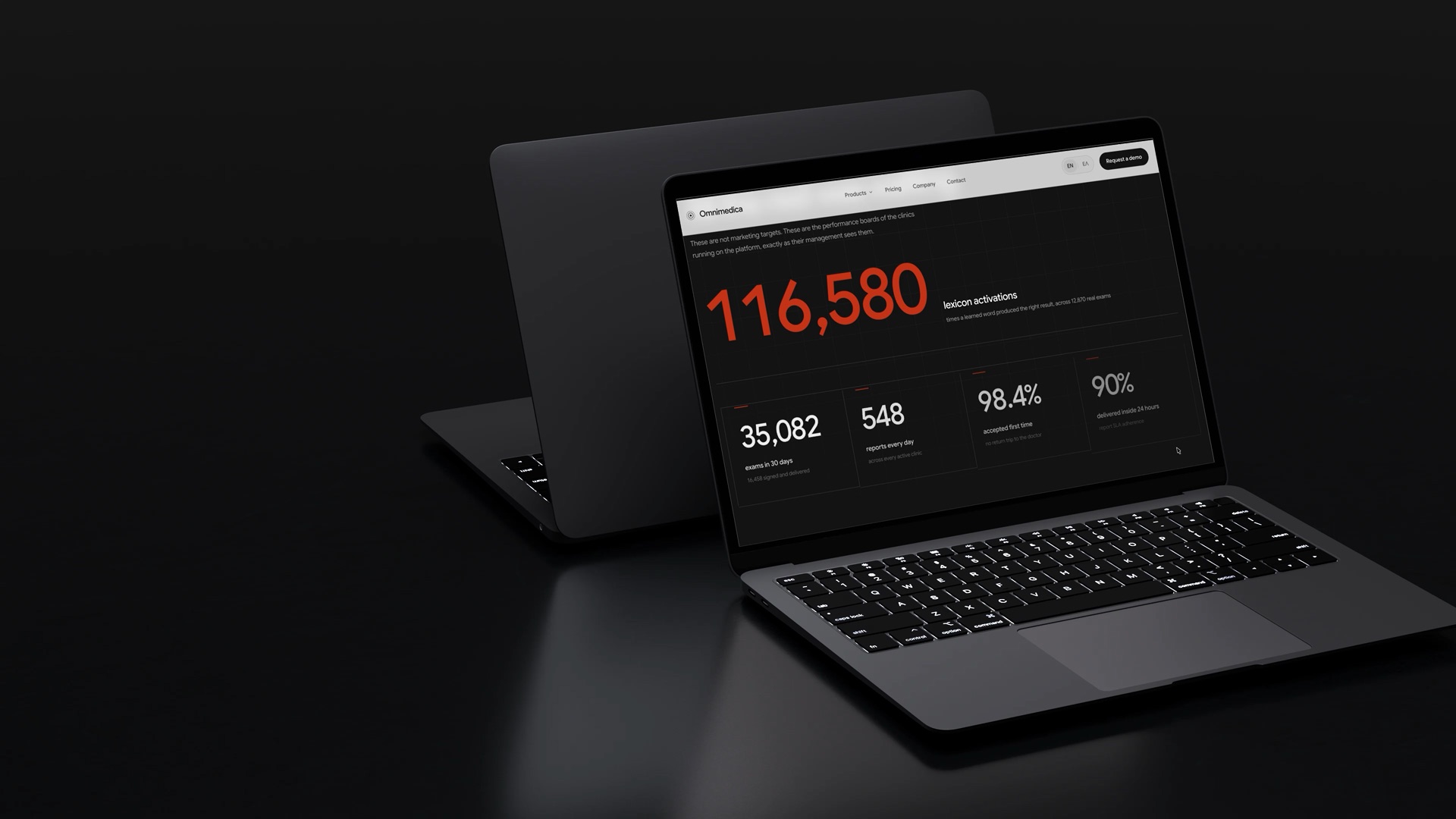
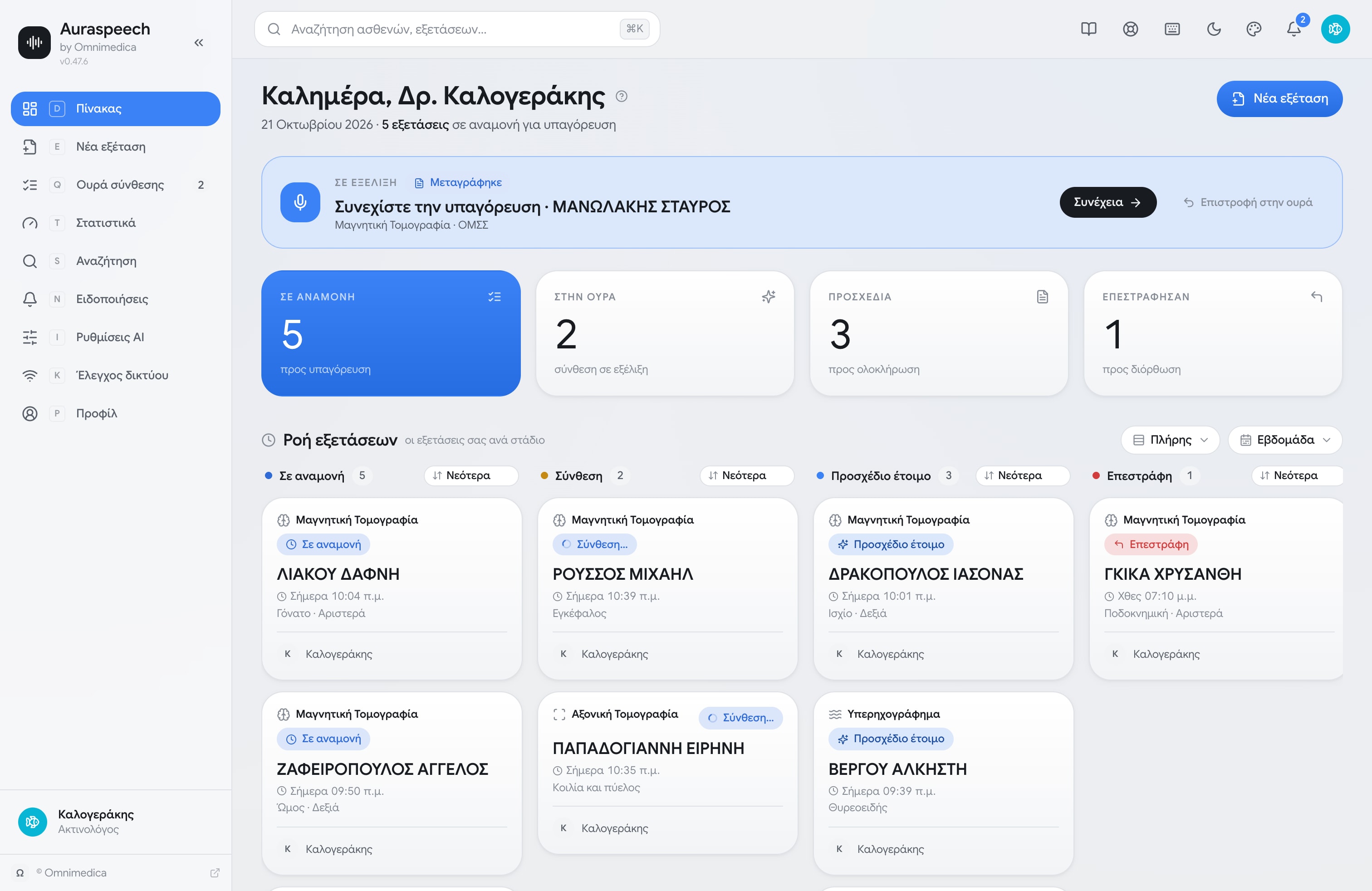
Reporting tools tend to load every task onto the doctor: dictation, formatting, correction, chasing. Auraspeech divides the work by role. The doctor's board opens on the exam left mid dictation and counts what waits at every stage. The editing team checks the report against the recording and sends a question of side or size back to its author. Management sees where an exam's time goes, in a view that cannot change a report.
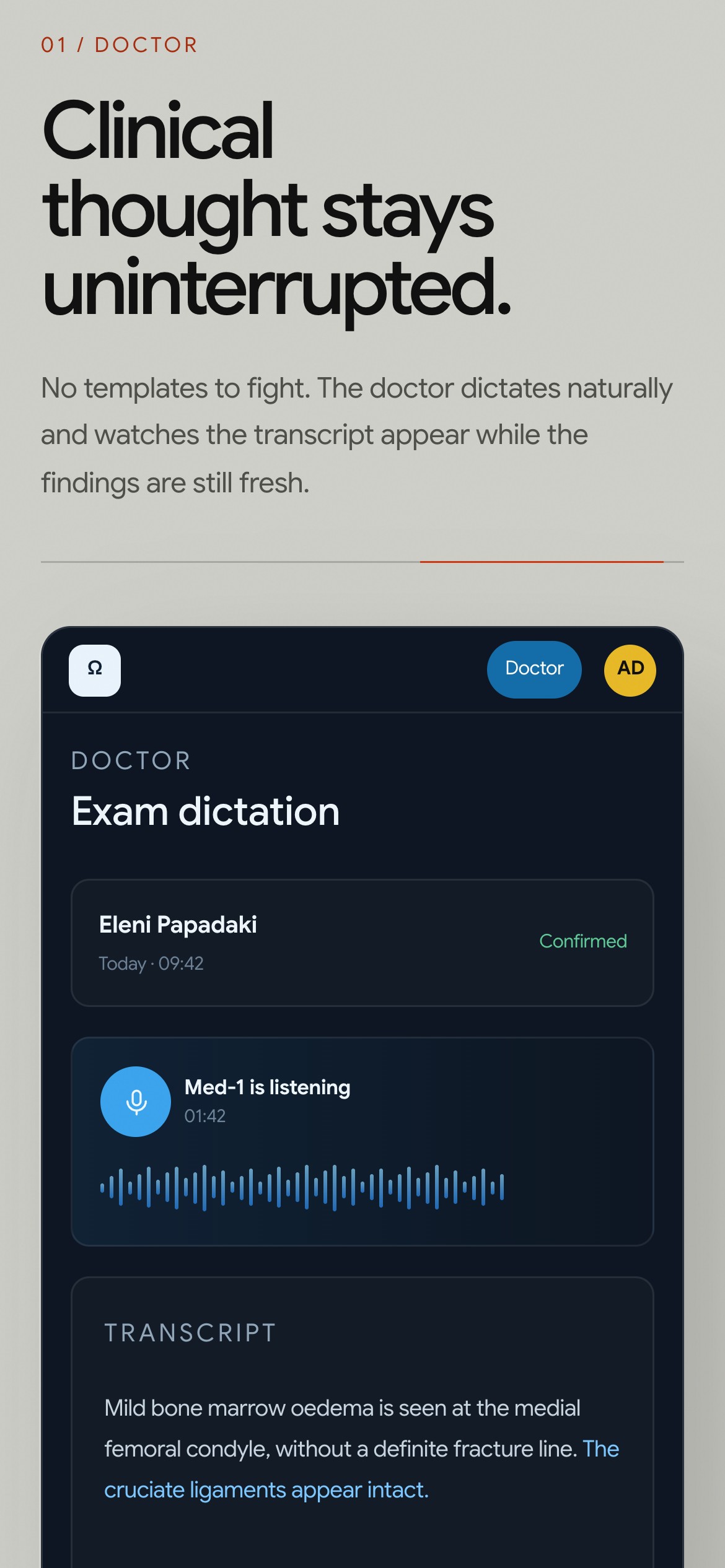
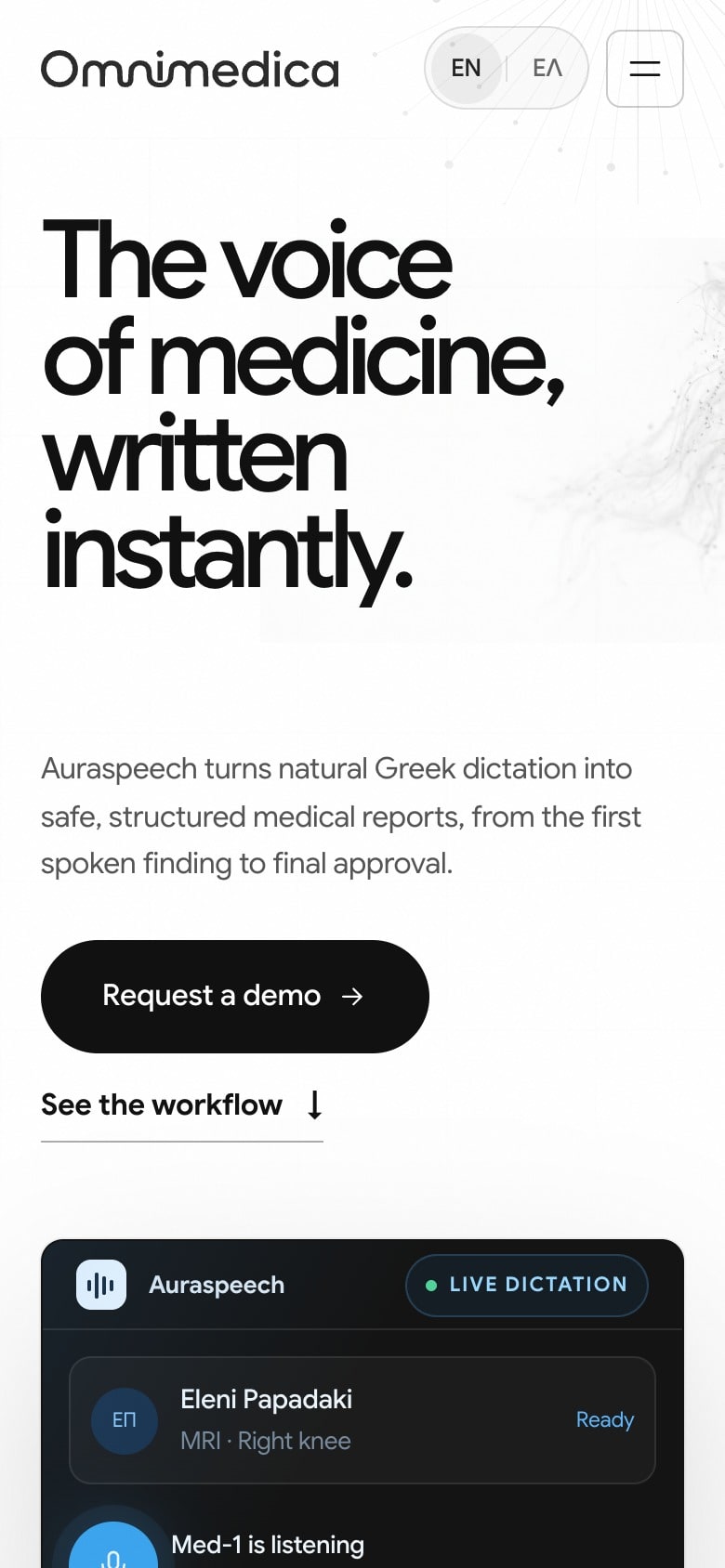
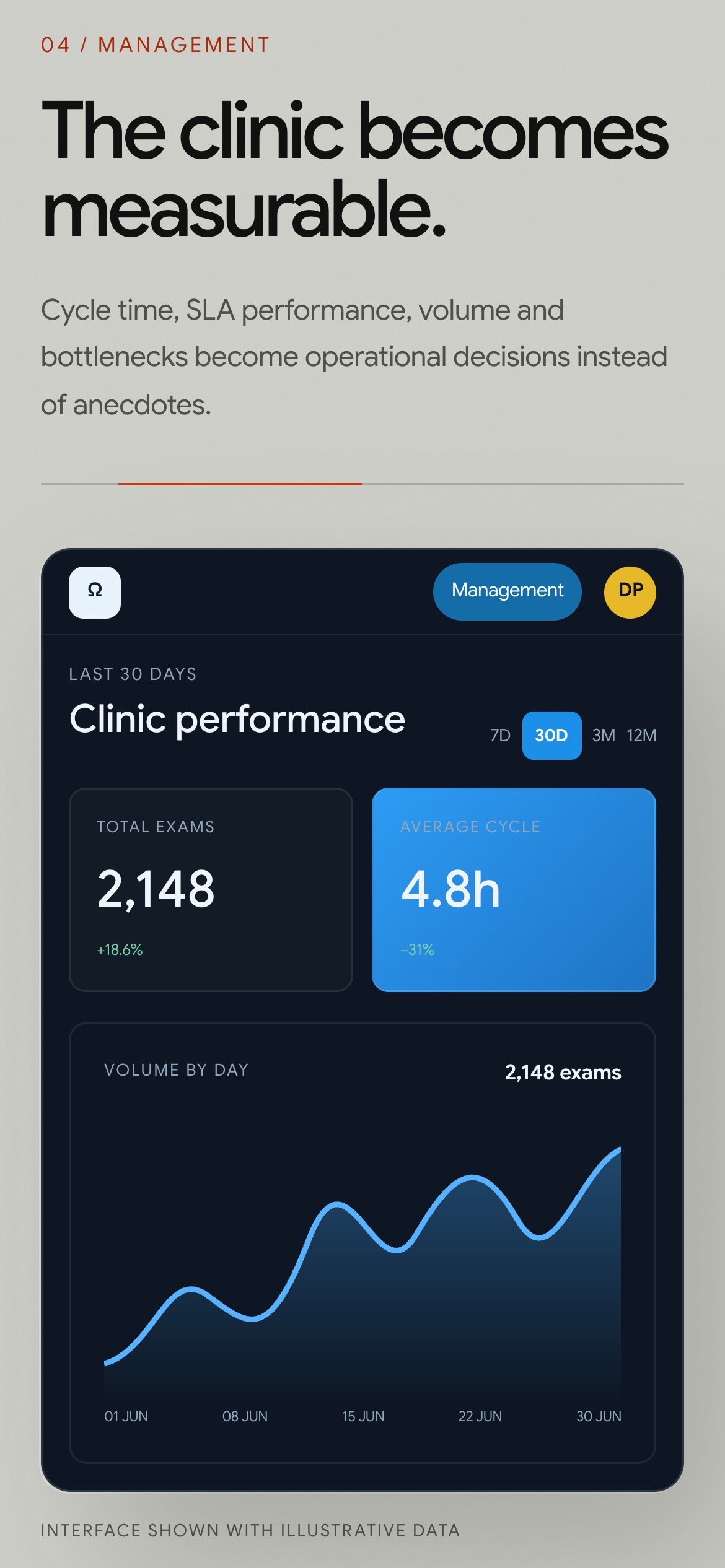
Recomposed, not shrunk
A role by role story suits a narrow screen. On a phone each role becomes a short chapter with its own headline and its own window, and each window is laid out again for the width instead of scaled down: tiles reflow two by two and the chart keeps its axis, so a number stays readable in the hand instead of turning into texture.
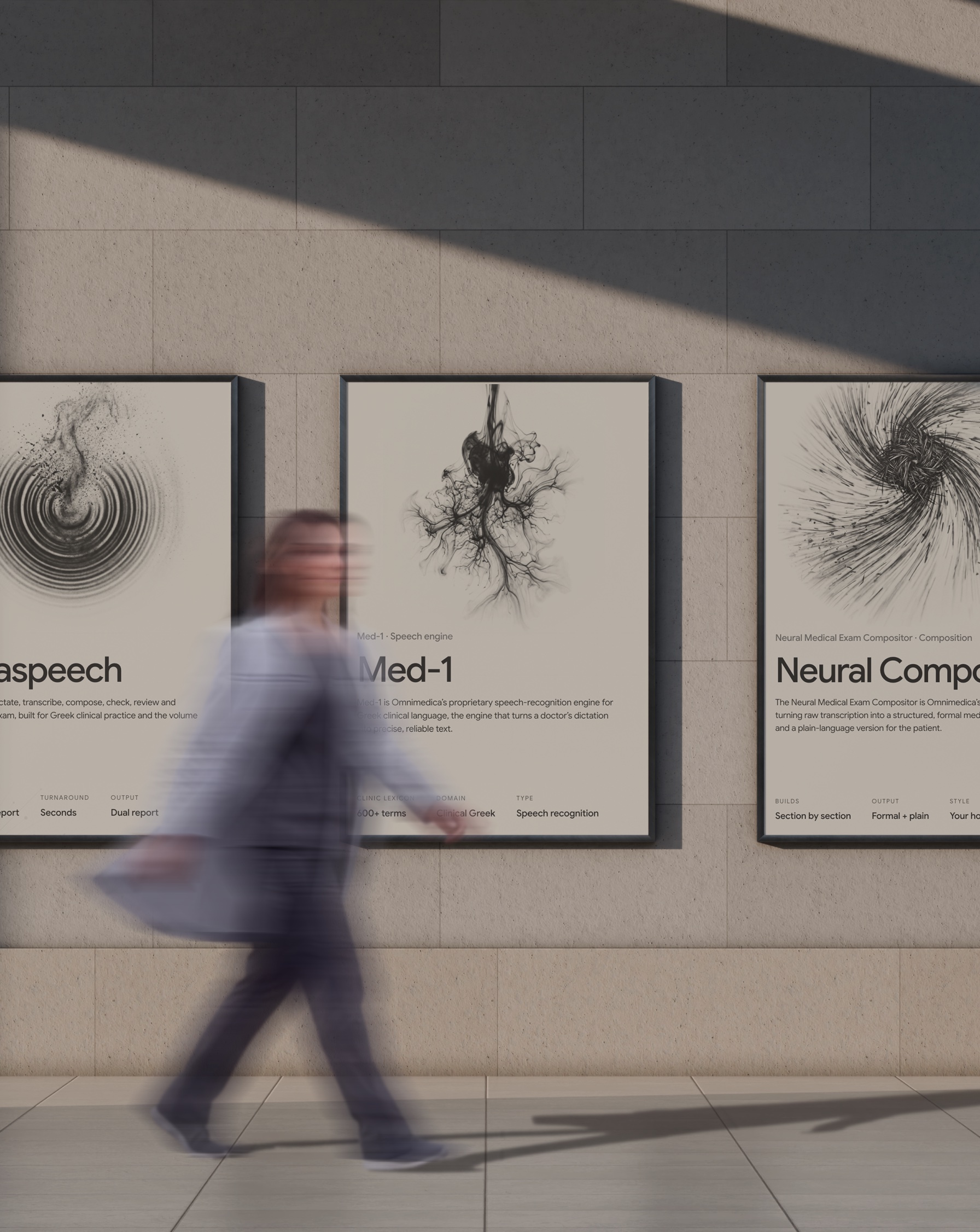
Ink plates keep the family together
Three related products are easy to confuse in a sentence. Each gets one ink plate, ripples for the voice, roots for the language and a swirl for composition, on the same concrete stage with its own coral shape and the same grid of facts, so the family holds on a poster as it does on the website.
The result
A Greek medical model, a reporting platform and its app, and the brand, website and films that explain them, designed and built by one team as one process. Omnimedica speaks with one voice from the first screen of its website to the last approval of a report, and review and approval stay with the clinical team, by design.
Building something like this?
Start a project.