Optima
Shipping
Optima is an independent shipbroker with offices in Athens, Istanbul, Dubai, Singapore and Shanghai. Its reach had outgrown its presence: a broad maritime business that was hard to explain on one screen, in a market that still meets in person once a year, at Posidonia.
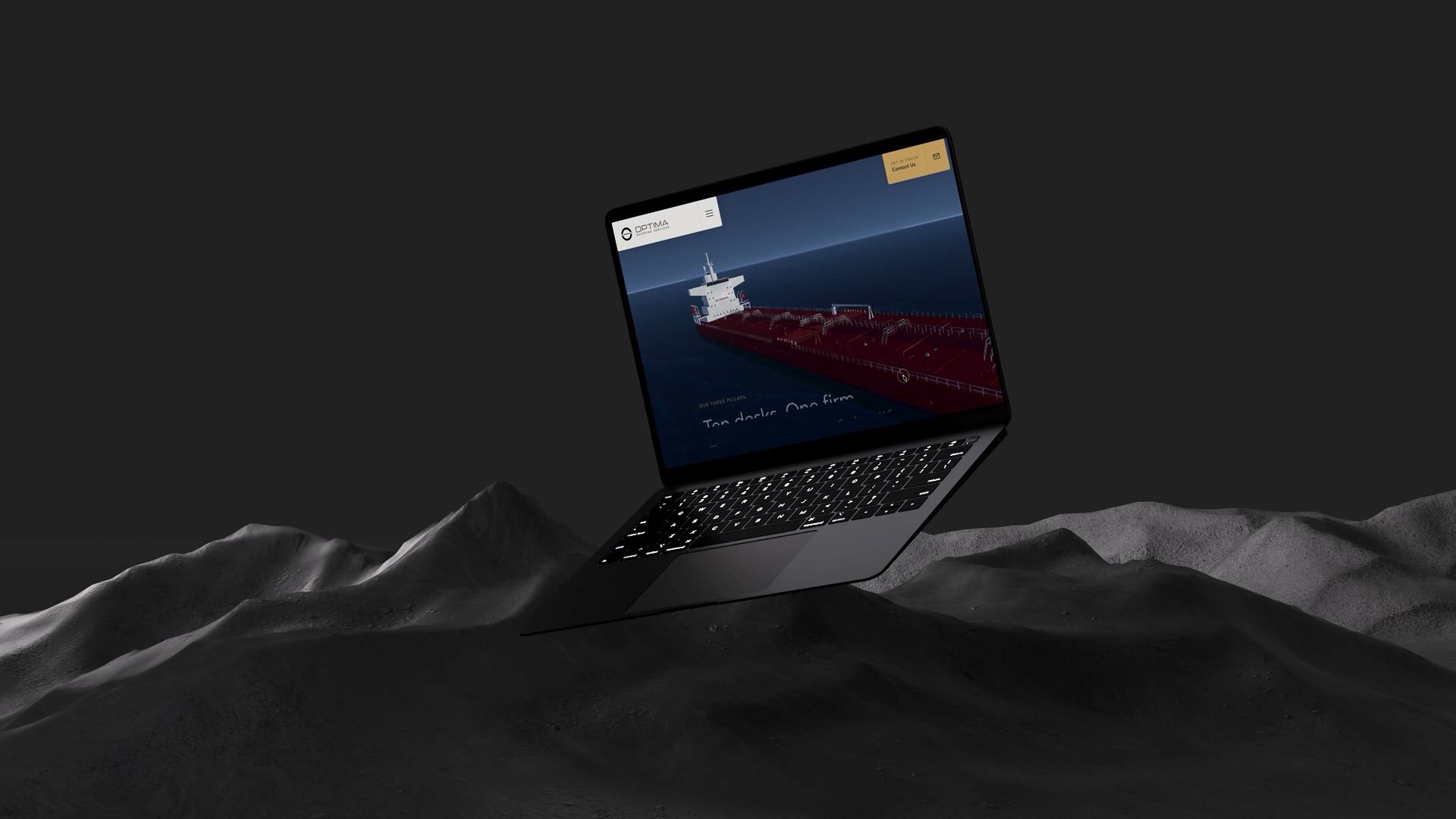
We designed and built the brand, the website and the Posidonia booking system as one piece of work: a mark to navigate by, a site that finds a drydock before a phone number, and a diary that books itself.

A fixed point to navigate by
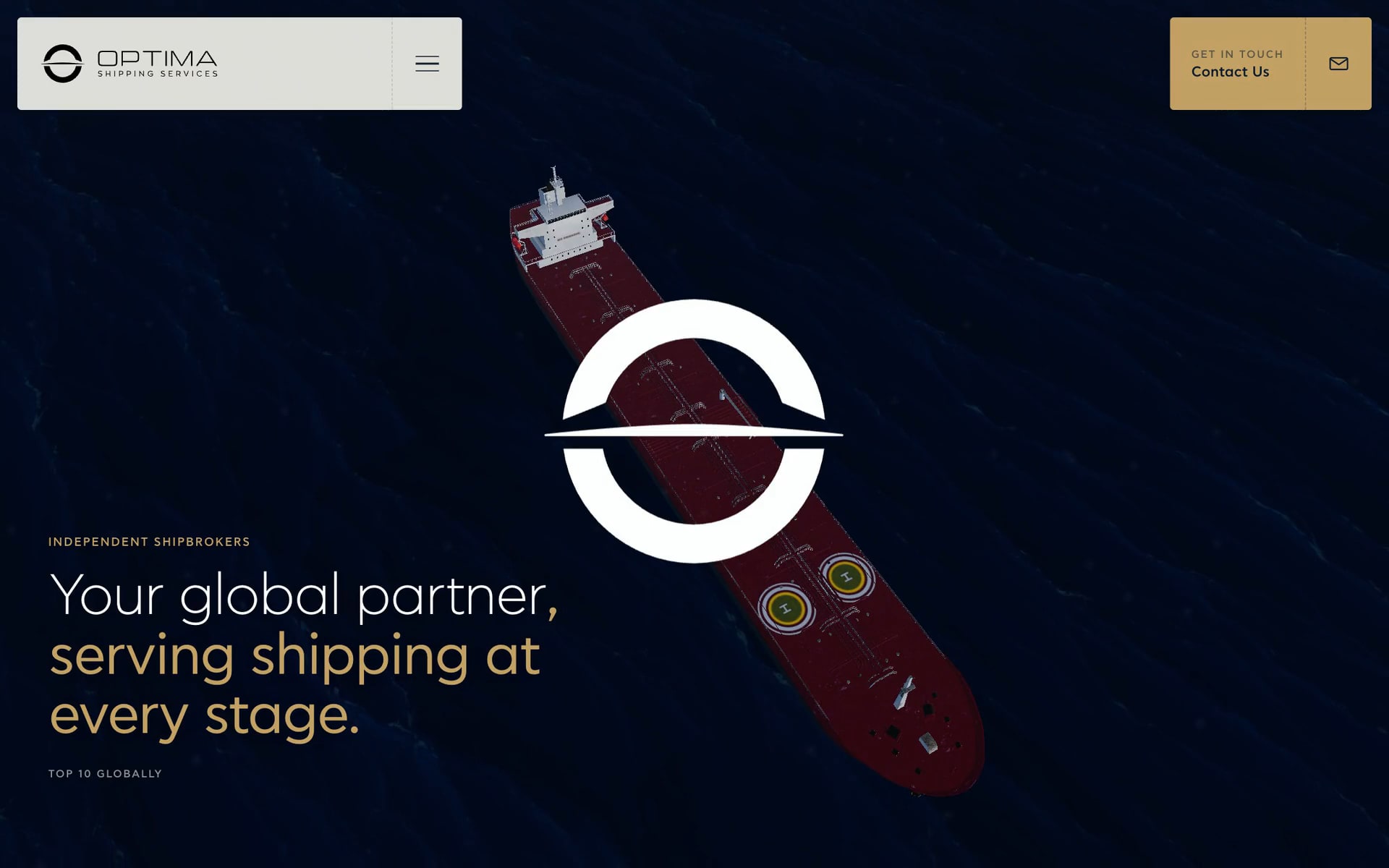
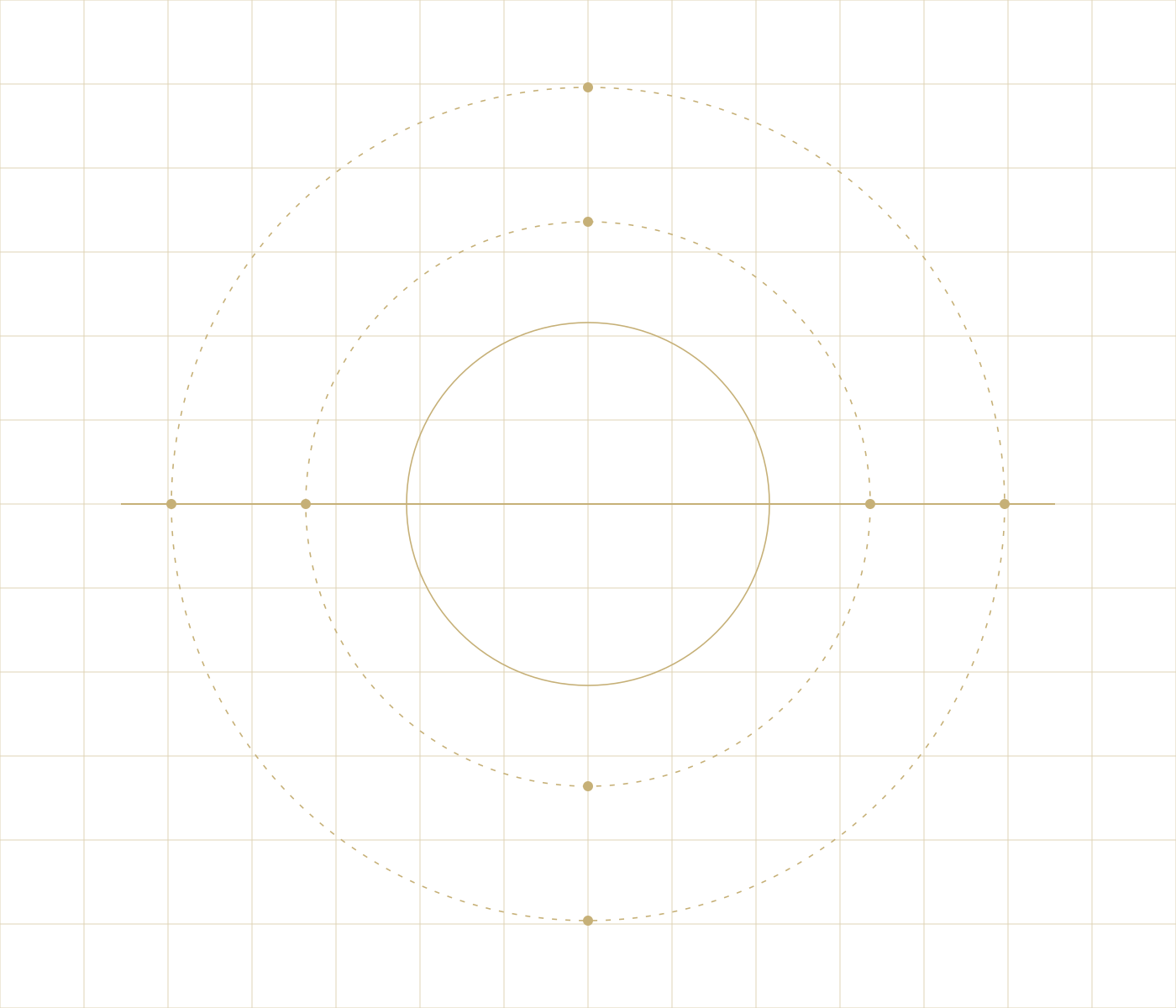
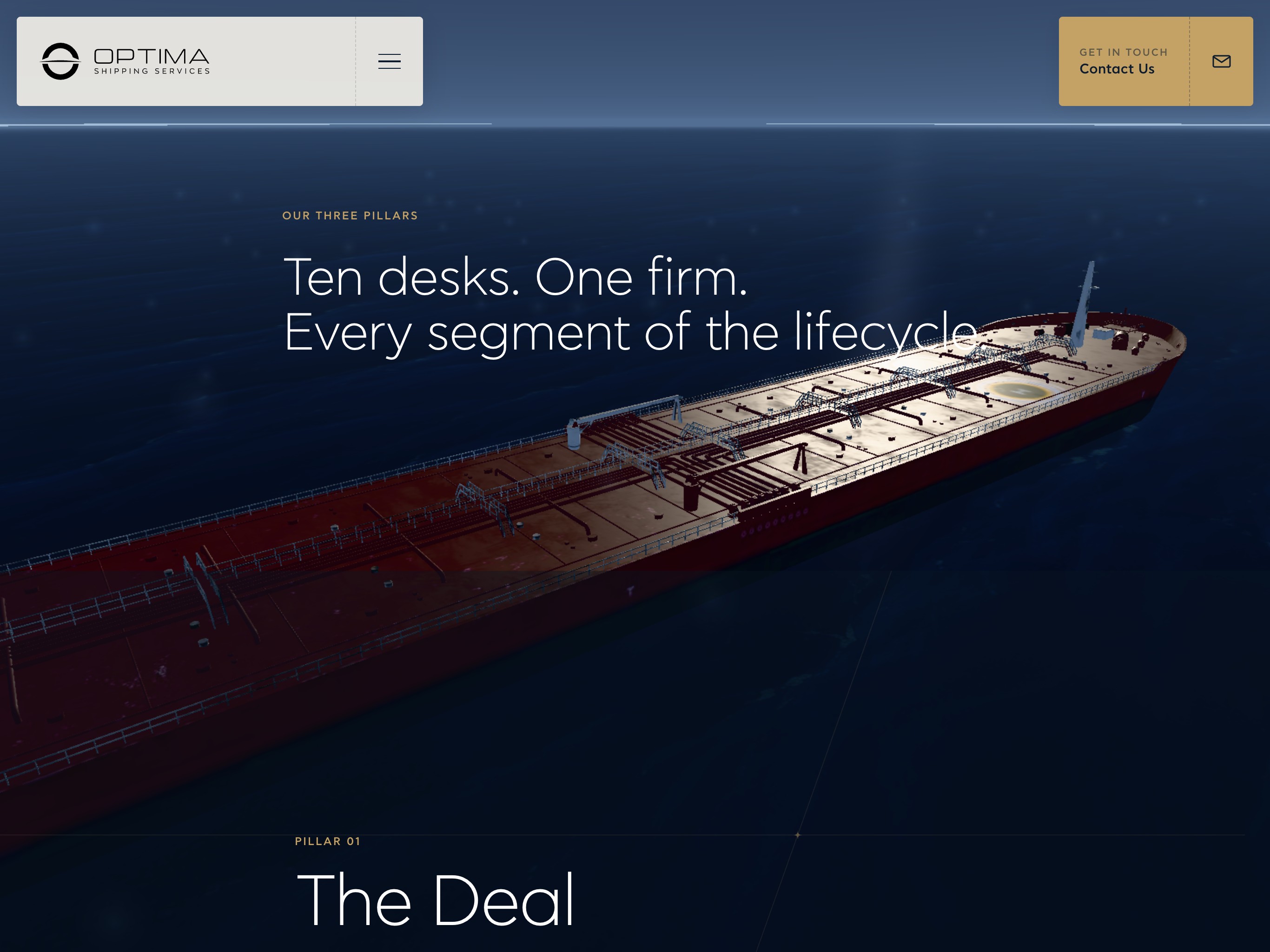
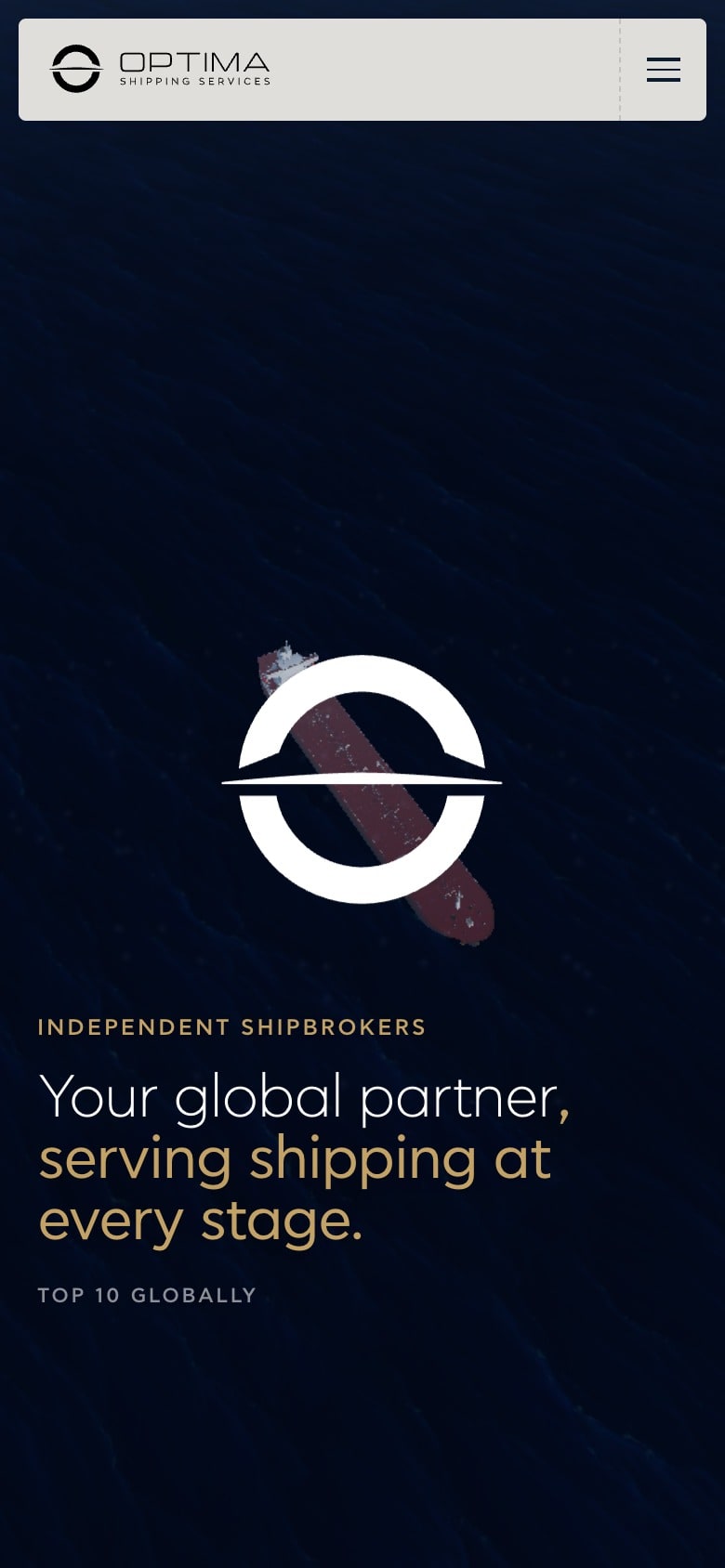
Ships are built from drawings, so the mark is drawn as one: a ring on a fourteen by twelve unit grid, cut by a horizon. On the website it does more than sign the page. The opening scroll grows it twelvefold until it frames the tanker, so a visitor's first act is to look through the logo rather than at it. Navy carries the everyday, gold is kept for ceremony, and nothing in the system is freehand.
Ten desks, one firm
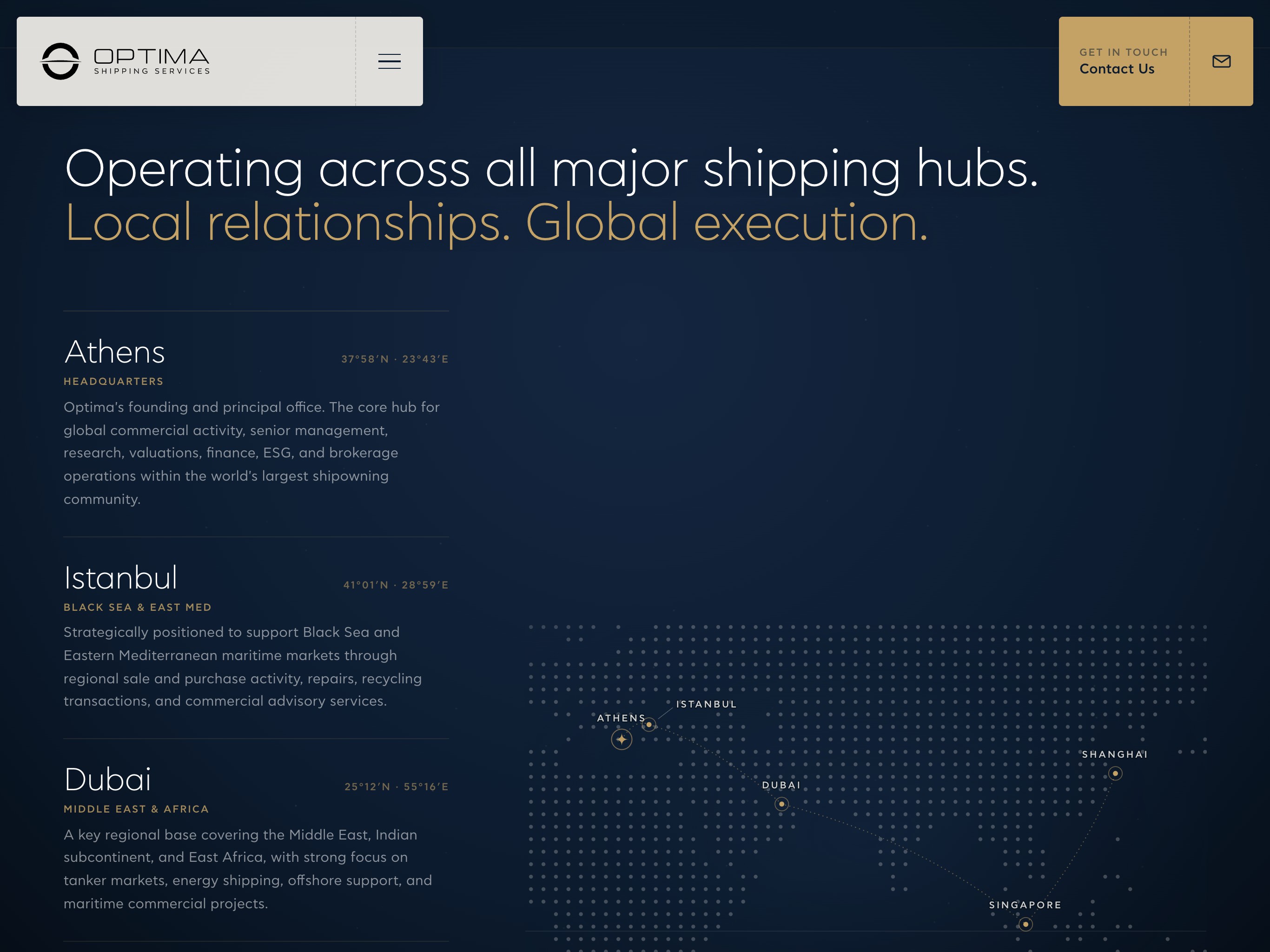
A vessel meets many specialists over its life: the yard that builds it, the bank behind it, the valuer, the buyer, the repairer and, at the end, the recycler. Optima covers every stage, which is hard to say on one screen without a menu of services. So the hull carries the line instead: ten desks laid out like the segments of a ship's lifecycle, and five hubs on one chart, each with its own hour.

Shortlist first, phone call second
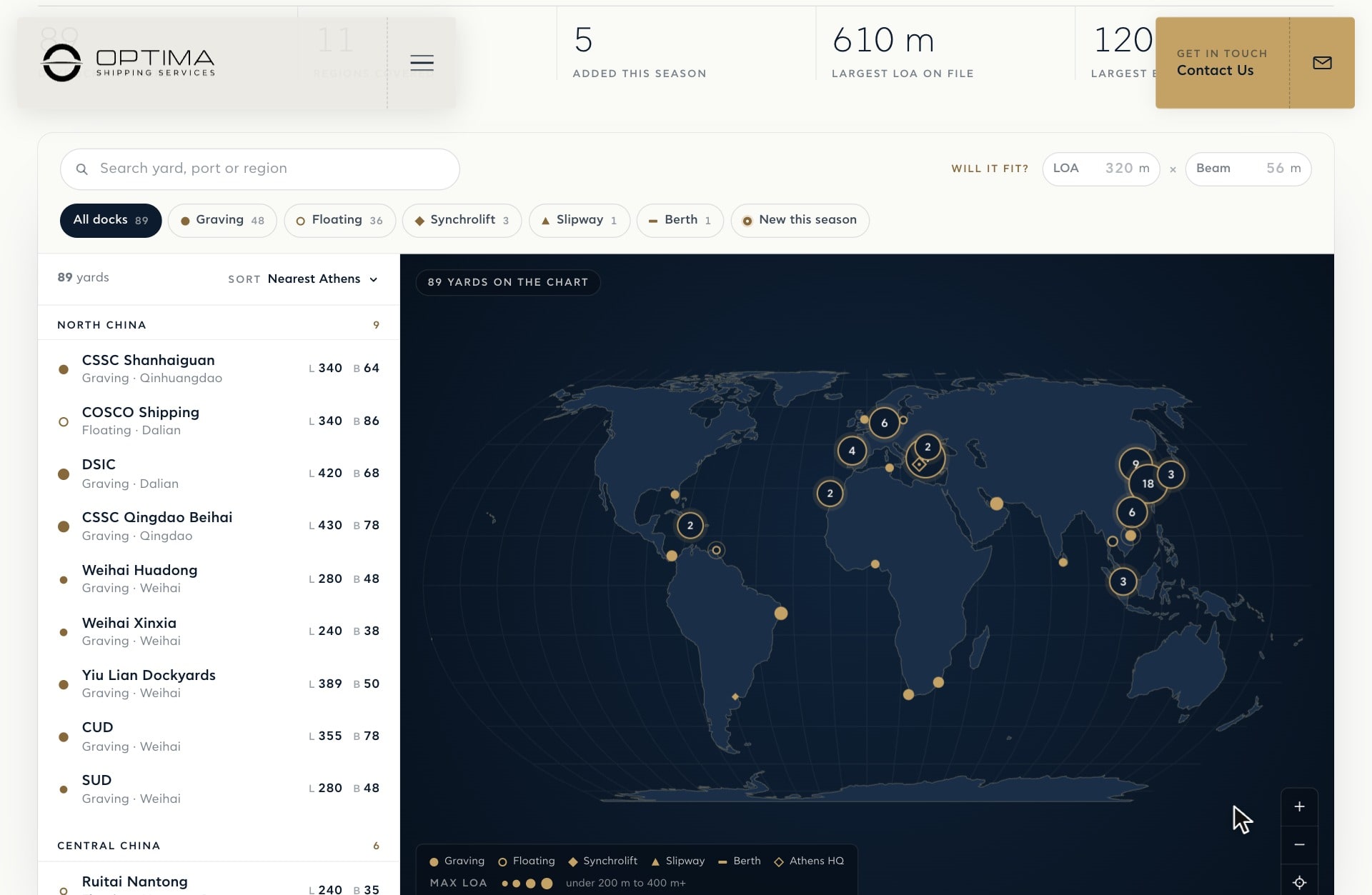
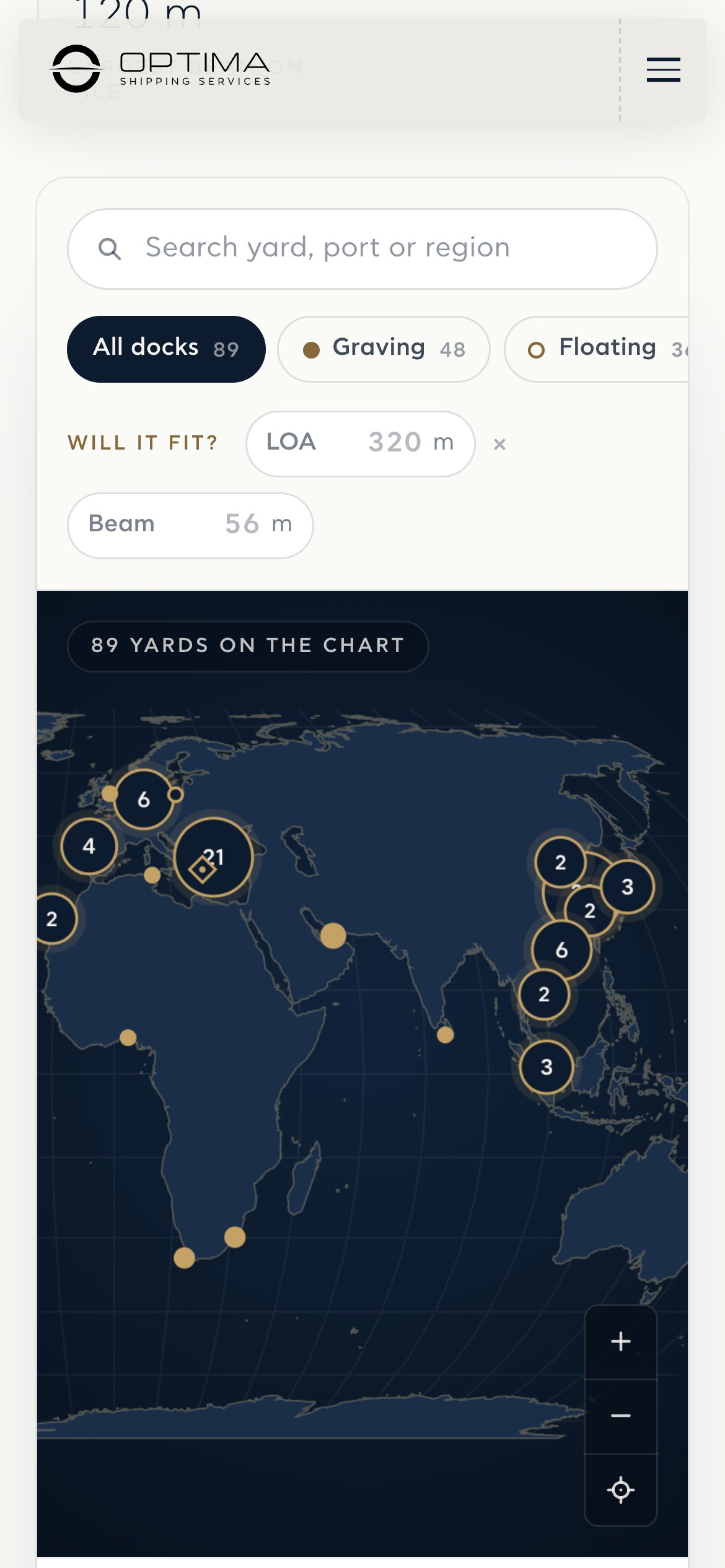
Before price or dates, a repair yard has to take the ship. The atlas starts from that question: enter the vessel's length and beam and every yard that cannot take her leaves the chart, so eighty-nine become the twenty-two worth a call. The ledger and the map answer to each other, a live count keeps every filter honest, and choosing a yard draws the route from Athens with the distance a superintendent will be asked about.
Sized for a hand
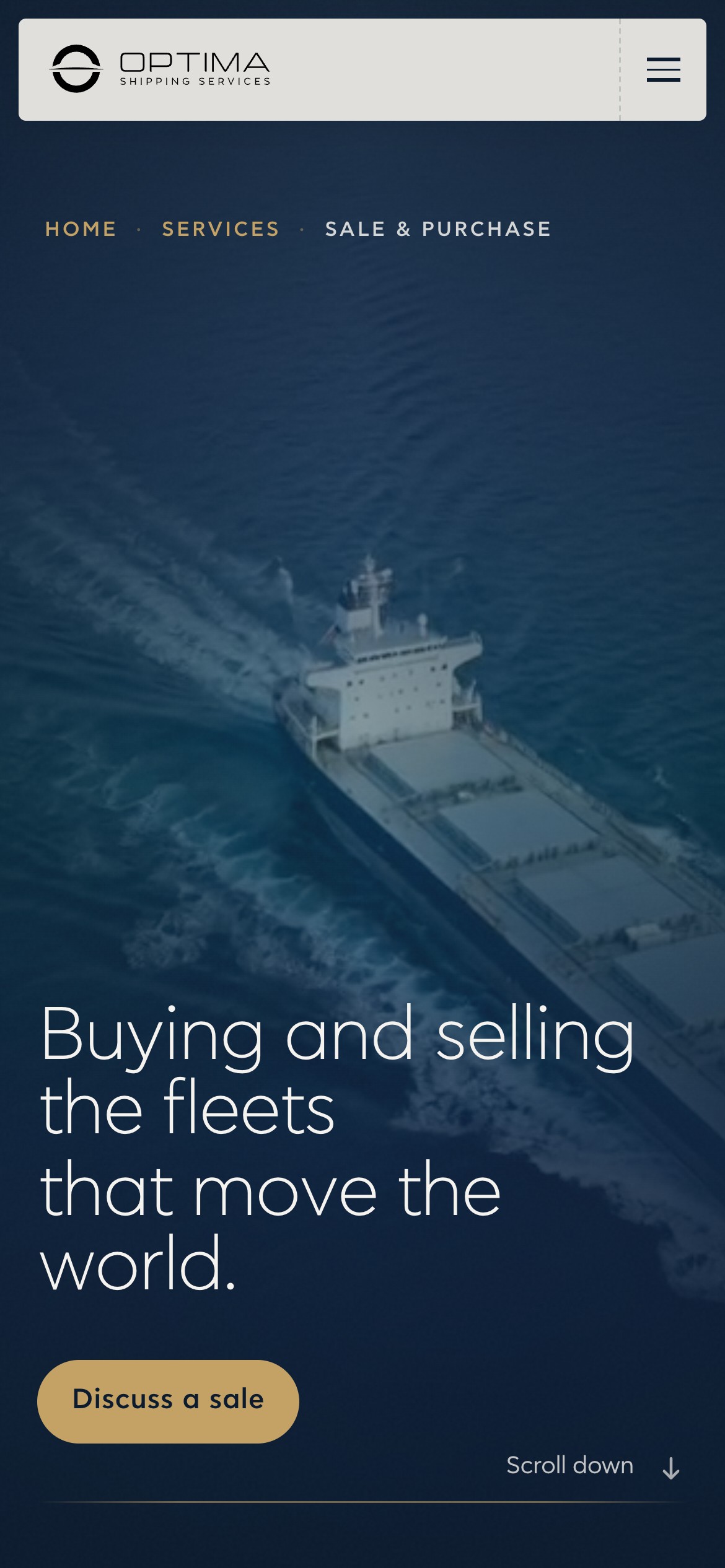
With offices from Athens to Shanghai, Optima is read across many time zones, much of it on a phone between meetings. Nothing is held back on the small screen: the atlas keeps its filters and its chart, the services keep their films, and every page keeps a way to write to the right desk within reach of a thumb.

The diary is open to the guest
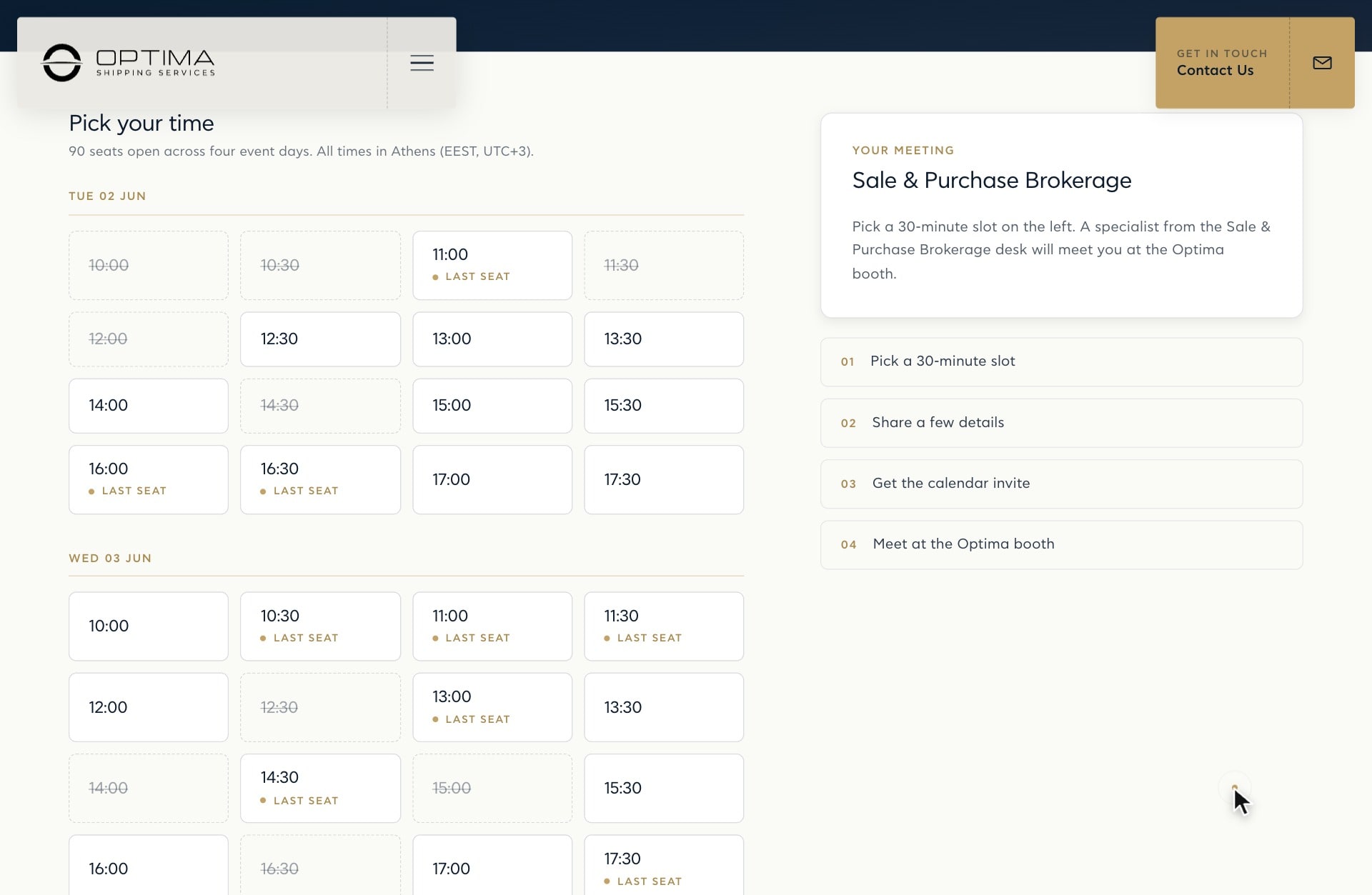
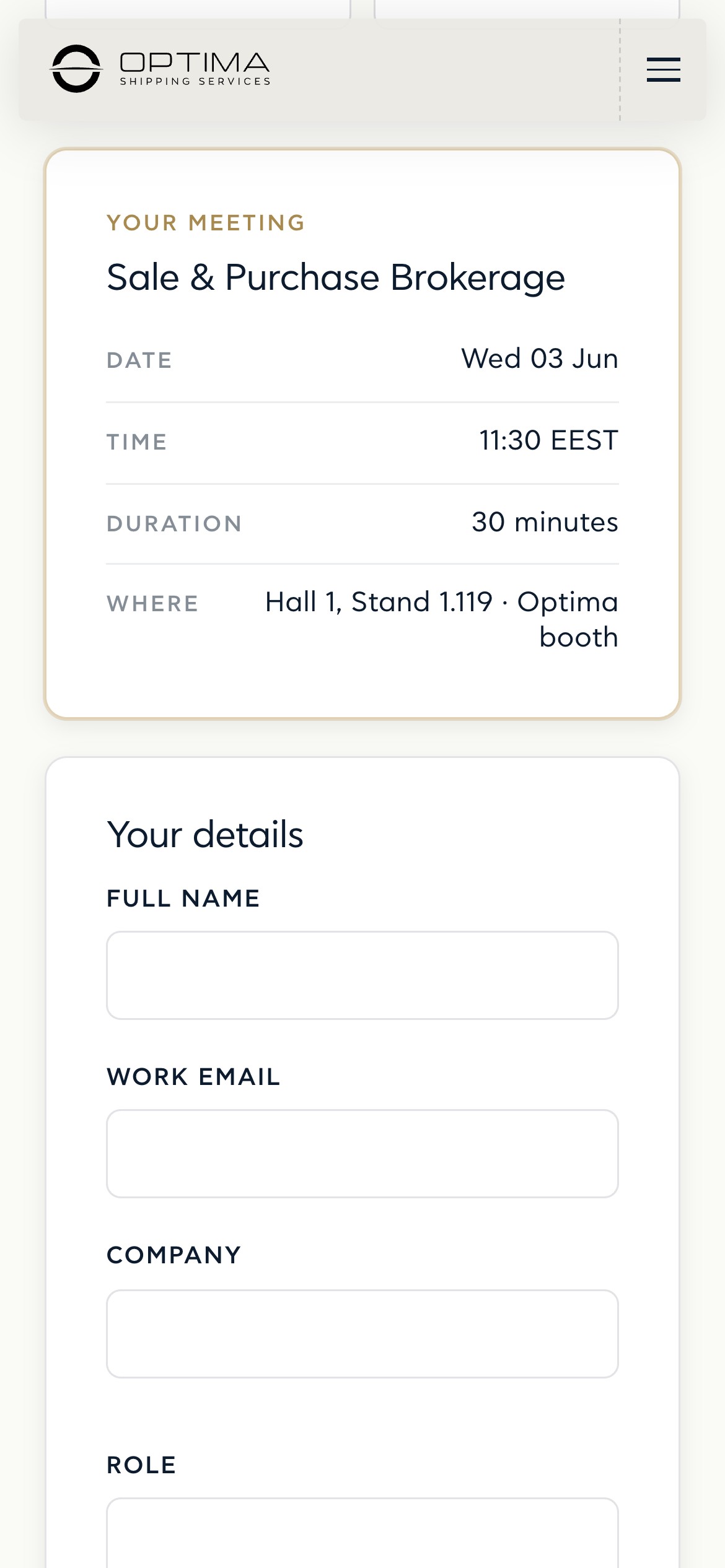
Meetings at a shipping exhibition are usually fixed by email, one reply at a time. At Posidonia a guest picks the desk that matches the business at hand and a half hour that suits them, and the meeting is theirs before the form begins: date, time, length, hall and stand, in Athens time. Last seats are marked and full slots stay in view, so demand shows itself without anyone having to ask.
One diary, three doors
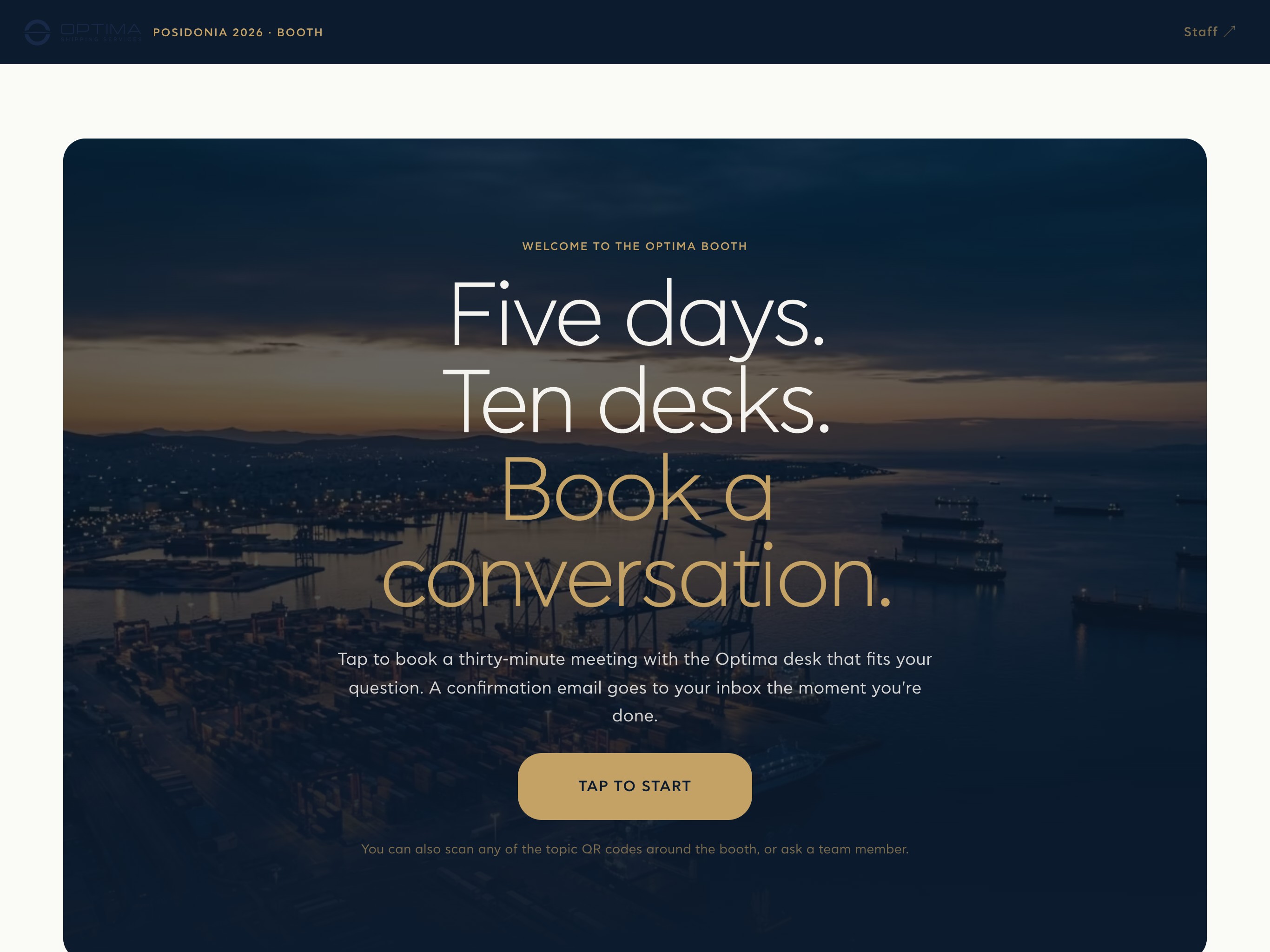
Visitors book online, from a QR code on the stand, or on the booth's own tablet, which greets them and takes a booking in three steps. Every door opens onto the same diary, so a desk is never booked twice and the team on the floor sees each meeting the moment it is made.
Demand sets the rota
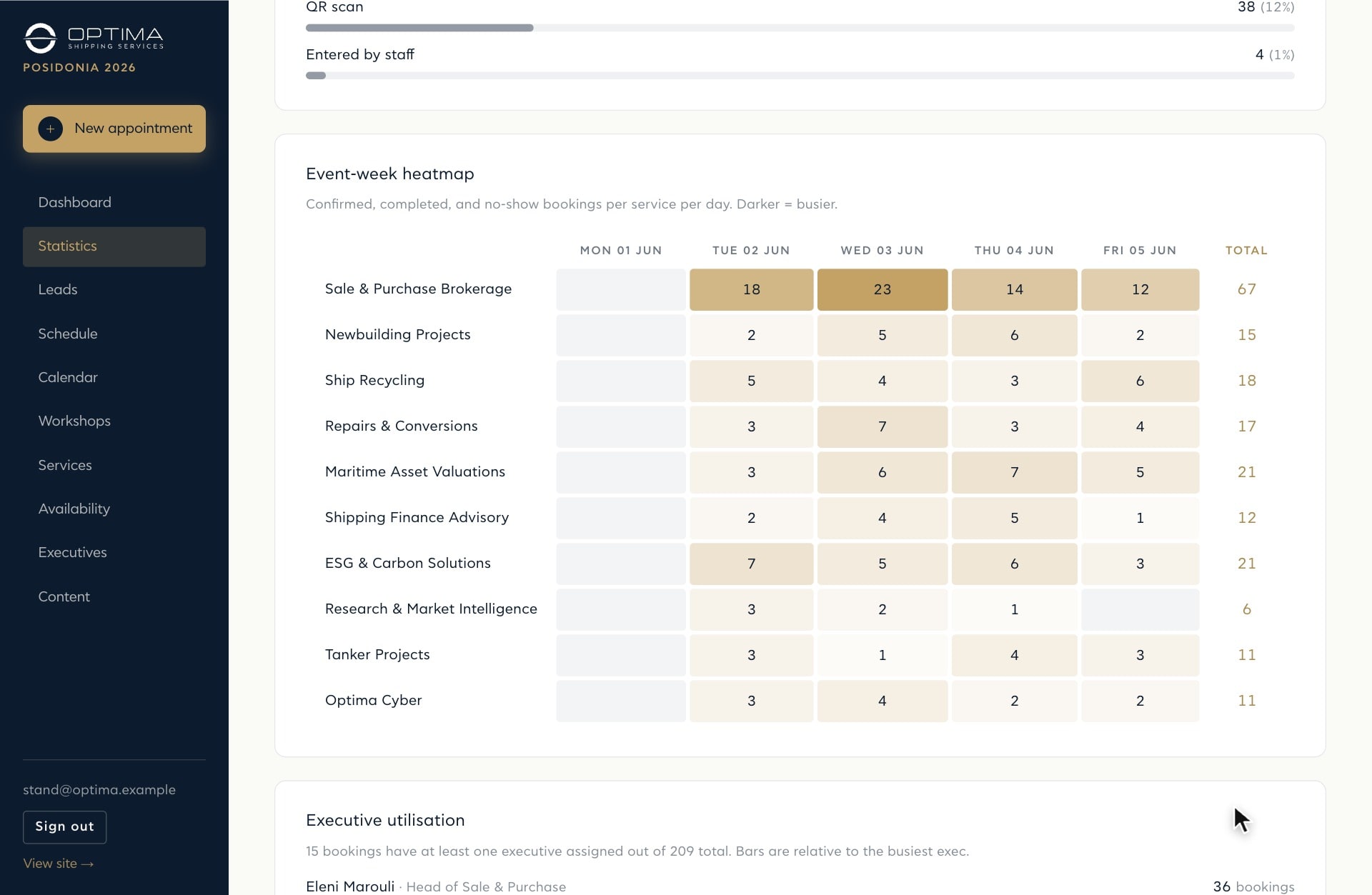
Most trade fairs end with a stack of business cards. The stand CRM counts bookings, completed meetings and no-shows per desk and per day, so the next day's rota follows the heat on the chart rather than a hunch, and every lead leaves the show with its notes attached.
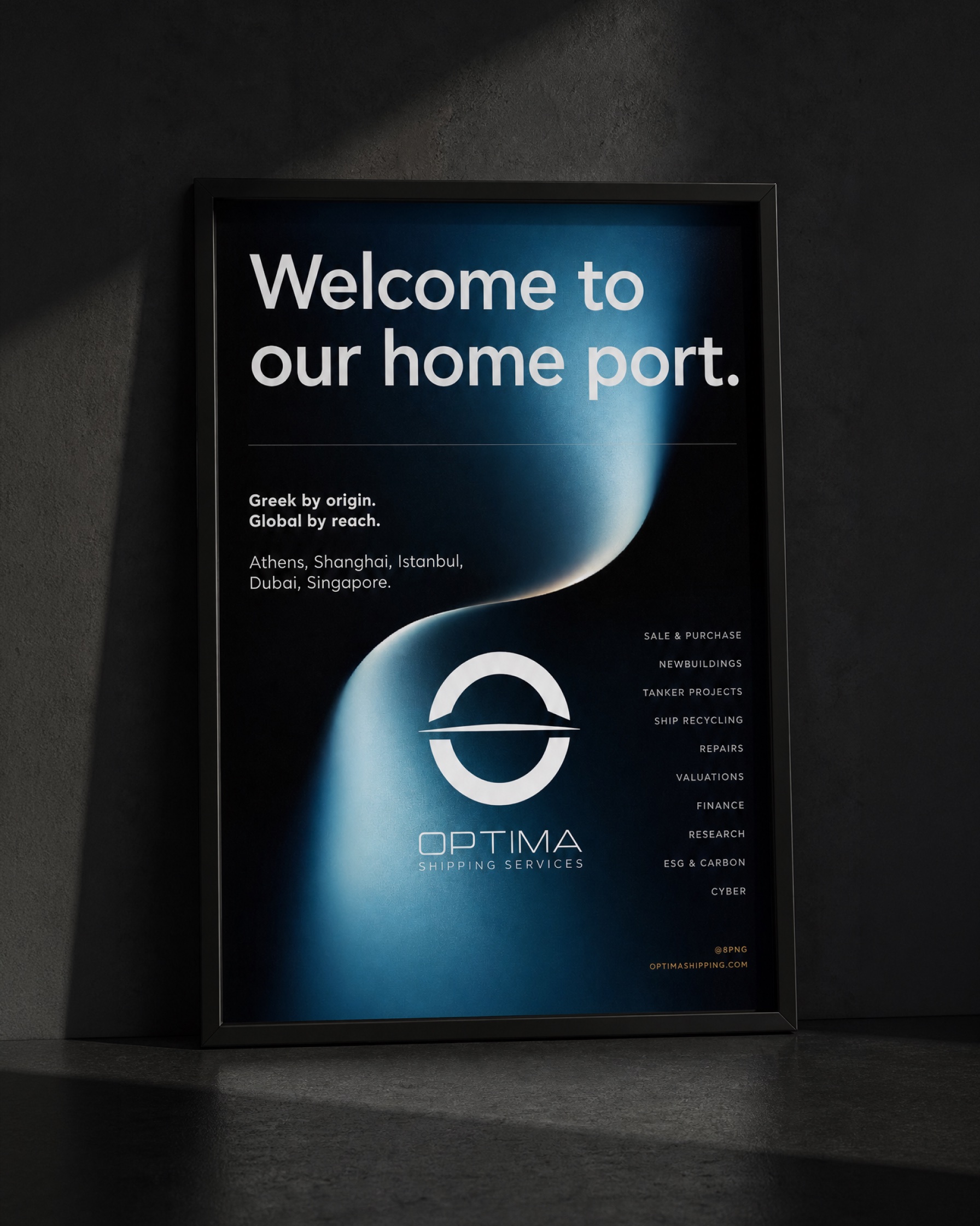
Ink keeps the same bearing
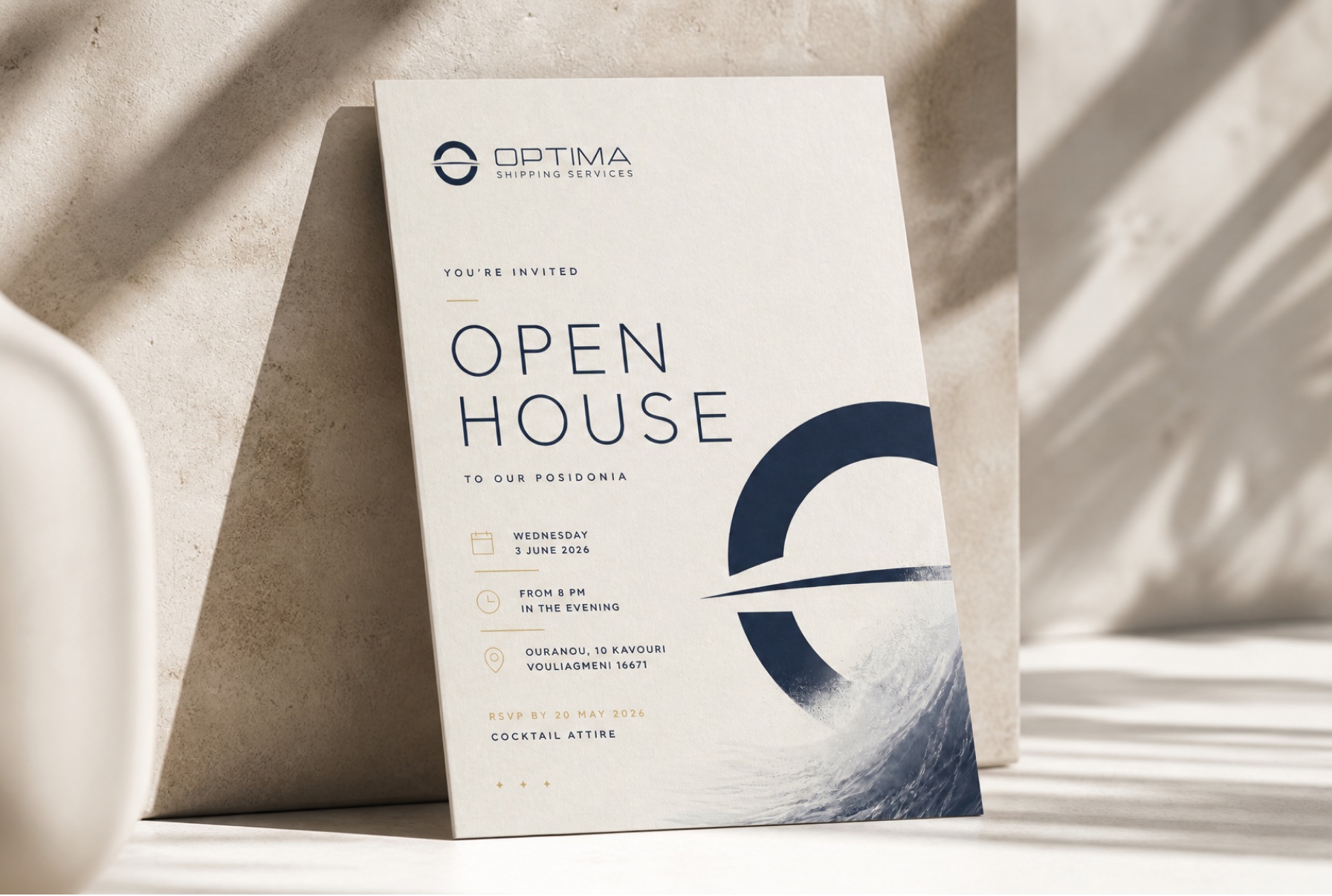
Posidonia brings the shipping world to Athens, Optima's home port, so the invitation and the poster welcome rather than sell. They speak the website's grammar, the glyph cropped to its bowl, the same type, gold on navy and cream, so a guest who arrives with the invitation in hand recognises the stand from across the hall.
The result
A brand, a website and a booking system, designed, built and run by one team as one piece of work. Optima meets its market with a single voice, whether a visitor lands on the site, scans a code on the stand or opens the invitation.
Building something like this?
Start a project.